LinkedIn Ads for IT Consulting Firms Lead Gen

Kavya Somani
January 5, 2026
Table of Contents
Tags
Campaign Optimization
Campaign Strategy
Industry
B2B SaaS
B2B Tech

Key Takeaways

  • 80% of B2B marketers say LinkedIn is most effective for quality leads; it's 277% more effective than Facebook for B2B lead generation​
  • LinkedIn provides access to 63M decision-makers, 10M C-suite executives, and 180M senior influencers, precision targeting no other platform offers​
  • Average IT consulting CPL is $125-$150, with enterprise targets at $150-$350, but LinkedIn delivers 3X better lead quality and 2X higher conversion rates​
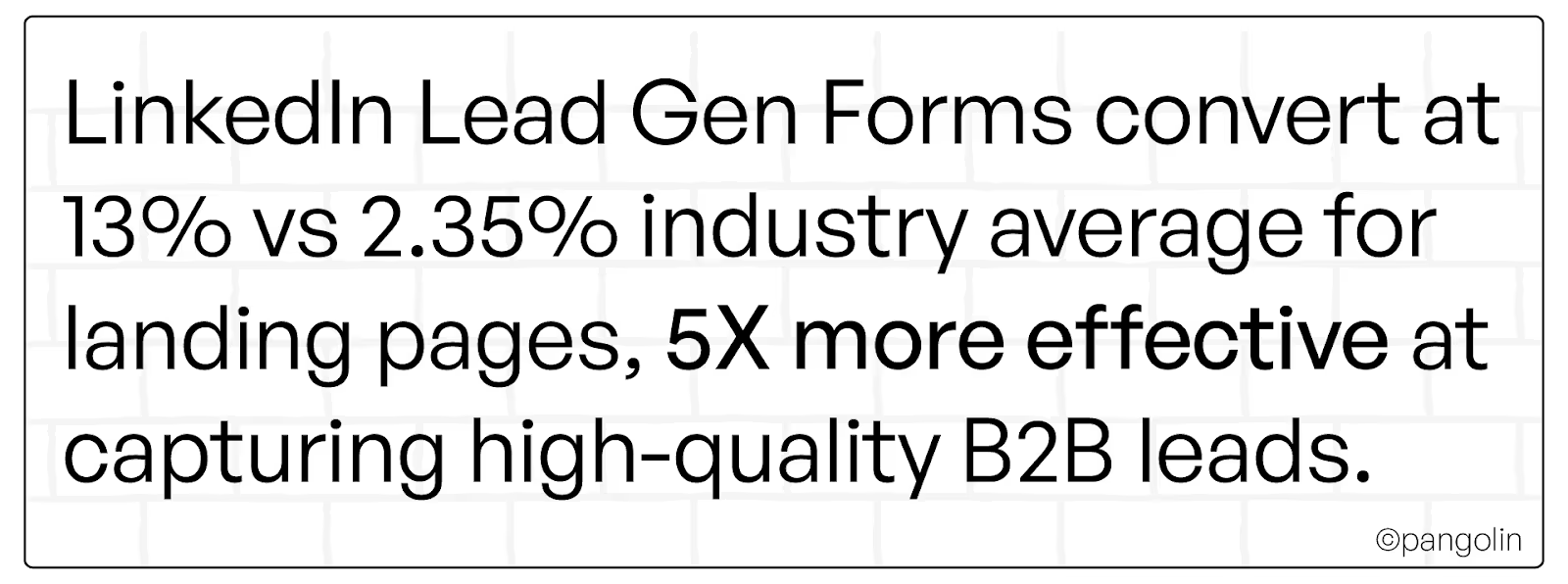
  • Lead Gen Forms convert at 13% vs 2.35% for landing pages, 5X more effective, and reduce CPL by 25-35%​
  • Message Ads achieve 3.2% CTR (7X higher than Sponsored Content's 0.44%) with 50%+ open rates, ideal for bottom-funnel direct response​
  • Layer targeting criteria for precision: job title + seniority + company size + industry + geography increases CTR by 75%​
  • Retargeting website visitors delivers 70% higher conversion rates and 40-60% lower CPL than cold audiences​
  • MobyCap case study: Full-funnel strategy generated 1,733% more conversions, 800% increase in qualified leads, 82% lower cost per conversion in 11 months​
  • Grant Thornton cut CPL 20% and increased qualified leads 20% by narrowing targeting and continuously optimizing creative​
  • CA Technologies slashed CPL 68% using personalized Dynamic Ads matching member profiles​
  • Minimum effective budget: $25-$50/day per campaign; testing phase $1K-2K/month, optimization phase $3K-5K/month, scaling phase $5K-15K/month​
  • Full-funnel approach works best: TOFU Sponsored Content (awareness) → MOFU retargeting (consideration) → BOFU Lead Gen Forms (conversion)

MobyCap, a specialty lender managing over $1 billion in assets, had a problem. Their LinkedIn ads were generating leads, but the wrong ones. CPCs kept rising. Lead quality kept falling. Conversion tracking was a mess. The campaigns felt like throwing money into a black hole.​

Eleven months later, they'd achieved 1,733% more conversions, an 800% increase in qualified leads, and an 82% lower cost per conversion.​

What changed? They stopped treating LinkedIn ads like a random tactic and started treating it like a system. Full-funnel strategy. Precise targeting. Strategic budget allocation. Lead flow automation. Every piece working together.​

That's the exact problem most IT consulting firms face with LinkedIn ads. You know your buyers are on the platform, 80% of LinkedIn's users drive business decisions at their companies. You know it's the most effective B2B channel, 277% more effective than Facebook for lead generation. But your campaigns are bleeding budget while competitors somehow make it work.​

Here's the reality: LinkedIn ads for IT consulting aren't expensive because the platform is overpriced. They're expensive because most firms are targeting the wrong people, with the wrong message, using the wrong ad formats, and measuring the wrong metrics.​

The average IT consulting CPL is $125. Many firms see $200-350. But Grant Thornton cut their CPL by 20% while increasing qualified leads by 20%. CA Technologies slashed CPL by 68%. These aren't anomalies. They're the result of systematic, strategic execution.​

This isn't a guide on "why LinkedIn is great for B2B." You already know that. This is a tactical playbook showing exactly how to target IT decision-makers, which ad formats convert for consulting services, what messaging cuts through the noise, and how to prove ROI when deals take 6-12 months to close.

Let's build your LinkedIn lead generation machine.

Why LinkedIn Ads Are Non-Negotiable for IT Consulting (Even at $125+ CPL)

The Numbers That Change the Conversation

Walk into any IT consulting firm's marketing meeting and you'll hear this:

Marketing Manager: "We need to increase LinkedIn ad spend. That's where our buyers are."

CFO: "LinkedIn leads cost $150 each. Facebook is $40. Why would we pay 4X more?"

Marketing Manager: "Because... quality?"

That's where most marketers lose the argument. Here's the data you actually need:​

  • 80% of B2B marketers say LinkedIn is most effective channel for high-quality leads
  • 277% more effective than Facebook/X for B2B lead generation
  • 89% of B2B marketers use LinkedIn for lead gen; 62% say it delivers quality leads
  • Conversion rates 2X higher than other platforms
  • 80% of LinkedIn users drive business decisions at their companies
  • Audiences exposed to brand + acquisition messages are 6X more likely to convert

But here's the stat that wins budget battles: 28% lower cost per lead than Google AdWords for B2B.​

The platform isn't expensive. Your targeting and execution are.

Access to the Decision-Makers Your Sales Team Actually Wants

Facebook gives you 2.9 billion users scrolling memes. LinkedIn gives you 63 million decision-makers, 10 million C-suite executives, and 180 million senior influencers.​

More importantly, you can target them with precision no other platform offers:​

  • Job title: CIO, CTO, VP of IT, IT Director
  • Job function + seniority: Information Technology + Director-level
  • Company size: 500-5,000 employees
  • Industry: Manufacturing, healthcare, financial services
  • Geography: Chicago metro area

Try doing that on Facebook. You can't.​

The consulting reality: Your ideal client isn't clicking ads while watching cat videos. They're researching IT transformation strategies, reading case studies, and evaluating vendors on LinkedIn.​

Superior Lead Quality (When Done Right)

Here's why that $150 CPL is actually a bargain: LinkedIn leads convert 3X better than Facebook for B2B consulting.​

The math:

  • Facebook: $40 CPL × 100 leads = $4,000 spend. 2% close rate = 2 clients. Cost per customer: $2,000
  • LinkedIn: $150 CPL × 27 leads = $4,000 spend. 6% close rate = 2 clients. Cost per customer: $2,000

Same customer acquisition cost. But LinkedIn leads are qualified decision-makers with budget authority. Facebook leads are... anyone who clicked.​

For IT consulting deals averaging $50K-$500K, paying $150 for a CIO's contact info is the bargain of the century.​

‘LinkedIn Lead Gen Forms convert at 13% vs 2.35% industry average for landing pages, 5X more effective at capturing high-quality B2B leads’

The Cost Reality: What You Should Actually Be Paying

CPL Benchmarks by Industry & Deal Type

Stop comparing your LinkedIn CPL to Facebook. Start comparing it to other B2B consulting firms.​

Average B2B CPL by vertical:​

  • IT/Software: $125
  • Hardware/Networking: $150
  • Enterprise consulting (500+ employee targets): $150-$350

Regional variations:​

  • North America: $230 average
  • Europe: $120 average
  • Asia-Pacific: $80 average
  • Latin America: $60 average

The targeting premium: The more precise your targeting (CIO at 1,000+ employee manufacturing companies), the higher your CPL, but the better your conversion rate.​

The Format Makes the Difference

Not all LinkedIn ads cost the same:​

Sponsored Content (Feed Ads):​

  • Average CTR: 0.44-0.65%
  • Cost varies by bid and competition
  • Best for awareness and content distribution

Message Ads (Sponsored InMail):​

  • Cost: $0.30-$0.80 per send
  • Average CTR: 3.2% (7X higher than Sponsored Content)
  • Average open rate: 50%+
  • Best for direct response and demo requests

Lead Gen Forms vs. Landing Pages:​

  • Native Lead Gen Forms: $45-$95 CPL
  • External landing pages: $65-$140 CPL
  • Lead Gen Forms reduce CPL by 25-35%

The game-changer: Using Lead Gen Forms instead of landing pages can cut your CPL nearly in half.​

The ROI Calculation That Justifies the Spend

Here's how to win the CFO argument:​

Scenario: IT consulting firm targeting enterprise clients

  • Average LinkedIn CPL: $150
  • Close rate: 10% (realistic for qualified consulting leads)
  • Average deal size: $200,000
  • Sales cycle: 6-9 months

The math:

  • 100 leads = $15,000 ad spend
  • 10 closed deals = $2,000,000 revenue
  • Customer acquisition cost: $1,500 per client
  • ROI: 13,233%

Even at $350 CPL for enterprise targets, you're looking at $3,500 CAC for a $200K deal. That's a 5,614% ROI.​

The key: Track leads through to closed deals, not just to MQL stage.​

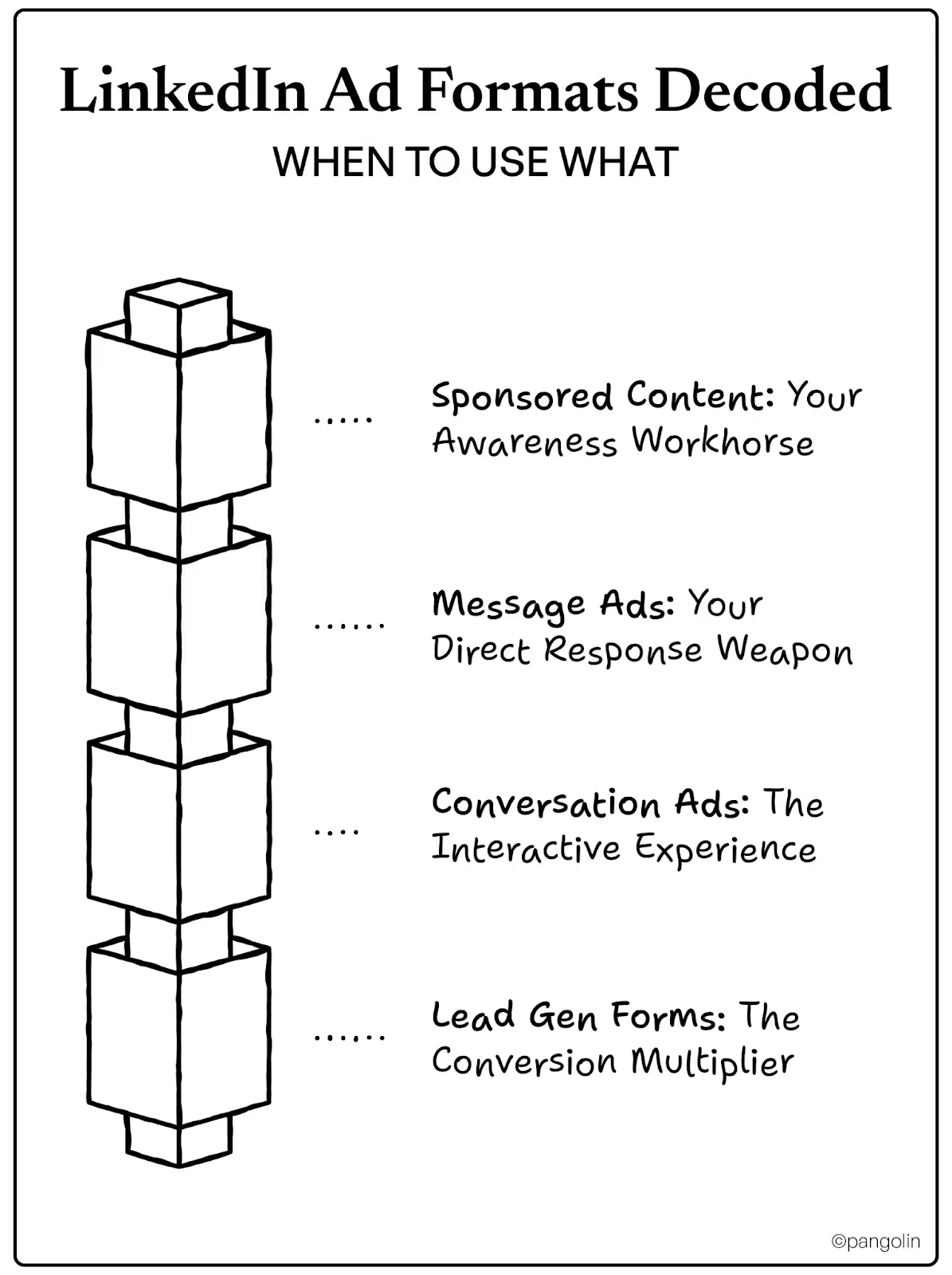
LinkedIn Ad Formats Decoded: When to Use What

Sketch titled ‘LinkedIn Ad Formats Decoded – When To Use What,’ listing Sponsored Content, Message Ads, Conversation Ads, Lead Gen Forms.

Sponsored Content: Your Awareness Workhorse

What it is: Ads that appear in the LinkedIn feed, looking like organic posts.​

Average performance:​

  • CTR: 0.44-0.65%
  • Best for: Brand awareness, thought leadership, content distribution

When to use it:​

  • Top of funnel: Introducing your consulting firm to new audiences
  • Promoting content: Case studies, whitepapers, webinars
  • Building authority: Sharing insights, industry trends, expertise

Format options:​

  • Single image ads
  • Carousel ads (multiple images/videos)
  • Video ads (30 seconds - 3 minutes optimal)
  • Document ads (native PDF viewer)

The consulting angle: Use Sponsored Content to establish thought leadership before asking for the sale. Share "How we helped [recognizable client] reduce IT costs 35%" case studies, not "We offer IT consulting services" pitches.​

Message Ads: Your Direct Response Weapon

What it is: Ads delivered directly to LinkedIn inboxes (formerly Sponsored InMail).​

Average performance:​

  • CTR: 3.2% (7X higher than Sponsored Content)
  • Open rate: 50%+
  • Cost: $0.30-$0.80 per send

When to use it:​

  • Bottom of funnel: Prospects who've engaged with your content
  • Event invitations: Webinar registrations, workshop signups
  • Demo requests: "See how we solve [specific problem]"
  • High-value offers: Free IT assessment, consultation

Why it works: Direct inbox access feels personal; recipients see sender profile photo and name.​

The mistake to avoid: Don't blast cold audiences with Message Ads. Use them for warm prospects who've visited your website or engaged with content.​

Conversation Ads: The Interactive Experience

What it is: Choose-your-own-path messaging experience with multiple CTAs.​

Why it's better than Message Ads: Interactive format increases engagement; prospects can select the path relevant to them.​

When to use it:​

  • Complex buying journeys: Multiple stakeholder types (CIO, CFO, COO)
  • Offering multiple resources: "Download case study" OR "Book demo" OR "View pricing"
  • Lead qualification: Ask questions before routing to sales

Example flow:​

  1. "What's your biggest IT challenge?"
  2. Options: "Cost reduction" / "Security" / "Modernization"
  3. Based on choice, offer relevant case study
  4. CTA: "Book consultation with our [Cost/Security/Modernization] specialist"

The consulting advantage: Shows you understand different buyer concerns and have solutions for each.​

Lead Gen Forms: The Conversion Multiplier

What it is: Native forms that pre-populate with LinkedIn profile data, no landing page redirect.​

The performance difference:​

  • 13% conversion rate vs 2.35% landing page average
  • 5X more effective than traditional landing pages
  • Reduce form abandonment by 90%+
  • Keep users on LinkedIn (no bounce from redirect)

Why it works:​

  • Name, job title, email, company auto-filled from profile
  • One-click submission
  • Mobile-optimized (most B2B research happens on mobile)
  • High-quality data pulled from verified LinkedIn profiles

When to use it: Any campaign where you need contact information, webinar registration, content download, demo request, consultation booking.​

The setup:​

  • Choose 3-4 form fields (fewer = higher conversion)
  • Essential fields: Name, email, company, job title
  • Optional: Add 1-2 qualifier questions ("Company size?" "Timeline?")
  • Thank you page: Set clear next steps

Case study impact: MobyCap integrated Lead Gen Forms with CRM auto-routing, contributing to 800% increase in qualified leads.

Targeting Playbook: Reaching IT Decision-Makers (Not Job Seekers)

The Problem with Generic Targeting

Most IT consulting firms target "Information Technology professionals" and wonder why they're getting applications from help desk technicians.​

What happens:​

  • You bid $10 CPC to reach "IT professionals"
  • LinkedIn shows your ad to 30 million people (way too broad)
  • Students, job seekers, and entry-level staff click
  • Your CPL hits $250 for unqualified leads
  • Sales team revolts

The fix: Layer targeting criteria to reach actual decision-makers.​

The Decision-Maker Targeting Formula

Hand-drawn target diagram titled ‘The Decision-Maker Targeting Formula,’ with five darts labeled Job Title, Job Function + Seniority, Company Size, Industry Vertical, and Geography.

Layer 1: Job Title​

  • CIO, CTO, VP of Information Technology, IT Director, Head of IT
  • CFO (budget authority for IT investments)
  • COO (operational oversight)

Why job title matters: Grant Thornton improved results by 20% when they narrowed from broad "Accounting & Finance" to specific "0-3 years experience" targets. Precision beats reach.​

Layer 2: Job Function + Seniority​

  • Job function: Information Technology
  • Seniority level: Manager, Director, VP, C-suite
  • This combo increases CTR by 75% in documented case studies​

Layer 3: Company Size​

  • Small business: 1-50 employees (smaller deals, faster cycles)
  • Mid-market: 51-500 employees (sweet spot for many IT consultants)
  • Enterprise: 500+ employees (higher CPL but larger deals)

ABM works best for 500+ employee companies​

Layer 4: Industry Vertical​

  • Manufacturing (uptime/production concerns)
  • Healthcare (compliance/security focus)
  • Financial services (regulatory requirements)
  • Legal (client confidentiality)

Why vertical matters: Tailored messaging resonates 3X better than generic "IT consulting" pitches.​

Layer 5: Geography​

  • Target regions where you actually deliver services
  • Example: "Chicago metro area" not "United States"

The precision formula:​
"IT Directors at 500-5,000 employee manufacturing companies in the Midwest"

That's 10,000X more targeted than "IT professionals", and your CPL reflects it.​

Matched Audiences: The Secret Weapon

What it is: Custom targeting using your own data, website visitors, CRM contacts, target account lists.​

Three types:​

1. Website Retargeting​

  • Target people who visited specific pages (pricing, case studies, services)
  • 70% more likely to convert than cold audiences​
  • 40-60% lower CPL with retargeting​
  • Minimum audience size: 300 members

Example: Someone visits your "IT Consulting for Manufacturing" page. Retarget with case study: "How we helped [Manufacturing Client] reduce downtime 73%"​

2. Account Targeting (ABM)​

  • Upload list of dream accounts (companies you want as clients)
  • Layer with job title/seniority for precision
  • Works best for enterprise deals​

Case study: B2B tech firm used ABM retargeting for decision-makers who viewed product pages, 30% conversion improvement, CPL dropped from $120 to $64.​

3. Contact Targeting​

  • Upload email lists from CRM (existing customers, prospects, event attendees)
  • High ROI, these are warm/hot contacts​
  • Use for upselling, cross-selling, nurturing

Recommended audience sizes:​

  • Sponsored Content: 50,000+ for scale
  • Message Ads: 15,000+ (more targeted)
  • Retargeting: 300-5,000 (highly qualified)

The retargeting sequence that works:​

  1. Week 1: Sponsored Content with case study (awareness)
  2. Week 2: Retarget engaged viewers with comparison content (consideration)
  3. Week 3: Message Ad to website visitors with demo offer (decision)

Result: MobyCap's full-funnel retargeting approach generated 1,733% more conversions.​

Creative & Messaging That Converts for IT Consulting

The Differentiation Challenge

Here's the problem every IT consulting firm faces: You all say the same thing.​

  • "We offer deep expertise"
  • "Trusted IT partner"
  • "20 years of experience"
  • "Custom solutions"

Your prospects can't tell you apart. And when consulting firms look identical, buyers choose based on price.​

The fix: Lead with outcomes, not capabilities.​

Headline Formulas That Work

Generic (doesn't work):​

  • "Leading IT Consulting Firm"
  • "Comprehensive IT Solutions"
  • "Your Technology Partner"

Outcome-focused (works):​

  • "Reduce IT Costs 30% While Improving Uptime"
  • "Manufacturing IT That Prevents Production Downtime"
  • "Healthcare IT Compliance Without the Headaches"
  • "How [Recognizable Client] Cut IT Spend $250K/Year"

The pattern: [Outcome] for [Specific Audience].​

Length limits:​

  • Headlines: <150 characters
  • Body text: <70 characters
  • Keep it punchy, scannable, value-first

Visual Best Practices

What works:​

  • People imagery (builds trust, especially for consulting)
  • Client photos/logos (social proof)
  • Before/after data visualizations ("73% reduction in downtime")
  • Professional, on-brand imagery (no generic stock photos)

Specs:​

  • Single image: 1200×627 pixels
  • Video: 75KB-200MB, 3 seconds - 30 minutes (30-90 seconds optimal)

Case study: Grant Thornton featured people imagery in ads, contributing to 20% more qualified leads.​

Social Proof That Builds Credibility

What to include:​

  • Client testimonials from recognizable companies
  • Statistics: "Trusted by 500+ manufacturing companies"
  • Results: "Average 35% cost reduction for clients"
  • Certifications: Display relevant credentials (AWS, Azure, security certifications)

Example ad copy:​
"How we helped [Fortune 500 Manufacturing Company] reduce IT costs by $1.2M while improving system uptime from 94% to 99.7%. [Download Case Study]"

That's 10X more compelling than "We offer IT consulting".​

Personalization for Different Audiences

Manufacturing IT Decision-Makers:​

  • Pain point: Production downtime costs $250K per hour
  • Messaging: "Manufacturing IT that keeps production running 24/7"
  • Offer: "Free Production Uptime Assessment"

Healthcare IT Decision-Makers:​

  • Pain point: HIPAA compliance + security + legacy systems
  • Messaging: "Healthcare IT that's compliant, secure, and modern"
  • Offer: "HIPAA Compliance Checklist"

Financial Services IT Decision-Makers:​

  • Pain point: Regulatory requirements + cybersecurity threats
  • Messaging: "Financial services IT that satisfies regulators and stops hackers"
  • Offer: "Cybersecurity Risk Assessment"

The principle: Tailor to specific vertical pain points, not generic IT challenges.​

CTAs That Drive Action

Generic (doesn't work):​

  • "Learn More"
  • "Click Here"
  • "Visit Website"

Action-specific (works):​

  • "Book a Demo"
  • "Get Free IT Assessment"
  • "Download ROI Calculator"
  • "Register for Webinar"
  • "See Pricing"

Match CTA to offer:​

  • Content: "Download Now"
  • Trial: "Try Now"
  • Demo: "Watch Demo" or "Book Demo"
  • Consultation: "Schedule Call"

Mobile optimization: Large, thumb-friendly buttons.​

Lead Gen Forms: The 13% Conversion Secret

Why Lead Gen Forms Beat Landing Pages

Traditional approach: LinkedIn ad → Landing page → Form fill → Thank you page.​

The problems:​

  • Redirect bounce (10-30% abandon when leaving LinkedIn)
  • Loading delays (every second = 7% conversion drop)
  • Mobile friction (60%+ of traffic is mobile; landing pages often aren't optimized)
  • Manual data entry (typing on mobile = abandonment)

Lead Gen Forms solution: One-click submission with pre-filled data.​

The performance difference:​

  • 13% conversion rate vs 2.35% landing page average
  • 5X more effective at capturing leads
  • 90%+ reduction in form abandonment

Why it works: Name, job title, email, company auto-populated from LinkedIn profile. One click, done.​

Form Field Strategy

The tradeoff: More fields = more qualification data, but lower conversion.​

Optimal approach: 3-4 fields​

  • Essential: Name, email, company, job title (auto-filled)
  • Optional: Add 1-2 qualifier questions

Qualifying questions that work:​

  • "What's your company size?" (1-50, 51-500, 500+)
  • "What's your primary IT challenge?" (Cost, Security, Modernization, Compliance)
  • "What's your timeline for making a decision?" (0-3 months, 3-6 months, 6-12 months, Just researching)

Example: MobyCap added qualifier questions to segment leads automatically, routing high-priority prospects directly to sales, contributing to 800% increase in qualified leads.​

Offer Optimization

Headline: Clear value prop in <60 characters​

  • "Get Your Free IT Cost Assessment"
  • "Download: Manufacturing IT Checklist"
  • "Watch: How [Client] Cut IT Costs 40%"

Offer detail: Explain what they'll get in <160 characters​

  • "Discover 5 ways to reduce IT spending without sacrificing performance. 15-page guide with real client examples."

Privacy policy: Must include link to comply with regulations.​

Thank You Page Strategy

Custom message: Set expectations​

  • "Thanks! Check your email for the IT Cost Assessment. Our team will reach out within 24 hours to discuss your results."

Destination URL options:​

  • Download link (for gated content)
  • Booking page (for consultations)
  • Case study page (for further nurturing)

CTA button options:​

  • "Visit Website"
  • "Download Now"
  • "View Now"
  • "Try Now"

CRM Integration: The Game-Changer

Automatic lead routing:​

  • Integrate with Salesforce, HubSpot, Marketo
  • Route based on qualifier responses
  • Example: "0-3 month timeline" + "500+ employees" = immediate sales alert

The speed advantage: Companies responding within 5 minutes are 100X more likely to connect.​

Case study: MobyCap's CRM integration with auto-routing was critical to achieving 1,733% more conversions and 800% increase in qualified leads.​

Campaign Strategy: From Launch to Scale

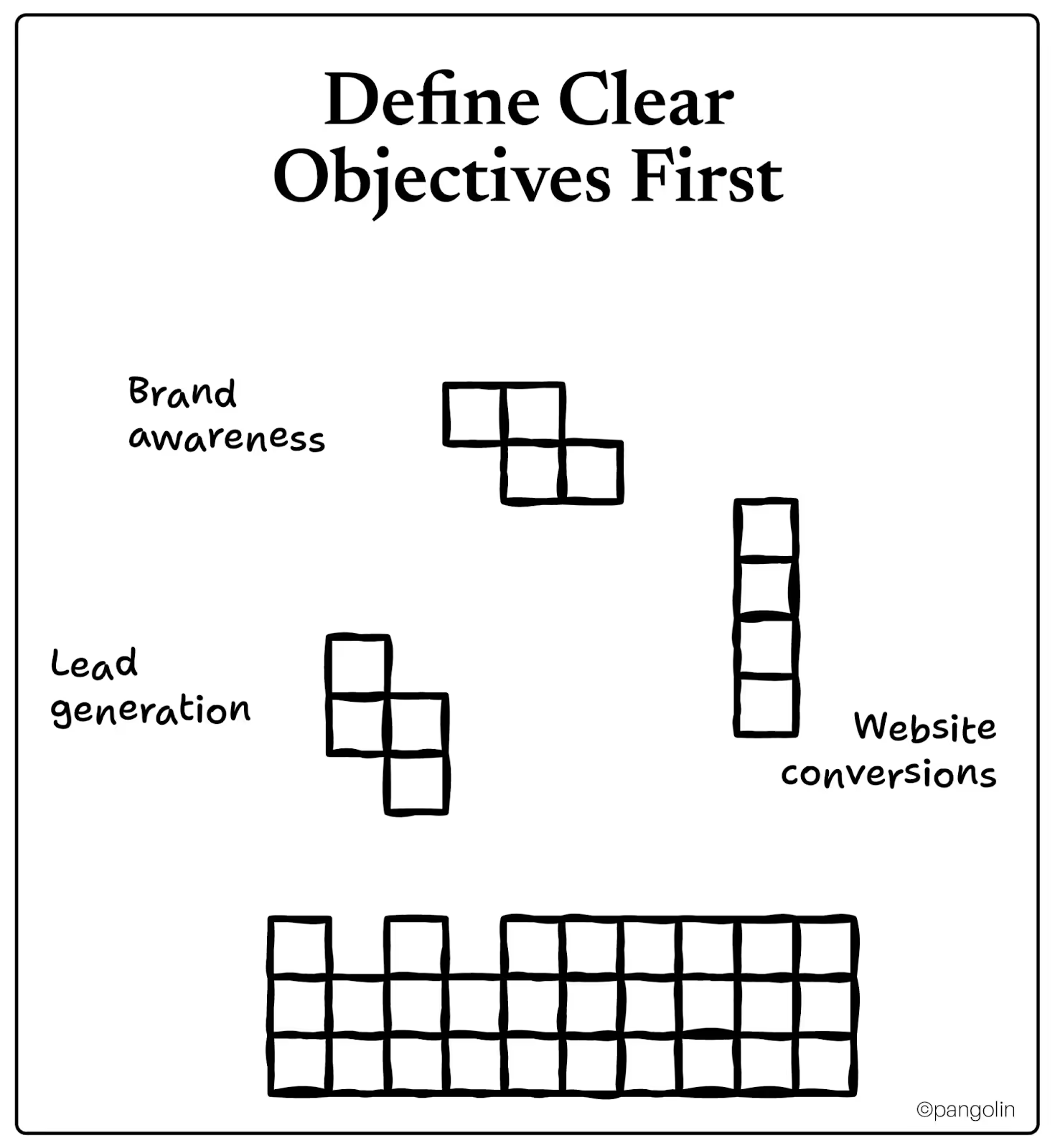
Define Clear Objectives First

​​

‘Define Clear Objectives First,’ showing Tetris-like blocks labeled Brand awareness, Lead generation, and Website conversions floating above a partially built block foundation.

Brand awareness:​

  • Goal: Impressions, reach, engagement
  • Ad format: Sponsored Content, Video Ads
  • Audience: Broad targeting (all IT decision-makers in your region)

Lead generation:​

  • Goal: Form fills, demo requests, content downloads
  • Ad format: Lead Gen Forms + Message Ads
  • Audience: Precise targeting (specific job titles, company sizes, industries)

Website conversions:​

  • Goal: Trial signups, quote requests
  • Ad format: Retargeting campaigns with Lead Gen Forms
  • Audience: Website visitors, engaged prospects

The mistake: Running all objectives in one campaign. Separate them.​

Budget & Bidding Strategy

Minimum requirements:​

  • Daily budget: $10 per campaign minimum (LinkedIn requirement)
  • Recommended: $25-$50/day minimum for meaningful data
  • Campaign lifetime budget: $100 minimum

Starting budget for IT consulting:​

  • Testing phase: $1,000-$2,000/month ($50/day)
  • Optimization phase: $3,000-$5,000/month ($100-150/day)
  • Scaling phase: $5,000-$15,000/month ($150-500/day)

Bidding options:​

  • Automated bidding: Let LinkedIn optimize (good for beginners)
  • Manual CPC: Control exact cost per click (advanced)
  • Manual CPM: Pay per 1,000 impressions (brand awareness campaigns)

Optimization tip: Start automated, switch to manual once you have 2-4 weeks of data.​

Campaign Structure

One objective per campaign​

Example structure:​

  • Campaign 1 (TOFU): Sponsored Content promoting case study (broad awareness)
  • Campaign 2 (MOFU): Video ad retargeting website visitors (consideration)
  • Campaign 3 (BOFU): Lead Gen Form with demo offer (decision)

Ad variations: 3-5 per campaign for A/B testing​

The full-funnel approach that works:​

MobyCap's winning structure:​

  1. TOFU: Video ads showcasing expertise (awareness)
  2. MOFU: Retargeting engaged viewers with comparison content (consideration)
  3. BOFU: Lead Gen Forms offering consultations (conversion)

Result: 1,733% more conversions.​

Advanced Tactics: ABM, Retargeting & Video Influence

Account-Based Marketing (ABM) for Enterprise Deals

What it is: Target specific companies you want as clients.​

How to set it up:​

  1. Create list of 50-200 dream accounts (companies you want to win)
  2. Upload to LinkedIn Matched Audiences
  3. Layer with decision-maker job titles (CIO, CTO, CFO)
  4. Create personalized campaigns referencing their industry/challenges

When it works best: Enterprise deals (500+ employee companies), high-value targets, strategic accounts.​

Case study: B2B tech firm used ABM retargeting for decision-makers who viewed product pages, 30% conversion improvement, CPL dropped from $120 to $64.​

The messaging shift:​

  • Generic: "IT Consulting for Healthcare Companies"
  • ABM: "IT Modernization for 500+ Bed Hospital Systems Like [Target Account]"

Retargeting Sequences That Convert

The three-touch sequence:​

Touch 1 (Awareness): Sponsored Content with thought leadership

  • Audience: Broad IT decision-makers
  • Content: "5 IT Modernization Trends for Manufacturing in 2025"
  • Goal: Website visits, engagement

Touch 2 (Consideration): Retarget engaged visitors with case study

  • Audience: People who viewed blog, watched 50%+ of video
  • Content: "How [Manufacturing Client] Reduced IT Costs 35%"
  • Goal: Deeper engagement, consideration

Touch 3 (Decision): Message Ad or Lead Gen Form with offer

  • Audience: Website visitors, case study viewers
  • Content: "Get Your Free IT Cost Assessment, Identify $100K+ in Savings"
  • Goal: Lead capture, demo booking

The ROI impact: Retargeting slashes CPL by 40-60% while improving lead quality.​

Technical setup:​

  1. Install LinkedIn Insight Tag on website
  2. Create retargeting audiences (visitors to specific pages)
  3. Minimum audience size: 300 members
  4. Build campaigns targeting these audiences

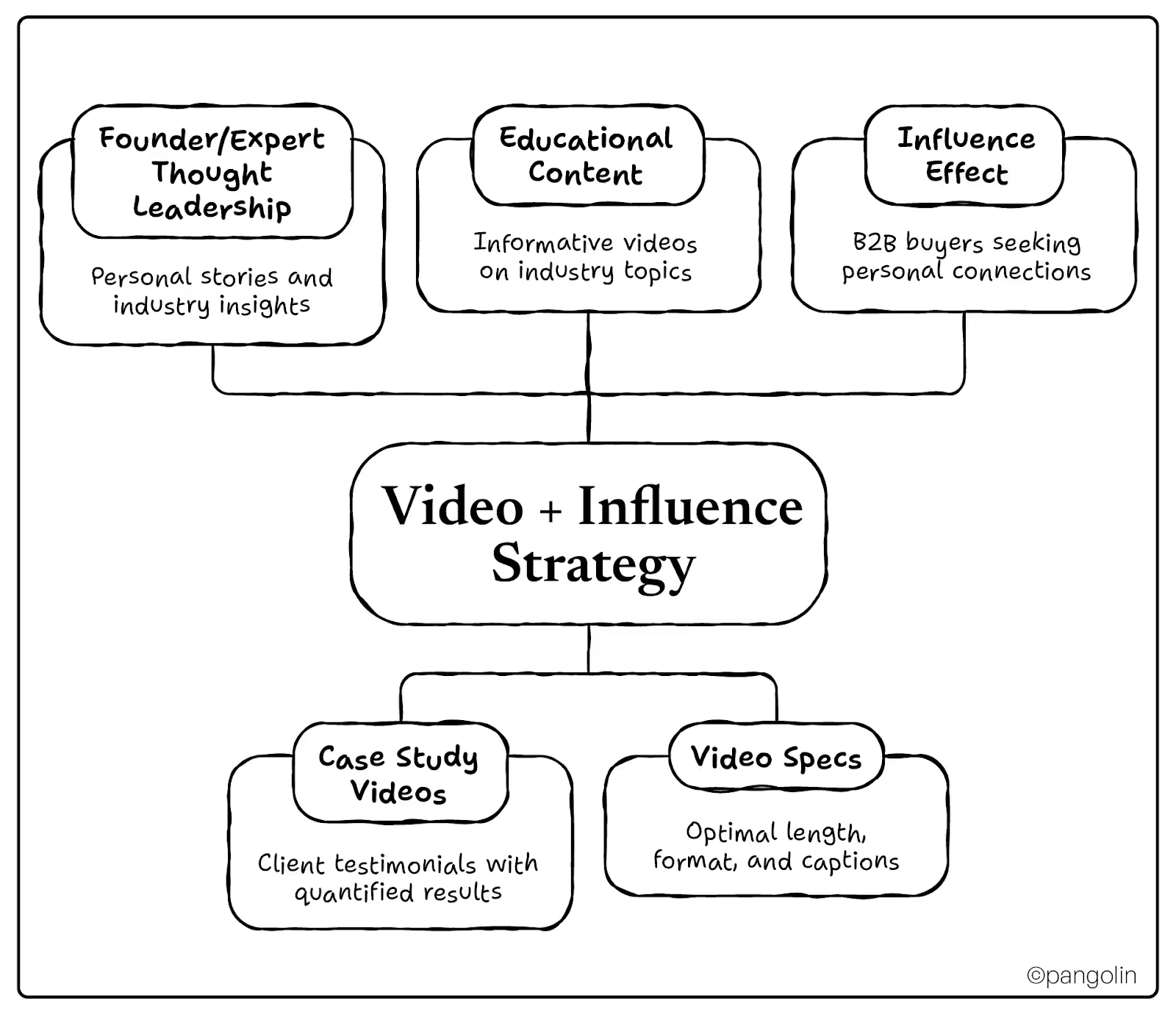
Video + Influence Strategy (2025 Trend)

Why video matters: 2025 B2B marketing benchmark shows video + influence builds trust and accelerates deals.​

Flowchart labeled ‘Video + Influence Strategy,’ linking boxes for Founder/Expert Thought Leadership, Educational Content, Influence Effect, Case Study Videos, and Video Specs.

Three video types that work:​

1. Founder/Expert Thought Leadership:​

  • Personal stories, industry insights, predictions
  • Builds authority and trust
  • Example: Brij's founder-led LinkedIn content influenced 50% of deals, drove 10X revenue growth​

2. Case Study Videos:​

  • Client testimonials with quantified results
  • "How we helped [Client] achieve [Outcome]"
  • Show real people from client companies

3. Educational Content:​

  • "How to Choose an IT Consulting Firm"
  • "5 IT Mistakes Manufacturing Companies Make"
  • "What Your IT Assessment Should Include"

Video specs:​

  • Length: 30-90 seconds optimal (attention span reality)
  • Format: 16:9 aspect ratio, 1920×1080 resolution
  • Captions: 85% watch without sound, add text overlay

The influence effect: B2B buyers want to know who they're working with, not just what company.​

Measurement & Optimization: The 90-Day Cycle

KPIs That Actually Matter

Awareness metrics (if running TOFU campaigns):​

  • Impressions
  • Reach
  • Video view rate (25%, 50%, 75% completion)

Engagement metrics:​

  • CTR: 0.44-0.65% benchmark for Sponsored Content​
  • Engagement rate: Likes, comments, shares
  • Social actions per impression

Conversion metrics (the ones that matter most):​

  • Lead Gen Form completion rate: 13% benchmark​
  • CPL: $125 benchmark for IT/Software​
  • Cost per conversion
  • Conversion rate (clicks to conversions)

Revenue metrics (what CFOs care about):​

  • Marketing-influenced revenue
  • ROI: Revenue / ad spend
  • Customer acquisition cost (CAC)
  • Sales cycle length (track if LinkedIn shortens it)

Stop tracking: Impressions, reach, profile visits, unless you're paid by impressions.​

The A/B Testing Framework

Test one variable at a time:​

  • Headlines
  • Images/videos
  • CTAs
  • Ad copy
  • Audience segments
  • Offer types

Testing requirements:​

  • Run for 2-4 weeks minimum (statistical significance)
  • Need 100+ conversions per variation for reliable results
  • Don't kill tests early, let them run full duration

What to test first:​

  1. Week 1-2: Headlines (biggest impact on CTR)
  2. Week 3-4: Images/videos (second biggest impact)
  3. Week 5-6: CTAs (impacts conversion)
  4. Week 7-8: Audience segments (who responds best)

Case study: Grant Thornton continually tested creative design and messaging, contributing to 20% more qualified leads YoY.​

Optimization Tactics by Performance Level

Campaign level:​

  • Pause campaigns with CTR <0.3%​
  • Reallocate budget from low to high performers​
  • Increase bids on high-converting audiences, decrease on low​

Audience level:​

  • Refine based on who actually converts
  • Example: Grant Thornton narrowed from broad "Accounting & Finance" to "0-3 years experience", improved results 20%​

Creative level:​

  • Rotate 3-5 ad variations, pause lowest performers​
  • Refresh creative monthly to combat ad fatigue​
  • Test new angles based on seasonal trends, client wins

The refresh cycle: New creative every 4-6 weeks to avoid ad fatigue.​

LinkedIn Campaign Manager Tools

Media Planner:​

  • Model campaigns before launch
  • Predict reach, impressions, leads, cost-per-result
  • Test different audience/budget scenarios
  • Save and share plans with team

Conversion Tracking:​

  • Install LinkedIn Insight Tag on website
  • Track actions: form fills, demo requests, purchases
  • Attribute conversions to specific campaigns

Analytics Dashboard:​

  • Real-time performance monitoring
  • Demographic breakdowns (who's engaging)
  • Placement performance (feed vs sidebar)
  • Time-of-day/day-of-week analysis​

Real-World Proof: Case Studies That Changed the Game

MobyCap: 1,733% More Conversions in 11 Months

Company: Specialty lender managing $1B+ in assets​

Challenge: Rising CPCs, lead quality misalignment, inconsistent performance​

Strategy:​

  • Full-funnel approach: TOFU video ads, MOFU retargeting, BOFU Lead Gen Forms
  • Strategic budget allocation with manual bidding
  • Advanced lead flow automation (CRM integration with auto-routing)

Results (11 months):​

  • 1,733% more conversions
  • 800% increase in qualified leads
  • 82% lower cost per conversion

Key lesson: Systematic full-funnel approach outperforms random tactics.​

Grant Thornton: 20% Lower CPL, 20% More Qualified Leads

Company: Global consulting firm​

Challenge: Sporadic LinkedIn Ads usage; gap between targeting and ideal customer profile​

Strategy:​

  • Optimized messaging and creative continually
  • Narrowed targeting from broad "Accounting & Finance" to "0-3 years experience"
  • Tested creative design best practices; featured people imagery

Results (1 year):​

  • 20% more qualified leads YoY
  • 20% lower cost per lead
  • Built compelling business case for always-on LinkedIn Ads

Key lesson: Precision targeting beats broad reach.​

CA Technologies: 68% CPL Reduction with Personalization

Company: Enterprise software (now Broadcom)​

Challenge: Disappointing click conversion rates on other channels​

Strategy: Personalized Dynamic Ads matching member profile images to brand assets​

Results:​

  • 68% reduction in CPL
  • Brisk increase in conversions
  • Highly engaging personalized experience

Key lesson: Personalization dramatically improves performance.​

VistaVu Solutions: One-Fifth Industry CPL

Company: Oilfield software provider (niche B2B)​

Challenge: Reaching very specific niche audience (oilfield services)​

Strategy: Sponsored Content + Message Ads targeting specific job category​

Results (first week):​

  • 19 of 20 leads moved to sales as qualified
  • CPL at one-fifth typical benchmark

Key lesson: Niche targeting works exceptionally well for specialized B2B.​

The 90-Day LinkedIn Ads Launch Plan

Month 1: Foundation (Weeks 1-4)

Week 1-2: Research & Strategy

  • Define campaign objectives (brand awareness, lead gen, conversions)​
  • Identify buyer personas (CIO, CTO, CFO, IT Director)​
  • Map buyer journey (TOFU → MOFU → BOFU)​
  • Research competitors' LinkedIn presence​
  • Document pain points by vertical (manufacturing, healthcare, financial)​

Week 3-4: Setup & Creative

  • Set up Campaign Manager account​
  • Install LinkedIn Insight Tag for conversion tracking​
  • Create 3-5 ad variations per campaign​
    • Test headlines, images, CTAs
    • Tailor messaging to verticals
  • Build Lead Gen Form templates​
    • 3-4 fields maximum
    • Add 1-2 qualifier questions
  • Integrate CRM for lead routing (Salesforce, HubSpot)​

Deliverable: Campaign strategy document, creative assets, tracking setup​

Month 2: Launch & Test (Weeks 5-8)

Week 5-6: Campaign Launch

  • Launch TOFU campaign: Sponsored Content with case study (broad awareness)​
  • Launch BOFU campaign: Lead Gen Forms with demo offer (direct response)​
  • Set daily budgets ($25-$50 minimum per campaign)​
  • Start with automated bidding​
  • Monitor daily (don't panic over first week performance)

Week 7-8: Initial Optimization

  • Analyze performance data (CTR, CPL, conversions)​
  • Pause ads with CTR <0.3%​
  • A/B test headlines and images​
  • Refine targeting based on who engages (demographics tab)​
  • Identify best-performing audience segments

Deliverable: Performance report, optimization actions taken​

Month 3: Scale & Optimize (Weeks 9-12)

Week 9-10: Retargeting & Expansion

  • Launch website retargeting campaigns (target page visitors)​
  • Create Matched Audiences: account lists, contact lists​
  • Launch MOFU campaigns: video testimonials, comparison content​
  • Switch top campaigns to manual bidding for control​

Week 11-12: Optimization & Scaling

  • Identify best-performing campaigns/audiences​
  • Reallocate budget to winners (pause losers)​
  • Scale successful campaigns: increase budget 20-30%​
  • Refresh creative on campaigns showing fatigue​
  • Document playbook for repeatable process​

Deliverable: Optimized campaign structure, performance benchmarks, scaling roadmap​

Premium Platform, Premium Results

LinkedIn ads for IT consulting aren't cheap. At $125-$350 per lead, they're 3-5X more expensive than Facebook.​

But here's what that $150 buys you:​

  • Access to 63M decision-makers with budget authority
  • Targeting precision down to "CIO at 500+ employee manufacturing companies in Chicago"
  • Conversion rates 2X higher than other platforms
  • Lead quality 3X better than Facebook
  • 80% of buyers who actually make IT purchasing decisions

The IT consulting firms winning on LinkedIn in 2025 aren't the ones spending the most. 

They're the ones executing the smartest:​

  • Precise targeting: IT Directors, not "IT professionals"​
  • Full-funnel strategy: Awareness → Consideration → Decision​
  • Lead Gen Forms: 13% conversion vs 2.35% landing pages​
  • Retargeting: 40-60% lower CPL for warm prospects​
  • Continuous optimization: Test, measure, refine every 2-4 weeks​

Your 90-day action plan:

  1. Week 1-4: Define strategy, set up Campaign Manager, create Lead Gen Forms, integrate CRM​
  2. Week 5-8: Launch TOFU + BOFU campaigns with $50/day budget, A/B test creative​
  3. Week 9-12: Add retargeting, scale winners, optimize based on conversion data​

The case study proof:​

  • Grant Thornton: 20% lower CPL, 20% more qualified leads
  • CA Technologies: 68% CPL reduction with personalization
  • MobyCap: 1,733% more conversions, 800% increase in qualified leads

The question isn't "Should IT consulting firms use LinkedIn ads?" It's "Can you afford to be invisible where 80% of IT decision-makers are researching solutions?"​

The answer is no.

Now build your LinkedIn lead generation machine.

FAQs

What's a realistic cost per lead for IT consulting on LinkedIn?
Why are LinkedIn ads so much more expensive than Facebook?
Which LinkedIn ad format works best for IT consulting lead generation?
Should I use Lead Gen Forms or send traffic to my website landing page?
How do I target CIOs and CFOs instead of random IT professionals?
What's the minimum budget to run LinkedIn ads effectively?
How long does it take to see results from LinkedIn ads?
Can you show me real IT consulting firms that made LinkedIn ads work?
What's the best way to prove LinkedIn ads ROI when consulting deals take 6-12 months?
How do I avoid wasting budget on job seekers and unqualified clicks?
What should I test first in my LinkedIn ad campaigns?
Should I use Sponsored Content, Message Ads, or Conversation Ads?
How does retargeting work on LinkedIn and why does it matter?
What's the difference between targeting by job title vs job function + seniority?
How often should I refresh my ad creative to avoid fatigue?
Tags
Campaign Optimization
Campaign Strategy
Industry
B2B SaaS
B2B Tech