

In November 2024, an emperor penguin nicknamed Gus showed up on a beach in Western Australia, over 2,000 miles from Antarctica. He was exhausted, underweight, and completely lost. Scientists still don't know why he made the journey, but one thing was clear: he'd wandered far outside his natural habitat and had no idea how to get back home.
Your IT services company might feel the same way right now.
You've got the technical chops. Your managed services keep clients running smoothly. Your cybersecurity expertise is rock-solid. But when decision-makers in Dallas, Denver, or Detroit search for "managed IT services near me," you're nowhere to be found. You're swimming in unfamiliar waters, watching competitors with inferior services dominate the Google Map Pack while you remain invisible.
Here's the thing: 46% of all Google searches are local. When someone searches for IT services, they're not just browsing, they're hunting for a provider they can trust in their area. And if you're not showing up in those searches, you're leaving money on the table. Every. Single. Day.
The gap between your technical expertise and your local visibility isn't a reflection of your capabilities. It's a positioning problem. And unlike Gus the penguin, you don't need to swim 2,000 miles to fix it.
This guide shows you exactly how IT services companies can dominate local search in US markets, even without physical offices in every city you serve. We're talking real strategies that drive qualified leads, not generic SEO advice designed for pizza shops and plumbers.
Let's cut through the noise with hard data. 80% of local searches convert into customers. Compare that to the 2-3% conversion rate most online advertising delivers, and you'll see why local SEO is pure gold for IT companies.
Here's what's happening right now in your target markets:
For IT services companies, this creates a massive opportunity. While your competitors are still relying on referrals and cold outreach, decision-makers are actively searching for exactly what you offer. The question isn't whether they're looking, it's whether they can find you.
Most local SEO content assumes you're running a brick-and-mortar business with a physical storefront. But IT services companies operate differently. You're a service area business (SAB), you serve multiple cities without needing offices in each location.
This creates unique challenges:
The traditional "claim your listing and add some photos" approach won't cut it. You need strategies designed specifically for B2B service providers targeting multiple US markets.
Here's where things get really interesting, and where most IT companies are falling behind.
We've moved from Local 1.0 (basic citation management) through Local 2.0 (mobile-first optimization) into Local 3.0: AI-powered, intent-driven search.
60% of consumers now click on AI-generated overviews in Google Search. But here's the kicker: only 62% of generative engine results overlap with traditional Google rankings. That means if you're not optimizing for AI search engines like ChatGPT Search and Google AI Overviews, you're invisible to nearly 40% of potential customers using these platforms.
Add voice search into the mix, where 46% of users look up local businesses daily, and you've got a completely transformed search landscape. The IT companies winning in 2025 aren't just ranking in traditional search; they're showing up everywhere their prospects are looking.
Local SEO positions IT services companies as accessible partners, not faceless enterprises. It builds credibility before the first conversation even happens.
Google Business Profile signals account for up to 32% of all local ranking factors. Let that sink in. Nearly one-third of your local visibility comes down to how well you've optimized this single, free platform.
Yet most IT services companies treat their GBP like an afterthought, incomplete information, generic descriptions, no photos, zero engagement. Meanwhile, their competitors with properly optimized profiles are capturing leads they should be winning.
The data is clear: Customers are 70% more likely to visit and 50% more likely to purchase from businesses with complete Google Business Profiles.
Here's your step-by-step game plan:
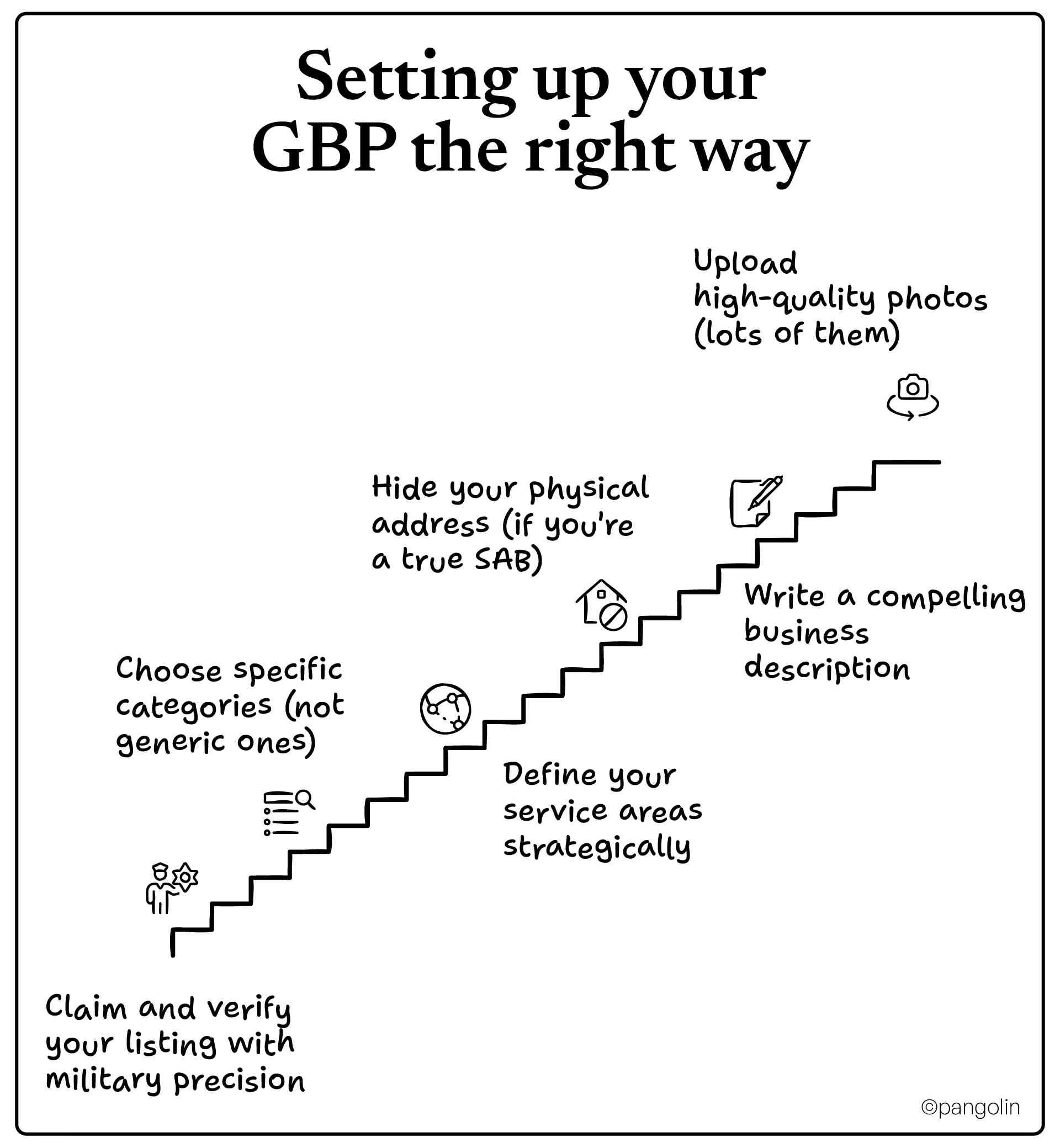
Use your actual business information, no shortcuts, no approximations. Google's algorithm is sophisticated enough to detect inconsistencies, and they'll tank your rankings for it.
Don't select "IT Services" and call it a day. Use precise categories like:
Each specific category helps Google understand exactly what you offer and when to show your business to searchers.
You can specify up to 20 service area zones within one metro region. But here's the important part: only list areas you genuinely serve. Google is cracking down on spam, and claiming service areas where you have no real presence will backfire.
If customers don't visit your office, hide the address and focus entirely on service areas. This tells Google you're a mobile or virtual service provider.
Skip the corporate jargon. Your description should:
Businesses with 100+ photos get 520% more calls and 2,717% more direction requests. That's not a typo. Five hundred twenty percent.
Include:
Claiming your profile is step one. Optimizing it for ongoing visibility is where the real work begins.
Google Posts appear directly in your Business Profile and influence local ranking. Share:
75% of consumers expect business responses within 24 hours. For IT services, reviews are especially critical because they build trust in your technical expertise.
Don't wait for prospects to ask questions. Seed your Q&A section with common IT service questions:
This positions you as helpful and thorough before prospects even contact you.
Outdated hours, old phone numbers, or incorrect service listings hurt your rankings. Audit your GBP monthly and update immediately when anything changes.
Here's the paradox IT services companies face: you need to rank in multiple cities to capture leads across your target US markets, but creating location pages without physical presence feels like gaming the system.
It's not, if you do it right.
Service area businesses can absolutely rank in multiple locations. The key is creating genuinely valuable, unique content for each area you serve, not just slapping different city names on templated pages.
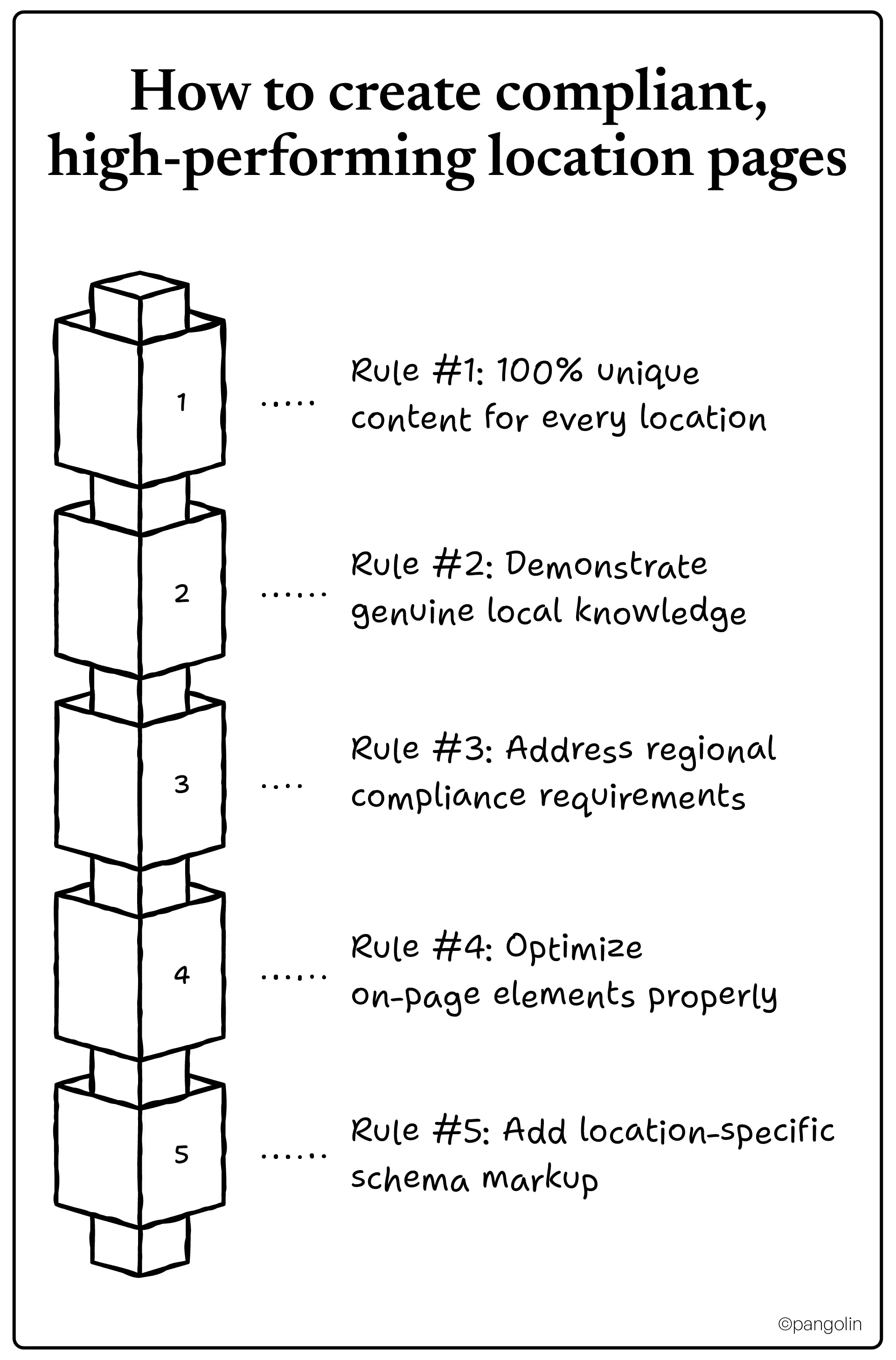
Google's algorithm is smart enough to detect duplicate content, even if you've swapped out city names. Each location page must be genuinely different.
This means:
Don't just say "We serve Austin." Prove it. Show you understand the Austin market:
"Austin's booming tech startup scene creates unique IT challenges. From scaling cloud infrastructure for hypergrowth SaaS companies to ensuring GDPR compliance for firms with European customers, we've helped 40+ Austin-based tech companies build secure, scalable IT foundations."
See the difference? You're not just claiming to serve Austin, you're demonstrating intimate knowledge of the Austin tech ecosystem.
This is where IT services companies have a massive advantage over generic local SEO tactics. Different regions have different compliance needs:
Each location page should address the compliance landscape relevant to that market's dominant industries.
Schema markup helps Google understand your local relevance, which has moved from "nice to have" to critical for AI-powered search. Implement LocalBusiness schema for each service area with:
Don't create pages for areas you don't genuinely serve
Google considers this spam and will penalize your entire domain. Only create location pages where you have real capacity to deliver services.
Don't use identical content with city name swaps
This is duplicate content and will tank your rankings. If you can't write 500+ words of unique, valuable content about serving a specific area, don't create the page.
Don't keyword stuff location names.
"Looking for Denver IT services? Our Denver managed IT services help Denver businesses with Denver-based IT support..."
This reads terribly and Google penalizes it. Use location keywords naturally, the way humans actually talk.
Don't neglect mobile optimization
60% of local searches happen on mobile devices and convert within one hour. If your location pages aren't mobile-friendly, you're losing the highest-intent traffic.
Remember when we mentioned that only 62% of AI-generated results overlap with traditional Google rankings? That's not a future concern, it's happening right now.
Decision-makers are using ChatGPT, Perplexity, Google AI Overviews, and other generative engines to research IT services. If your content isn't optimized for these platforms, you're invisible to a growing segment of your target market.
Traditional SEO focused on keywords and backlinks. AEO focuses on providing direct, structured answers that AI can extract and present to users.
Here's how to optimize:
Create comprehensive FAQ sections
Don't just answer one question and move on. Create deep FAQ content that addresses:
Format answers concisely but completely. AI engines favor clear, direct responses over flowery marketing copy.
Structure content with clear hierarchy
Use proper H2/H3 heading structure that makes information easy to parse, both for humans and AI. Think:
Develop how-to guides and implementation content
AI engines love actionable, educational content. Create guides like:
These position you as the expert while feeding AI engines exactly the kind of content they prioritize.
Use conversational, question-based content
Write the way people actually search and speak. Instead of:
"Network security solutions implementation"
Write:
"How do I protect my business network from ransomware attacks?"
This aligns with both voice search patterns and AI query interpretation.
58% of consumers use voice search to find local business information. For IT services, voice queries often sound like:
Notice how different these are from typed searches? Voice queries average 29 words, much longer than traditional searches.
1. Target long-tail, conversational keywords
Optimize for natural language patterns, not shortened keyword phrases.
2. Focus on question-based content
Structure content around who, what, where, when, why, and how questions relevant to your services.
3. Include location-specific answers throughout your content
Don't just mention the city in your title. Reference local landmarks, business districts, and regional characteristics throughout your content.
4. Ensure mobile optimization is flawless
Voice searches happen on mobile devices. If your site isn't mobile-optimized, you've already lost.
5. Get your GBP voice-search-ready
Voice assistants pull heavily from Google Business Profiles. Complete, accurate profiles with reviews and Q&A improve voice search visibility.
Schema markup has moved from moderate importance to critical for AI-powered search. It helps Google, and more importantly, AI engines, understand exactly what your business offers.
Essential schema types for IT services companies:
Defines your business type, location, contact information, and service areas. This is foundational.
Specifies each service you offer:
Each service can have its own schema with descriptions, pricing indicators, and service area specifications.
Defines your company, brand, logo, social profiles, and corporate structure.
Structures your FAQ content so it can appear as rich results in search. Critical for AEO.
Displays star ratings directly in search results, improving click-through rates dramatically.
Basic LocalBusiness schema example for IT services:
json
{
"@context": "https://schema.org",
"@type": "LocalBusiness",
"name": "Your IT Company Name",
"image": "https://yoursite.com/logo.jpg",
"@id": "https://yoursite.com",
"url": "https://yoursite.com",
"telephone": "+1-555-123-4567",
"priceRange": "$$",
"address": {
"@type": "PostalAddress",
"streetAddress": "123 Tech Street",
"addressLocality": "Austin",
"addressRegion": "TX",
"postalCode": "78701",
"addressCountry": "US"
},
"geo": {
"@type": "GeoCoordinates",
"latitude": 30.2672,
"longitude": -97.7431
},
"areaServed": [
{
"@type": "City",
"name": "Austin"
},
{
"@type": "City",
"name": "Round Rock"
}
],
"openingHoursSpecification": {
"@type": "OpeningHoursSpecification",
"dayOfWeek": ["Monday", "Tuesday", "Wednesday", "Thursday", "Friday"],
"opens": "08:00",
"closes": "18:00"
}
}
Implement this on every location page, customizing the service areas and contact information accordingly.
NAP stands for Name, Address, Phone number. It sounds basic, but inconsistent NAP information tanks local rankings.
Here's why it matters: Business directories make up 37% of organic search results for local-intent searches. NAP citations are trust signals for both traditional algorithms and AI/LLMs analyzing your business.
Even minor inconsistencies hurt you:
NAP audit checklist:
Build citations systematically across:
General directories:
Industry-specific directories:
Local directories:
The key is consistency and accuracy, not volume. Ten perfectly consistent citations beat 100 inconsistent ones.
Here's a hard truth: generic "we're a full-service IT provider with extensive expertise" messaging makes you invisible. Every IT services company says this. It's background noise.
Decision-makers don't want to hear about your "comprehensive solutions." They want to know if you understand their specific challenges in their specific market.
Create in-depth content addressing compliance challenges specific to industries in each target market:
"HIPAA-Compliant IT Infrastructure for Houston Healthcare Providers: A Complete Implementation Guide"
"Data Protection Requirements for California SaaS Companies: CCPA Compliance Checklist"
"Financial Services IT Security: Meeting SEC Cybersecurity Requirements in New York"
This content:
Feature successful client engagements from each service area:
"How We Helped a Denver Fintech Startup Scale from 10 to 100 Employees Without IT Growing Pains"
Include:
Write about technology trends, cybersecurity threats, and IT challenges affecting businesses in specific regions:
"The Rise of Ransomware Targeting Austin Tech Startups: What Local CTOs Need to Know"
"Cloud Migration Trends Among Seattle B2B SaaS Companies: Data from 50+ Local Implementations"
This positions you as a community thought leader, not just a vendor.
Create genuinely helpful guides addressing local business needs:
"IT Disaster Recovery Planning for Miami Businesses: Hurricane Preparedness Edition"
"The Chicago Small Business Guide to Cybersecurity: Addressing Illinois-Specific Threats"
These resources:
Your content needs to work across all discovery channels:
For voice search:
For AI engines:
For human readers:
79% of consumers trust online reviews as much as personal recommendations. For high-value, complex IT services with long buying cycles, this trust is everything.
Think about it from your prospect's perspective: they're considering entrusting you with their entire IT infrastructure, their data security, their business continuity. One bad decision could cost them millions. Reviews provide the social proof that reduces that perceived risk.
Don't leave reviews to chance. Build a systematic process:
Identify optimal asking moments:
Create frictionless review request process:
Segment clients by service area:
Request reviews that mention location when appropriate.
"We'd love to hear about your experience working with our Denver team. Your feedback helps other Colorado tech companies find the right IT partner."
This generates location-specific review content that boosts local relevance.
75% of consumers expect business responses within 24 hours. But for IT services, responses serve a dual purpose: acknowledging the reviewer and demonstrating expertise to everyone reading.
For positive reviews:
"Thank you, [Name]! We're thrilled the cloud migration went smoothly for your team. Maintaining zero downtime during infrastructure transitions is always our top priority, and our Austin team takes pride in that track record. We're here whenever you need us."
Notice how this:
For negative reviews:
"We appreciate the feedback, [Name], and apologize that our response time didn't meet your expectations during the incident last month. We've since implemented a new escalation protocol to ensure P1 tickets get immediate senior engineer attention. I'd welcome the opportunity to discuss this directly, I'll reach out via email today."
This shows:
Every response is a mini case study in how you handle client relationships.
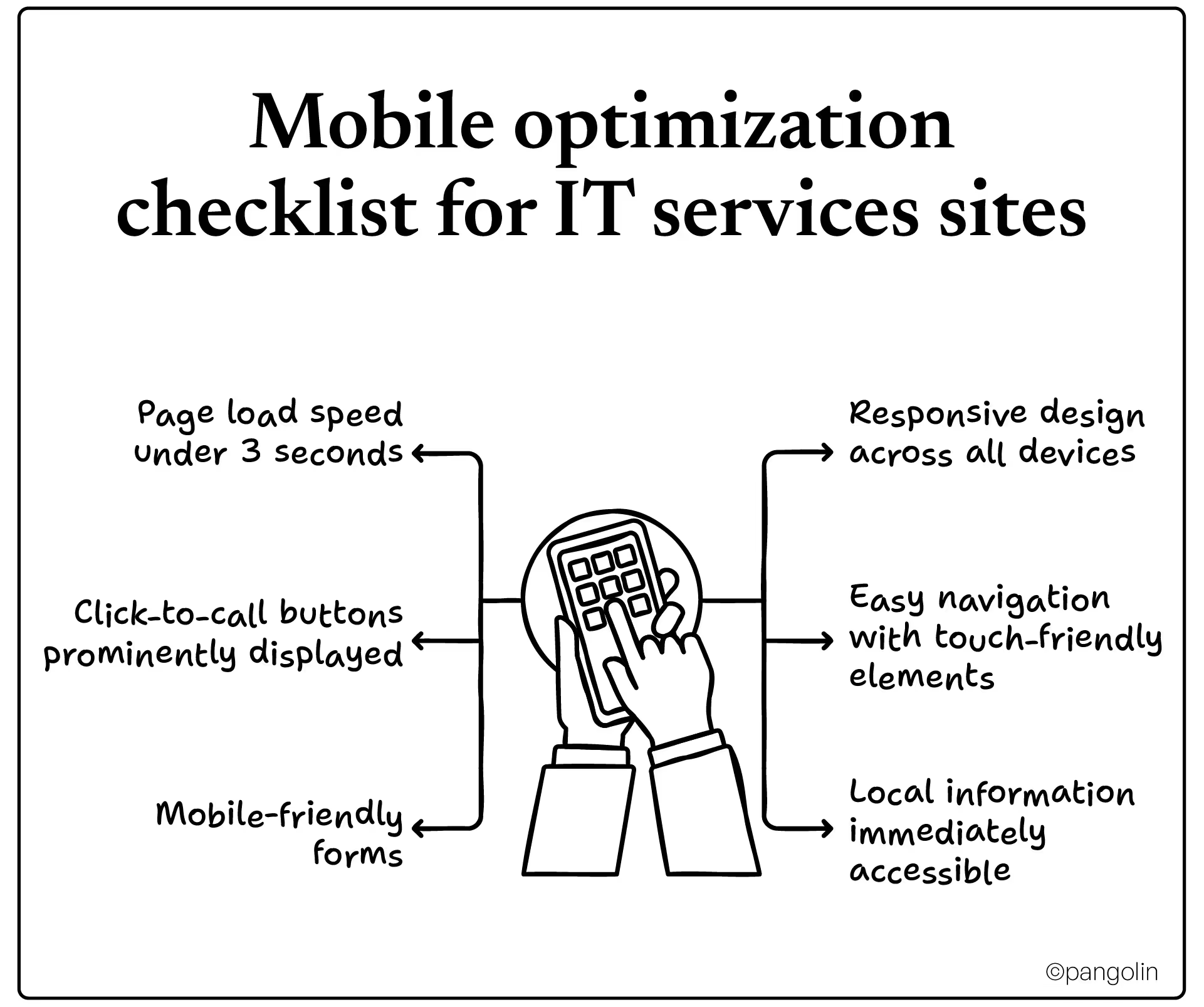
Over 50% of global internet traffic comes from mobile devices. But here's the really important stat for local SEO: 60% of local searches on mobile result in conversion within one hour.
One. Hour.
That means when a CTO searches "managed IT services near me" on her phone while stuck in traffic, she's likely to contact a provider before she even gets back to the office.
If your site isn't mobile-optimized, you're not just losing a visitor. You're losing someone ready to buy right now.
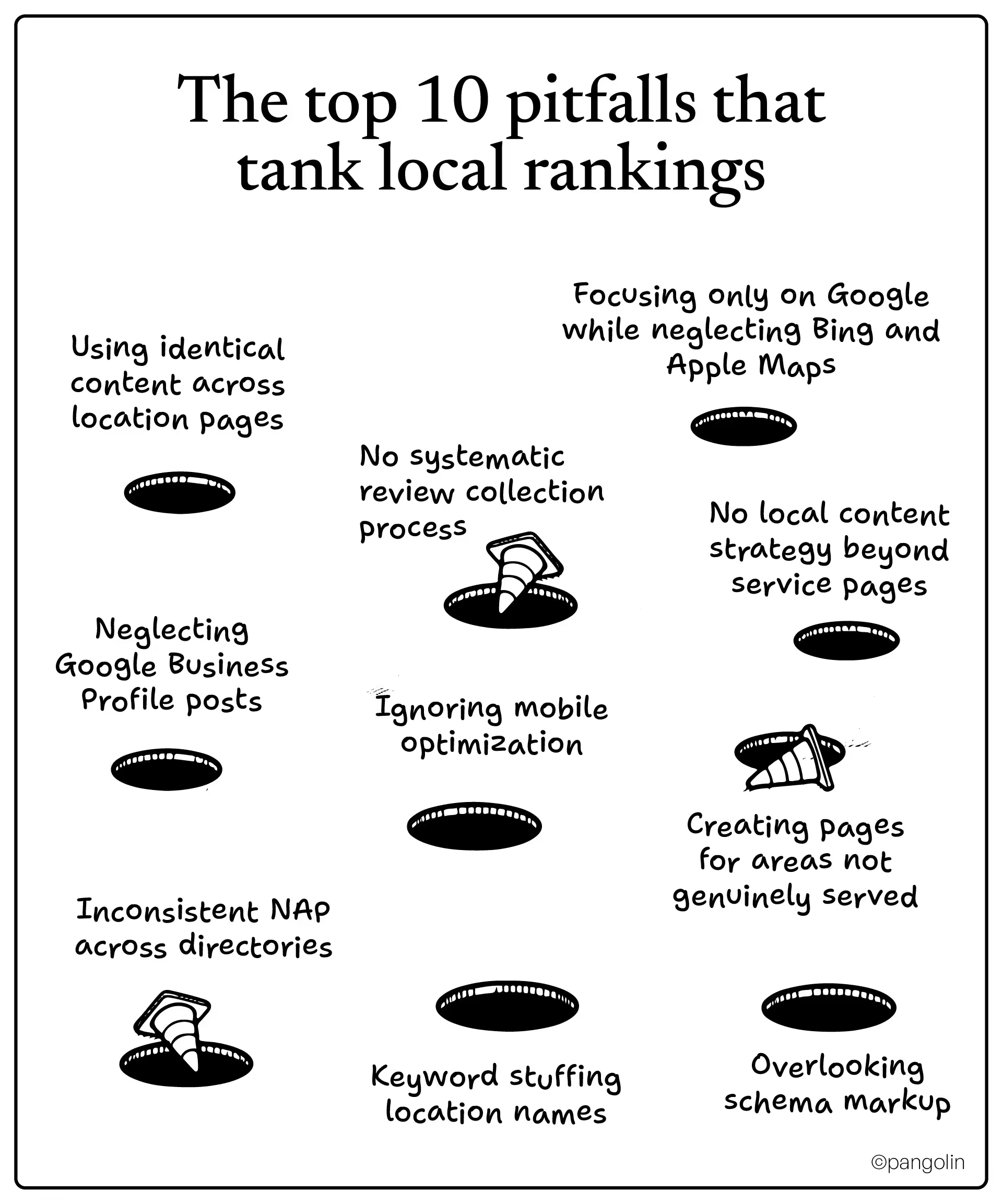
This duplicate content penalty is real and devastating. Google sees it as spam. Write unique content or don't create the page.
Your competitors posting weekly while you posted once in 2023 is costing you rankings and visibility. Set a reminder: post every Monday.
Different phone numbers, address formats, or business name variations confuse Google and hurt rankings. Audit quarterly and fix immediately.
"Denver IT services Denver managed services Denver" reads terribly and gets penalized. Use locations naturally, as humans speak.
With 60% of local searches converting within an hour on mobile, a slow or broken mobile site is revenue suicide.
Reviews happen by accident or not at all. Build a process, train your team, make it systematic.
In an AI-driven search environment, schema is critical, not optional. Implement it properly or hire someone who can.
Google calls this spam and will penalize your entire domain. Only create location pages where you have real service capacity.
Voice assistants use multiple platforms. Optimize for Bing Places and Apple Maps too.
Service pages alone won't build local authority. Create valuable, location-specific educational content.
Local keyword rankings by city/service area
Track your position for primary keywords in each target market:
Segment by location to identify which markets need more attention.
Google Business Profile insights
Monitor monthly:
These insights reveal which GBP optimizations are working.
Organic traffic by city/region
Use Google Analytics with location segmentation to track:
This shows which location pages are actually driving business.
Citation accuracy score
Use tools like BrightLocal or Whitespark to monitor:
Maintain 95%+ accuracy.
Review volume and average rating by location
Track:
Conversion rate from local search traffic
The ultimate metric: how many local searches convert to:
Track by source (Google My Business, organic search, direct) and location.
Map Pack visibility for target keywords
Monitor whether you appear in the local 3-pack for your most important keywords in each city. Remember: 93% of local pack clicks go to the top 3 results.
Remember Gus, the emperor penguin who swam 2,000 miles off course? He eventually got the help he needed, wildlife experts rehabilitated him and he's now swimming back toward Antarctic waters.
Your IT services company doesn't need to swim 2,000 miles. You just need to show up where your customers are already searching.
Local SEO isn't about gaming algorithms or tricking Google. It's about making your genuine expertise visible to decision-makers actively looking for exactly what you offer. When a CTO in Denver searches for managed IT services, or a healthcare administrator in Houston needs HIPAA-compliant infrastructure support, you deserve to be in that conversation.
The shift to Local 3.0, AI-powered, voice-enabled, hyper-personalized search, isn't optional. It's how your prospects find IT services in 2025. IT companies that implement these strategies now gain competitive advantage while others play catch-up.
The question isn't whether your target customers are searching locally. They are, 46% of all Google searches are local.
The question is whether they can find you.

