

In the 1930s, a company called Kutol Products made a putty designed to clean black coal residue off wallpaper. Sales were solid, until oil and gas heaters replaced coal. Suddenly, nobody needed wall cleaner. The company was dying.
Then a schoolteacher discovered kids were using the putty in art class to make Christmas ornaments. Kutol pivoted hard. They removed the cleaning chemicals, added colors and scent, rebranded as Play-Doh, and shifted from industrial cleaning to toys. Today, Hasbro owns the brand with a $14 billion market cap. Over 2 billion cans sold worldwide.
Here's the lesson: Play-Doh didn't survive by choosing between cleaning or toys. They survived by recognizing the putty worked for both, just in different contexts, for different purposes.
That's the exact mistake most IT companies make with SEO and paid ads. They treat them as rivals competing for budget, "Should we invest in SEO or PPC?" But that's the wrong question. The right question is: "How do we make both work together so each multiplies the other's impact?"
Because here's the reality: B2B IT buyers interact with your brand 7-15 times before they qualify as a lead. If you're only visible through organic search OR paid ads, you're missing 50%+ of those touchpoints. And when your competitor appears in both position 1 paid and position 1 organic, capturing 49% of all available clicks, your single-channel strategy isn't just inefficient. It's invisible.
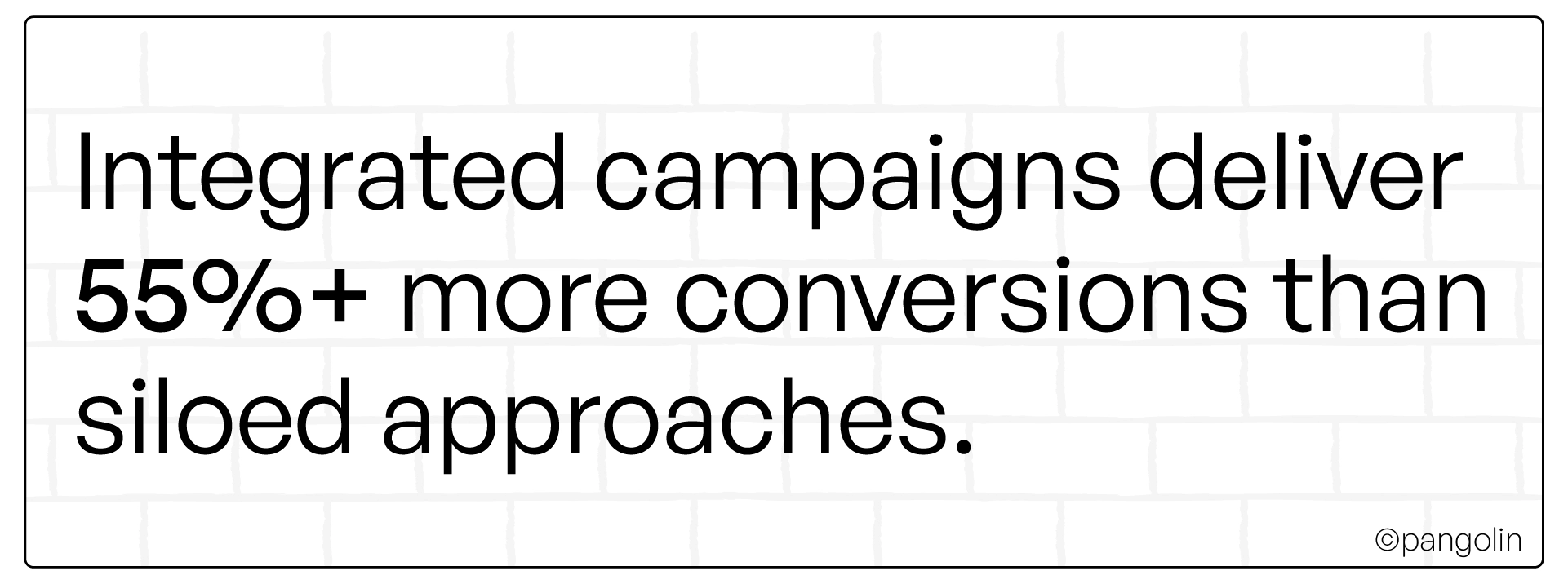
This isn't theory. Integrated SEO + paid strategies deliver 55%+ more conversions than siloed approaches. One IT services company dropped cost per lead by 68% and increased inbound leads 20X by combining both channels.
Let's break down why integration wins, how the math actually works, and the exact playbook to implement it.
Walk into any marketing planning meeting at a tech company, and you'll hear this argument:
The SEO advocate: "PPC is a treadmill. The moment we stop paying, traffic disappears. SEO builds long-term equity. We should invest 80% there."
The PPC advocate: "SEO takes 6 months to show results. We need pipeline now. Paid ads deliver instant visibility and let us target exactly who we want. 80% PPC."
The CFO: "Why are we paying for ads when we already rank on page one organically? Isn't that wasted money?"
Sound familiar?
Here's what's actually happening: 74% of CMOs plan to maintain or increase PPC investment. 80% say the same about SEO. But 71% admit they lack the budget to successfully execute their strategies. So they're forced to choose, and both choices leave money on the table.
Let's kill the myths with facts:
SEO delivers lower cost per lead, once it's established:
PPC delivers speed and precision, when you need it:
But here's the kicker: Companies appearing in both position 1 paid and position 1 organic capture 49% of all clicks, nearly half the available traffic on that search results page.
That's not an advantage. That's dominance.
Look at a Google search results page today. You'll see:
The first organic result, which everyone used to fight for, now gets 27.6% click-through rate. That's 10X better than position 10, but it's not the 40%+ it used to command.
Meanwhile, the top paid ad position gets significant traffic. But here's the magic: When you own both the top paid position AND the top organic position, you capture 49% of all clicks. You're not just visible, you're unavoidable.
B2B IT buyers don't make decisions in one search session. They:
If you're only visible in organic results, you miss everyone searching with high-intent, ready-to-buy keywords. If you're only running paid ads, you're invisible to researchers in the awareness stage who aren't ready to click ads yet.
Single-channel visibility = 50%+ of touchpoints missed.
Upfront reality: SEO requires 3-6 months before you see meaningful traffic. You're paying for content creation, technical optimization, link building, with no immediate pipeline.
Long-term payoff: Once rankings are established, traffic flows for months or years without per-click costs. That $31 cost per lead? It's a blended average. Mature SEO programs often hit $15-20 per lead.
The 500% ROI timeline: Most B2B companies hit 500%+ ROI from SEO within 6-12 months. That's $5 earned for every $1 spent, but only if you can survive the ramp-up period.
Instant gratification: Campaigns go live today. You're generating traffic this afternoon. Pipeline fills within days.
The treadmill problem: When you stop paying, traffic stops immediately. No compounding effect.
The rising costs: Average CPC in IT/SaaS is $3.80, but competitive keywords can hit $20-50 per click. If your conversion rate is 2%, you're paying $190-2,500 per lead. Sustainable? Only if LTV supports it.
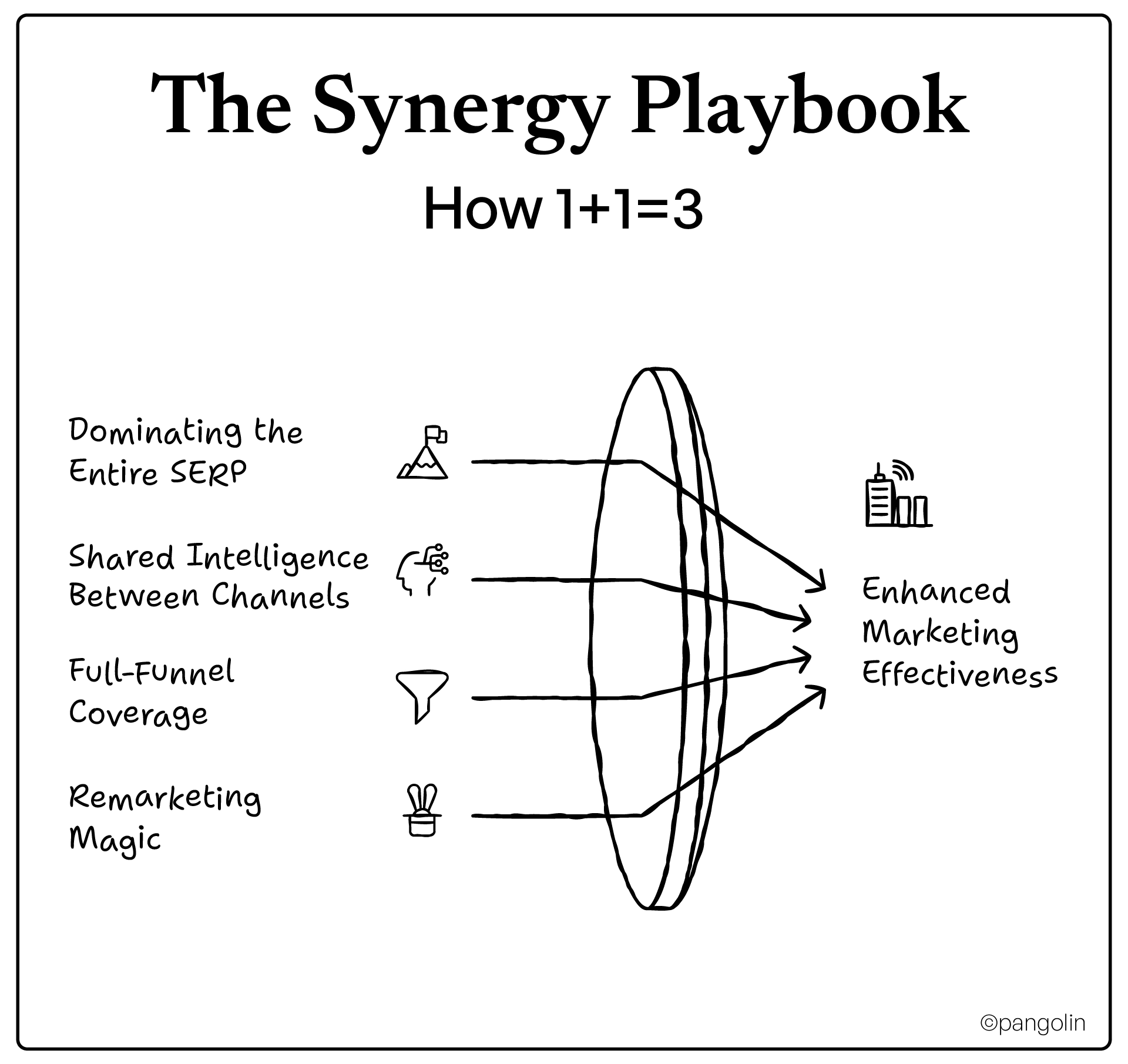
Here's where it gets interesting. When you run both channels together:
Lower blended CAC: One case study showed 68% drop in cost per lead when moving from siloed to integrated approach. Why? Because channels support each other:
Higher conversion rates: Integrated campaigns deliver 55%+ more conversions because prospects see you multiple times across touchpoints. Psychological principle: mere exposure effect. The more someone sees your brand, the more they trust it.
Optimized spend allocation: Test keywords with PPC first (fast feedback loop), then invest in SEO for high-converters (long-term efficiency). This is smarter than guessing which keywords to build content around.
When someone searches "managed IT services Chicago," and your brand appears:
What happens? Trust multiplies.
The prospect thinks: "They're advertising AND they rank organically. They must be the leader in this space." That's not guesswork, it's documented psychology.
The numbers: Appearing in both paid and organic doubles brand recall and increases click-through rates. You're not just getting more traffic. You're getting better quality traffic that's pre-sold on your authority.
Most companies run SEO and PPC in silos. The PPC team bids on keywords. The SEO team creates content. They never compare notes.
The smarter approach:
Use PPC as your keyword testing lab:
Result: You're not guessing which blog posts or service pages to create. You're investing in content that's already proven to drive conversions.
Feed SEO insights back to PPC:
Example: Your SEO team discovers people searching "managed IT services" are really looking for "24/7 IT support for manufacturing." Your PPC team shifts ad copy and landing pages to match that intent. Conversion rate jumps 40%.
Here's how the buyer journey actually works:
Top of Funnel (Awareness):
Middle of Funnel (Consideration):
Bottom of Funnel (Decision):
The kicker: Most buyers don't follow a linear path. They bounce between stages, search multiple times, revisit your site. If you're only visible in one channel, you lose them when they shift stages.
Here's the move most companies miss: Use paid ads to recapture organic visitors who didn't convert.
Someone finds your site through organic search. Reads a blog post. Leaves. They're now in your remarketing audience.
Over the next 30 days, they see your display ads on other sites. Your LinkedIn ads in their feed. Your YouTube pre-roll. They return to your site, this time via a branded search or direct visit. They convert.
Attribution nightmare: Last-click attribution credits the direct visit or branded search. But SEO brought them initially, and paid remarketing brought them back. Siloed reporting misses this.
The fix: Multi-touch attribution shows how channels assist each other. Integrated strategy gets credit for the full journey.
Most successful B2B tech companies follow this pattern:
Stop tracking SEO CAC and PPC CAC separately. Track blended CAC: total marketing spend ÷ total new customers acquired.
Why this matters: A customer who touches both SEO and PPC before converting, which channel gets credit? Both did their job.
Example:
Siloed reporting says: "SEO brought them, PPC brought them, organic branded search closed them." Multi-touch attribution says: "All three touchpoints mattered. Blended CAC = accurate."
Here's how to split a $100K monthly marketing budget using integrated approach:
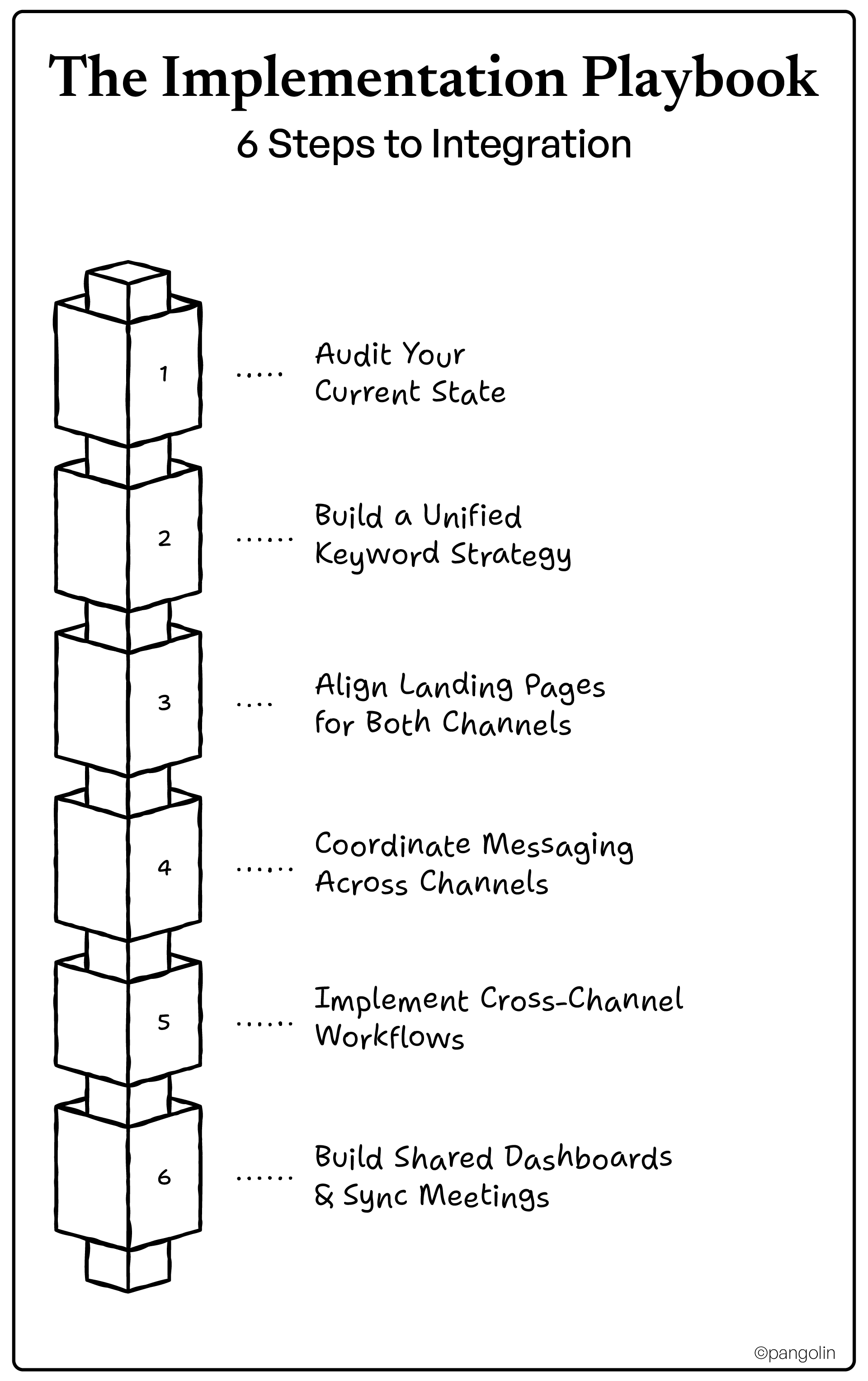
What to assess:
Red flag example: You rank #1 organically for "managed IT services" but you're also bidding $8 per click on that term. You're paying for traffic you'd get free.
Smart exception: If competitors are bidding on your brand term, defensive PPC makes sense to protect position.
Map keywords to buyer journey stages:
TOFU (Awareness) = SEO focus:
MOFU (Consideration) = Both channels:
BOFU (Decision) = PPC focus:
The coordination: SEO builds authority content for TOFU/MOFU. PPC captures high-intent BOFU traffic. Remarketing brings back TOFU/MOFU visitors who didn't convert initially.
Your landing pages need to serve two masters: SEO (ranking factors) and PPC (Quality Score + conversion).
SEO requirements:
PPC requirements:
The integration win: Pages optimized for both rank better AND convert better, lowering your blended CAC.
Nothing kills trust faster than inconsistent messaging.
Bad example:
Good example:
Unified narrative = trust = higher conversion rates.
Remarketing to organic visitors:
PPC audience building from SEO traffic:
Content amplification:
The problem: SEO team uses Google Analytics + Search Console. PPC team uses Google Ads dashboard. CFO sees neither and asks "What are we getting for this spend?"
The solution: Unified dashboard showing:
Weekly sync meetings:
Result: SEO and PPC become one integrated growth engine instead of competing departments.
The strategy: Appear when prospects research your competitors.
SEO approach: Create content targeting "[Competitor Name] alternative" or "Best alternatives to [Competitor]"
PPC approach: Bid on competitor brand terms in paid search
Why it works: Buyers actively comparing options are high-intent. Appearing in both channels when they research competitors captures switching opportunities.
Legal note: Bidding on competitor terms is legal; using their trademarked name in your ad copy is not.
The future: AI analyzes thousands of customer journeys to predict which touchpoints matter most.
Applications:
Early adopters seeing 20-30% efficiency gains.
The play: Coordinate SEO and PPC for seasonal or campaign-driven opportunities.
Example:
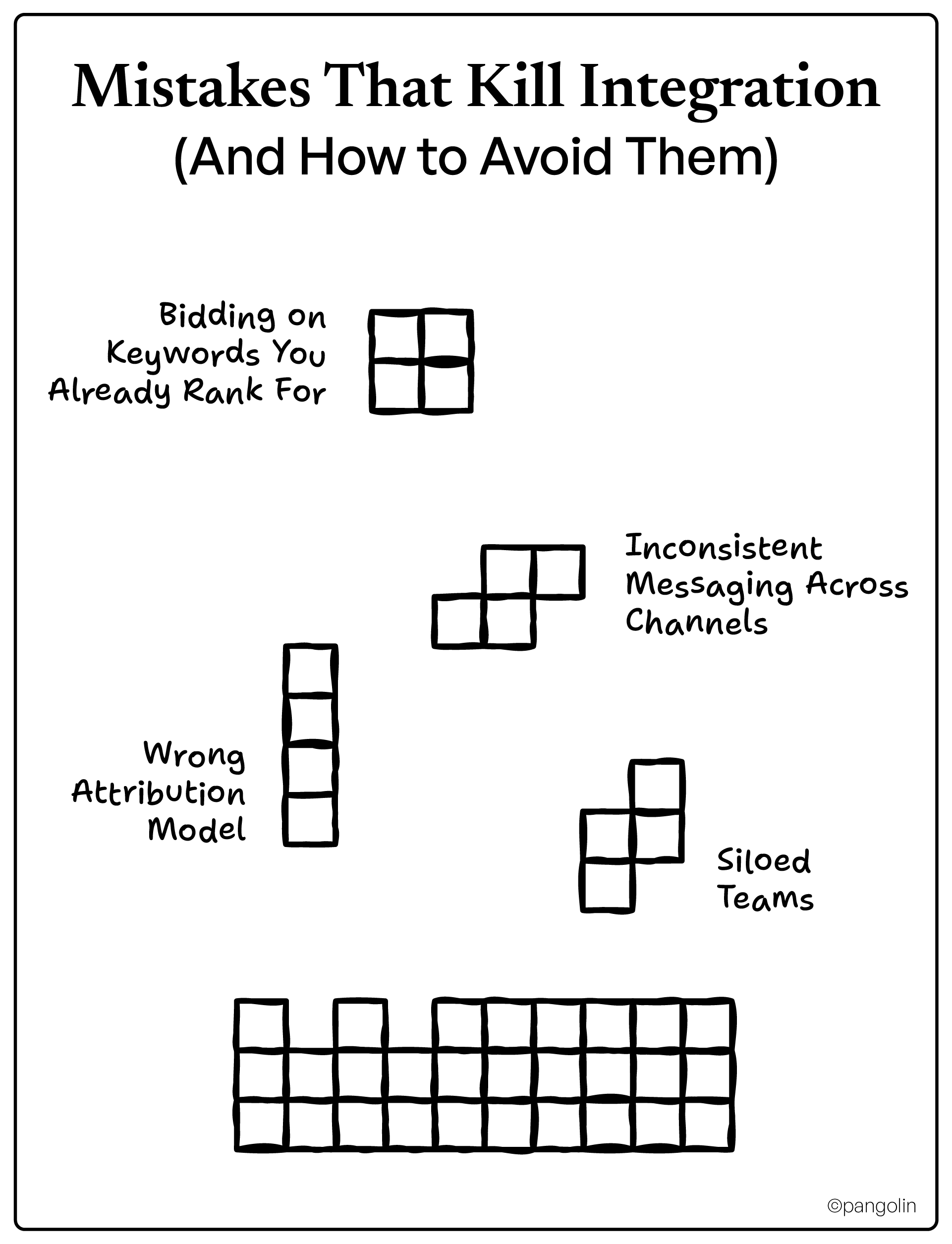
The problem: You're #1 organically for "managed IT services." But you're also paying $8/click to appear in paid ads above your own organic listing.
Why it happens: SEO and PPC teams don't talk.
The fix: Audit keyword overlap monthly. Stop bidding on terms where you own organic position 1-2 (unless competitors are bidding on your brand).
Exception: High-value conversions or competitive threats justify defensive bidding.
The problem: Your PPC ad promises "Free IT Assessment." Your organic landing page has no mention of it. Prospect is confused.
The fix: Unified messaging guidelines. Every channel reinforces same core value props.
The problem: You're using last-click attribution. It says: "80% of conversions came from branded organic search." So you cut PPC budget. Pipeline collapses.
What actually happened: PPC and non-branded SEO drove awareness and consideration. Branded organic search was just the final touchpoint.
The fix: Multi-touch attribution. Give credit to all touchpoints that influenced the conversion.
The problem: SEO team and PPC team report to different managers, have different KPIs, never coordinate.
The result: Wasted budget, missed opportunities, fragmented execution.
The fix: Shared goals (blended CAC, total pipeline), unified dashboards, weekly syncs.
SEO:
PPC:
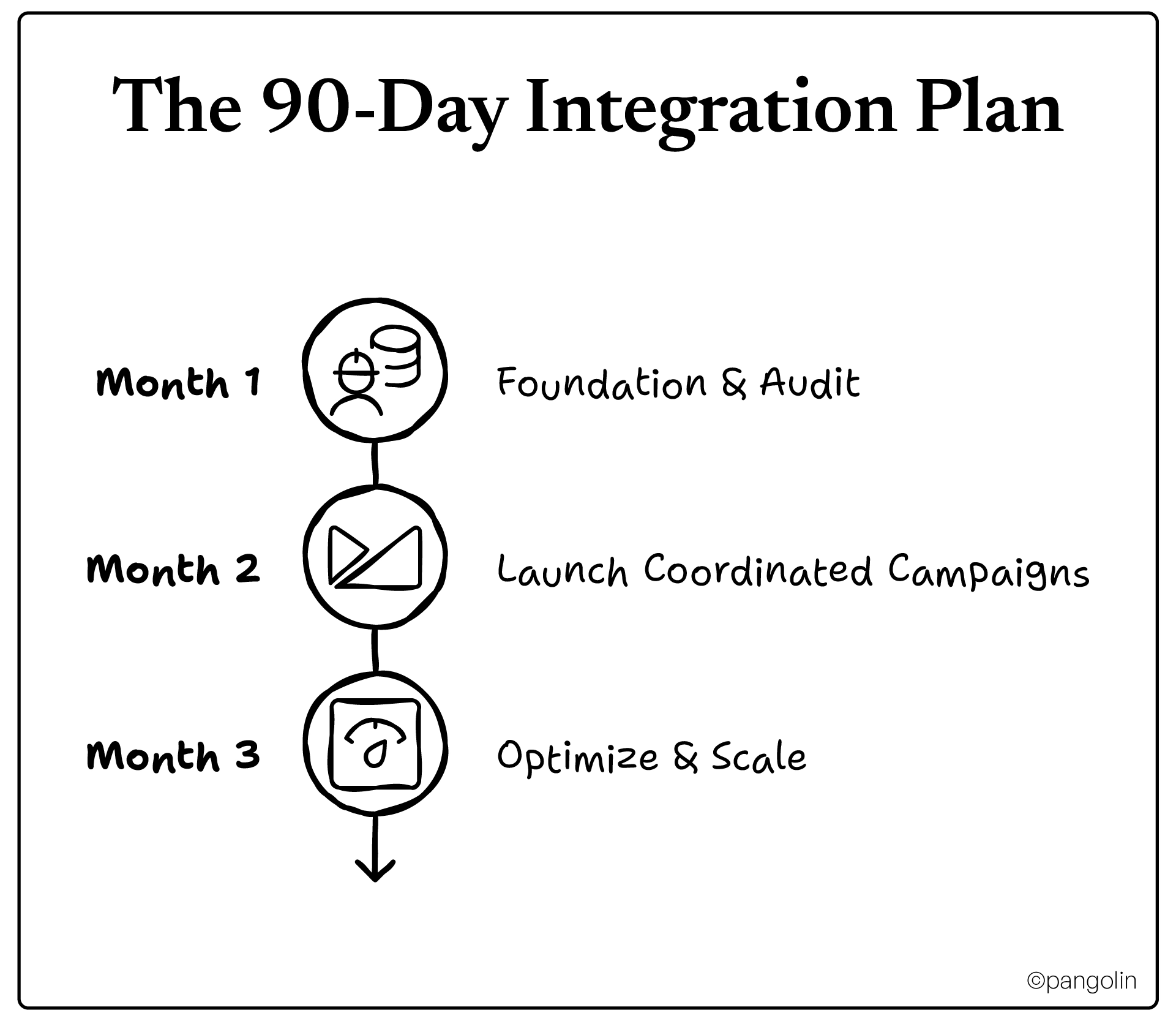
Week 1-2:
Week 3-4:
Week 5-6:
Week 7-8:
Week 9-10:
Week 11-12:
SEO and PPC aren't rivals. They're partners in a multiplication strategy.
SEO builds long-term authority, reduces cost per lead to $31 average, and delivers 500%+ ROI within 6-12 months. But it takes 3-6 months to show results.
PPC provides instant visibility, lets you test keywords before investing in SEO, and captures high-intent buyers ready to convert. But traffic stops when spend stops.
Together? They dominate the SERP (49% of clicks when you own both positions), share intelligence that optimizes both channels, cover the full buyer journey, and deliver 55%+ more conversions than siloed approaches.
The companies winning in 2025 aren't asking "SEO or PPC?" They're asking "How do we make both multiply each other?"
Start here:
Because in B2B IT, where buyers interact with you 7-15 times before converting, the brands that own both paid and organic don't just compete. They dominate while competitors fight over which channel to choose.

