


In March 2025, a baby colossal squid was filmed alive for the first time near Antarctica. For over a century, scientists had only seen dead specimens of these creatures washed up on shores. They knew the adults grew to 7 meters and weighed as much as grand pianos. They'd studied the remains. But they'd never actually seen one thriving in its natural habitat, rotating its medieval-weapon hooks, glowing transparent skin pulsing in the deep ocean.
That's what most IT services companies are doing with lead generation. They're studying dead leads. Analyzing what didn't work. Holding post-mortems on campaigns that flatlined. But they've never actually seen a thriving lead generation system in action, one that adapts to the 84-day sales cycles, multiple stakeholders, and fierce competition that define the IT services world.
Here's the thing: IT services companies generate 3,660 leads per month on average, the highest of any industry. Yet 54.8% still cite lead generation as their top challenge. The problem isn't volume. It's that those leads die before they reach sales. They're not nurtured through the complex buyer journey. They're not scored properly. And when they finally land in a rep's inbox, they're already cold.
This guide isn't about generating more leads. It's about building a lead generation system that actually works for IT services, one that turns curious prospects into qualified opportunities and then into closed deals.
[[divider]]
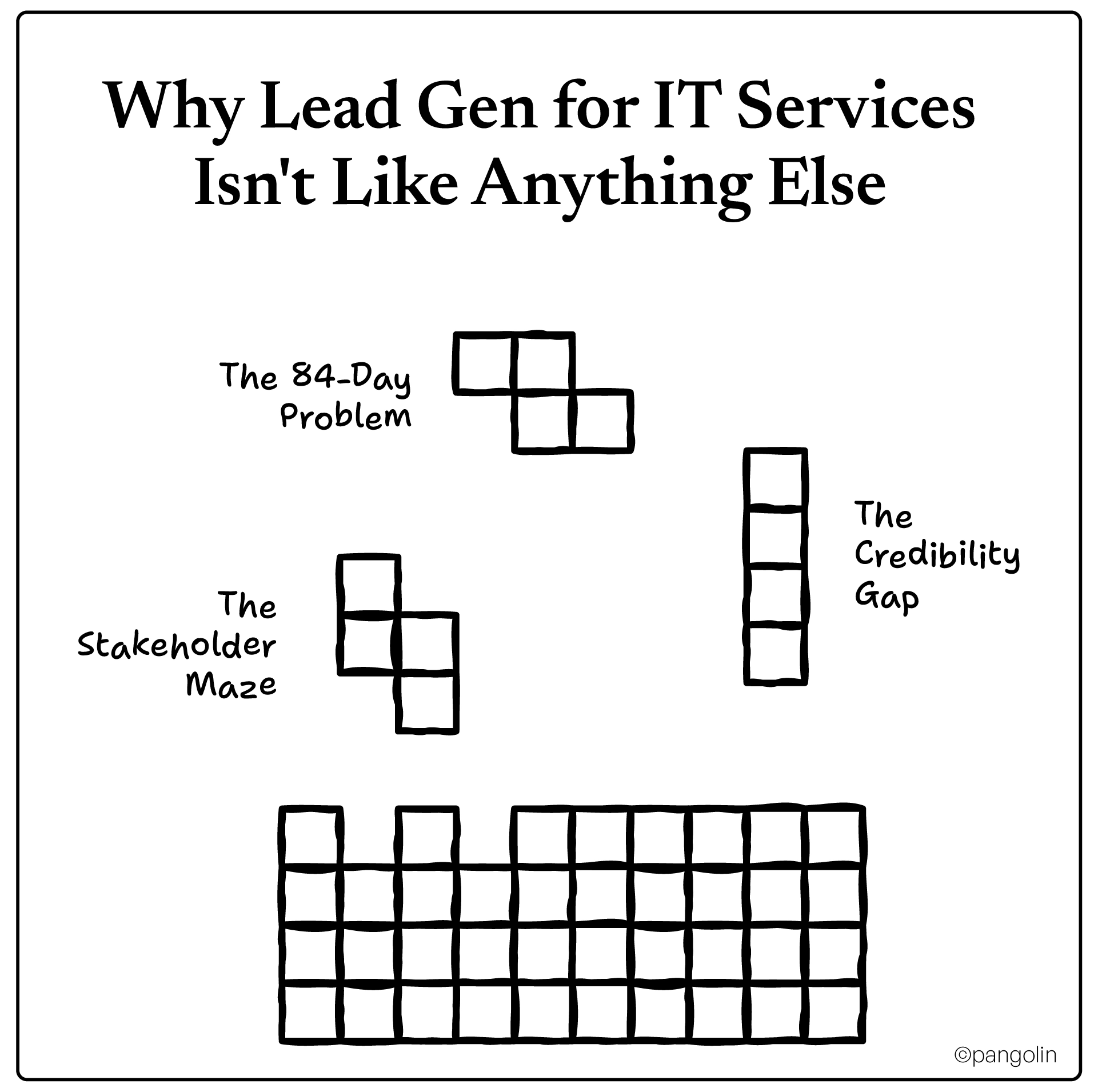
Your average B2B sale takes 84 days. Enterprise IT deals? Try 180+ days. That's not a sales cycle, that's a relationship. And most marketing teams treat it like a transaction.
During those 84 days, your prospect is talking to IT managers about technical fit, CFOs about budget, CEOs about strategic alignment, and procurement about contracts. Each person has different priorities. Each needs different content. And if you're not nurturing them through every stage, your competitor is.
The cost of getting this wrong: Misalignment between sales and marketing extends decision time by 25% and kills 50% of opportunities.
Unlike SaaS products with free trials or physical products with unboxing videos, IT services are invisible until they're delivered. You're asking buyers to trust you with mission-critical operations based on... what? A PDF brochure? A generic case study?
IT buyers need proof. Real proof. Client testimonials from recognizable companies. Technical depth that demonstrates expertise. ROI calculators that quantify value. And content that speaks directly to their vertical, whether that's managed IT for manufacturing or cybersecurity for healthcare.
You're not selling to one person. You're selling to a buying committee that averages 6-10 decision-makers. And here's the kicker: each stakeholder enters the journey at different times.
The IT manager starts researching in month one. Finance joins in month two to ask about budget. The C-suite shows up in month three wanting strategic assurance. Procurement arrives in month four to negotiate terms.
If your lead nurturing isn't mapping to this multi-stakeholder, multi-month journey, you're leaving money on the table.
[[divider]]
What's happening: Your prospect realizes they have a problem. Maybe their current IT provider keeps missing SLAs. Maybe they're drowning in security incidents. Maybe they need to scale operations but don't have internal capacity.
What they need: Educational content that helps them define the problem, not your solution. Think blog posts like "5 Signs Your IT Infrastructure Is Holding You Back" or "The Hidden Cost of Managing IT In-House".
Best tactics:
Key metric: 70-80% of the buyer journey happens before sales engagement begins. If you're not visible here, you don't exist.
What's happening: They're comparing vendors. Downloading comparison guides. Reading case studies. Watching demos. Joining peer groups to ask "Who do you use for X?"
What they need: Proof that you can actually deliver. Not promises. Evidence.
Best tactics:
Why this matters: The average B2B sale requires 7-9 touchpoints. Most IT services companies give up after 2.
What's happening: They've narrowed it to 2-3 vendors. Now it's about de-risking the decision. Can your team deliver? Will you be responsive? What happens if something goes wrong?
What they need: Assurance. Social proof. A pilot or proof-of-concept that removes risk.
Best tactics:
The closer: 75% of B2B companies take at least 4 months to win a new customer. If you're rushing the close, you're scaring them away.
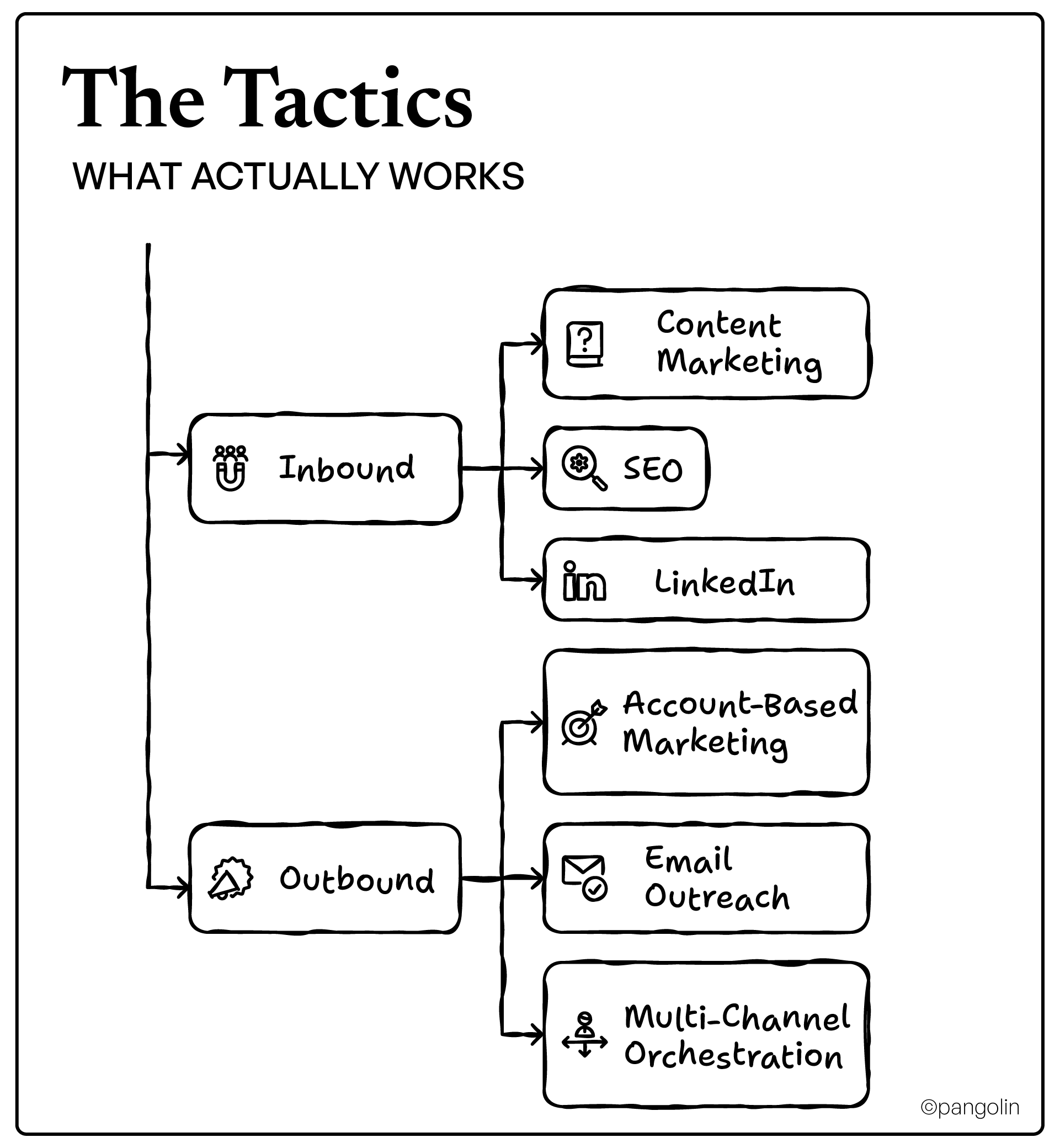
Here's what most IT services companies get wrong: they write about their services. "We offer 24/7 support." "Our team has 20 years of experience." Nobody cares.
Write about their problems. Create content so valuable that prospects would pay for it if you asked.
The data: 91% of B2B marketers use content marketing. But only 76% use it to actually generate leads. The difference? Distribution and conversion optimization.
What works:
SEO delivers the lowest cost per lead at $31 average, vs. $53 for email and $110+ for paid ads. But it takes 6-12 months to see results.
Target long-tail keywords that capture buying intent: "managed IT services for manufacturing companies in Ohio" beats "managed IT services".
IT professionals numbered 30 million on LinkedIn in 2024. LinkedIn drives 80% of B2B social media leads.
But here's the catch: broadcasting your services doesn't work. Engage in groups. Comment on posts. Share insights. Build relationships before you need them.
Remember how IT sales involve 6-10 stakeholders? ABM acknowledges that reality and markets to the entire buying committee, not just one contact.
The numbers: ABM delivers 28% increase in account engagement and 25% boost in conversion rates (Gartner).
Three ABM models:
97% of people ignore cold emails. The 3% who respond? They received emails that felt personal, not templated.
What works:
Here's the reality: single-channel outreach gets ignored. Multi-channel sequences (email + LinkedIn + direct mail + retargeting ads) create 3-4x higher engagement.
Marketing automation platforms like HubSpot, Marketo, or MoEngage let you orchestrate these sequences without manual work.
Forget generic eBooks. IT buyers want tools they can use today:
The stat that matters: Webinars produce the best quality leads for 73% of marketers with an average cost per lead of just $72.
Your landing page has one job: get the form filled out. Not explain your entire company history.
What works:
Key finding: Removing one form field can increase conversions by 26%.
Here's what typically happens: marketing sends 100 leads to sales. Sales calls 20. Converts 2. Then complains that "marketing leads are garbage".
The problem isn't the leads. It's that you're sending everyone to sales, including people who downloaded one whitepaper and never came back.
The fix: Lead scoring that combines explicit data (who they are) with implicit data (what they're doing).
Explicit scoring (fit):
Implicit scoring (interest):
The threshold: Set your MQL threshold (typically 50+ points) and only send qualified leads to sales.
The payoff: Companies using lead scoring see 77% increase in lead gen ROI.
Stop tracking vanity metrics (website traffic, social followers). Start tracking revenue metrics:
Your prospect downloaded a whitepaper. You sent them to sales. Sales called. No answer. Sales gave up.
What actually happened: The prospect is in month 2 of a 6-month evaluation. They're not ready to talk yet. They need 5 more touchpoints before they'll take a call.
The stat: Nurtured leads generate 20% more sales opportunities.
The rule: Provide value in every touchpoint. The moment you pitch too early, you lose them.
When sales and marketing aren't aligned, bad things happen:
The result: Multi-touch attribution reveals actual customer journey and enables 15-25% more efficient marketing spend.
You've got an 84-day sales cycle. Multiple stakeholders. Hundreds (or thousands) of leads at different stages. You can't manually nurture all of them.
The data: Multi-channel automation delivers 40-60% higher qualified lead volume vs. single-channel approaches.
The ROI: Companies using AI for lead gen report 50% increase in sales-ready leads and 60% lower CAC.

Chatbots and AI assistants qualify leads 24/7, capturing visitors when your sales team is offline.
The impact: 64% of businesses using AI chatbots report increase in qualified leads; conversion rates boost by up to 20%.
Move beyond static PDFs. Build ROI calculators, assessments, configurators that engage prospects and capture intent.
Why they work: Interactive content generates 2x more conversions than passive content.
Publish your content on industry platforms (TechTarget, Spiceworks, industry publications) to reach audiences beyond your website.
The payoff: Fresh lead lists from buyers actively researching solutions.
60-second explainer videos outperform 3,000-word case studies for busy executives.
Where to use them:
97% of people ignore cold emails. Mass emailing purchased lists destroys your sender reputation and delivers zero ROI.
The alternative: Hyper-targeted, personalized outreach to named accounts.
IT buyers are drowning in generic content. They want specific tools for their specific problems.
The alternative: Vertical-specific, actionable resources (not thought leadership fluff).
Website traffic and social followers don't pay the bills. Revenue metrics do.
The alternative: Focus on MQL-to-SQL conversion, sales cycle length, CAC, and marketing-influenced revenue.
Most B2B research happens on mobile devices, yet many IT services websites are still desktop-optimized.
The fix: Mobile-first design, fast load times, thumb-friendly CTAs.
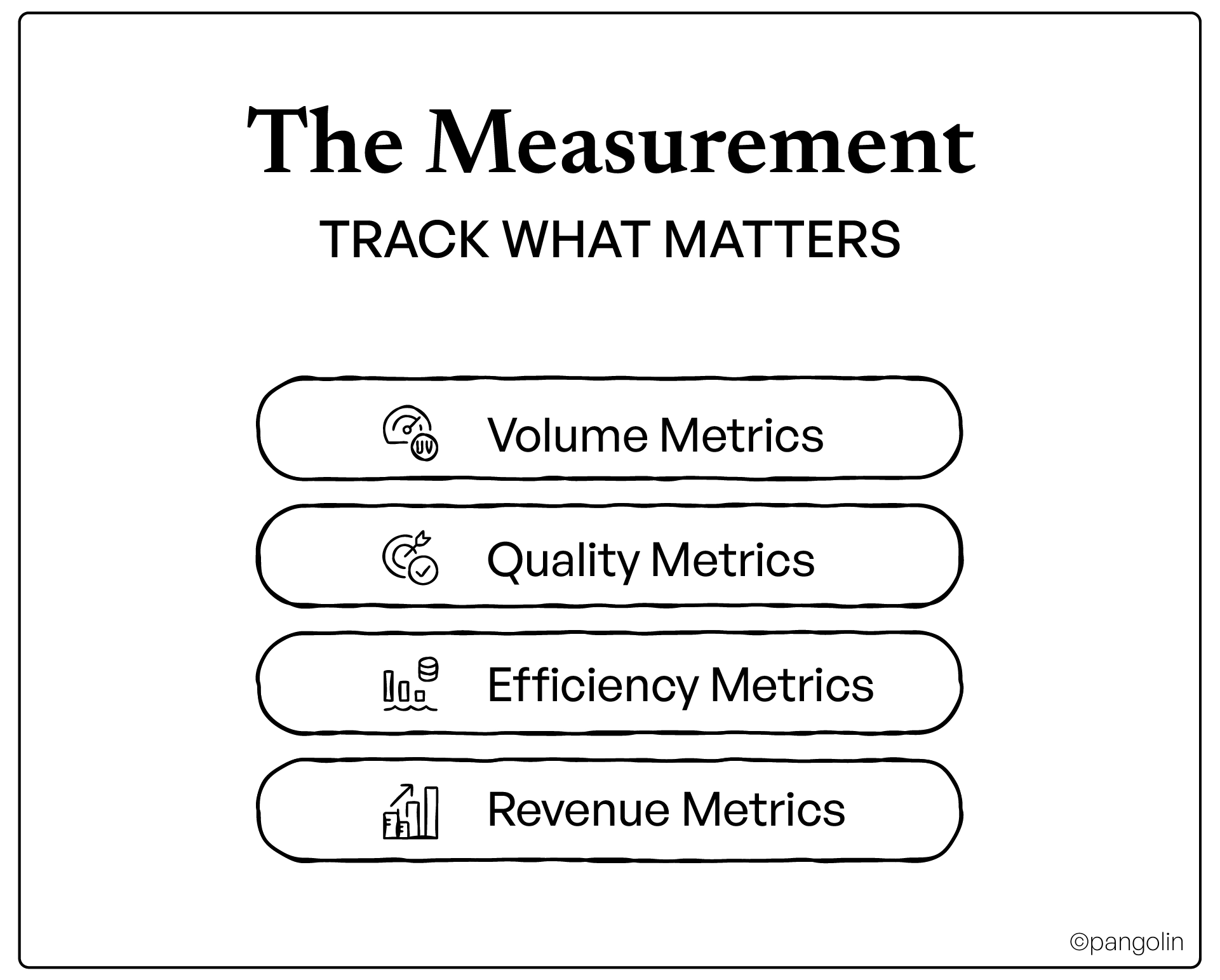
The key: Set up closed-loop reporting so you can track leads from first touch through closed deal.
Week 1-2:
Week 3-4:
Week 5-6:
Week 7-8:
Week 9-10:
Week 11-12:
Lead generation for IT services isn't a tactic. It's a system.
You need content that educates before it sells. Landing pages that convert. Lead scoring that separates the curious from the serious. Nurture sequences that build trust over 84-day cycles. And sales-marketing alignment that turns MQLs into revenue.
The companies winning in 2025 aren't generating more leads. They're generating better leads. And they're nurturing them smarter.
Start here:
Because in IT services, the companies that master lead generation don't just survive. They dominate their markets while competitors drown in unqualified leads and broken pipelines.
Now get to work.

