

The Problem: Most IT consulting firms burn budget on generic LinkedIn ads and chase low-ROI clicks at $7.85 while premium players charge 2-3x more by positioning themselves as strategic partners.
The Solution: Refine your positioning before advertising. Create LinkedIn campaigns targeting true IT decision-makers - CTO (technical), COO (business), CFO (budget) - with tailored messages at Awareness, Lead Gen, and Conversion stages.
The Impact: Firms with this approach see 113% ROAS (vs. 98% on Google, 104% on Meta), convert leads at 5–15%, and reach 63 million LinkedIn decision-makers. Lead quality and authority go up.
The Action: Invest $2,000–3,000/month for 90+ days. Allocate: 30% to Awareness, 50% to Lead Gen Forms, 20% to Retargeting. Layer targeting by job role, seniority, and company scope. Use LinkedIn’s Conversions API to boost efficiency 20–31%.
In September 2025, nearly 300 swimmers dove into the Chicago River for the first organized race in 98 years.
This is the same river that Upton Sinclair once called "the great open sewer", a waterway so polluted that swimming in it seemed impossible. But decades of focused, strategic cleanup transformed toxic water into something that now hosts 70 species of fish and meets federal swimming standards.
The transformation didn't happen by accident. It required understanding what actually polluted the river, investing in the right infrastructure, and measuring progress relentlessly. Most importantly, it required believing that dramatic change was possible when everyone said it wasn't.
Your IT consulting firm faces a similar challenge.
You've got 150 engineers who can execute complex cloud migrations and AI implementations. You have real expertise that solves real business problems. But the market still sees you as "just another offshore dev shop" competing on hourly rates while premium-positioned competitors charge 2-3x more for similar work.
Here's what most marketing advice won't tell you: LinkedIn ads aren't your problem. Your positioning is.
But when you fix the positioning and layer in strategic LinkedIn advertising, something remarkable happens. You start accessing the 63 million decision-makers on LinkedIn who are actively looking for strategic partners. You generate leads that convert at 5-15% rates (compared to 1-3% on other platforms). And you achieve 113% return on ad spend, outperforming both Google Ads (98%) and Meta (104%).
This is what happens when IT consulting firms stop trying to "generate more leads" and start building the systems that make those leads actually want to work with them.
Let's dig into exactly how to do it.
Before we talk tactics, let's get brutally honest about why your competitors' LinkedIn campaigns probably aren't working and why yours might fail too if you skip this section.
Walk through LinkedIn right now and you'll see a dozen ads that could've been written by any IT consulting firm:
Here's the problem: when everyone says the same thing, no one stands out. And on LinkedIn, where you're paying $7.85 per click for tech audiences, generic positioning is ineffective as well as expensive.
The firms winning on LinkedIn in 2025 aren't the ones with the biggest budgets. They're the ones with the clearest positioning. They've answered the question every IT buyer is asking: "Why you instead of the five other firms that just pitched me?"
Your prospects are exhausted. They've heard promises about "AI-powered transformation" from consultants who couldn't deliver. They've been burned by firms that over-promised and under-delivered. They're skeptical and rightfully so.
This matters for LinkedIn ads because trust determines conversion rates, not just click-through rates. You can drive traffic all day long. But if your positioning doesn't immediately signal expertise, specificity, and credibility, those clicks just drain your budget.
LinkedIn isn't just another advertising platform. It's the only place where:
But here's the catch: these advantages only matter if you know who to target and what to say to them. Most IT consulting firms skip the strategy and jump straight to tactics. Then they wonder why their $5,000 monthly budget disappeared with nothing to show for it.
Let's get specific about who you're trying to reach because vague targeting wastes more budget than bad creative.
IT consulting purchases typically involve 6-10 stakeholders. But here's who matters most:
Most failed LinkedIn campaigns target only one persona. Successful campaigns build awareness across all three at different funnel stages.
Here's how precision targeting looks in practice:
Let's talk money. Because if one more article tells you "LinkedIn is expensive" without context, you're going to make the wrong decision.
Based on current benchmarks for B2B technology services:
These numbers went up 8% year-over-year in 2025. And yes, that's higher than Google or Meta on a per-click basis.
LinkedIn delivers a 113% return on ad spend for B2B marketers outperforming Google Ads (98%) and Meta (104%).
Why? Because LinkedIn gives you two things other platforms can't:
Would you rather pay $3 per click for unqualified traffic or $8 per click for someone who can actually sign contracts?
That's the real math.
Here's the uncomfortable truth: if you can't commit $2,000-$3,000 per month for at least 90 days, LinkedIn ads probably aren't for you yet
Why? Because you need enough volume to:
Trying to "test" LinkedIn with $500/month is like trying to validate your business model by talking to five customers. The sample size is too small to learn anything useful.
Budget Allocation Framework:
Not all LinkedIn ad formats are created equal for professional services. Here's what actually moves the needle.
Think of Sponsored Content as your always-on awareness and lead generation engine.
Performance benchmarks:
What works:
What doesn't:
Here's a stat that should change how you think about landing pages: Lead Gen Forms convert 2-5x better than sending traffic to external pages.
Why? Because LinkedIn pre-fills the form with profile data. Your prospect clicks once, and the lead is captured. No typing, no page load delays, no friction.
When to use Lead Gen Forms:
Pro tip: Ask for 3-4 fields maximum. Every additional field drops conversion rates. You can always qualify leads afterward through email sequences.
Message Ads (formerly Sponsored InMail) cost significantly more - around $30-$150+ per click. But for the right use cases, they're worth it.
Best uses:
Worst uses:
Think of Message Ads as your Account-Based Marketing channel, not your mass marketing channel.
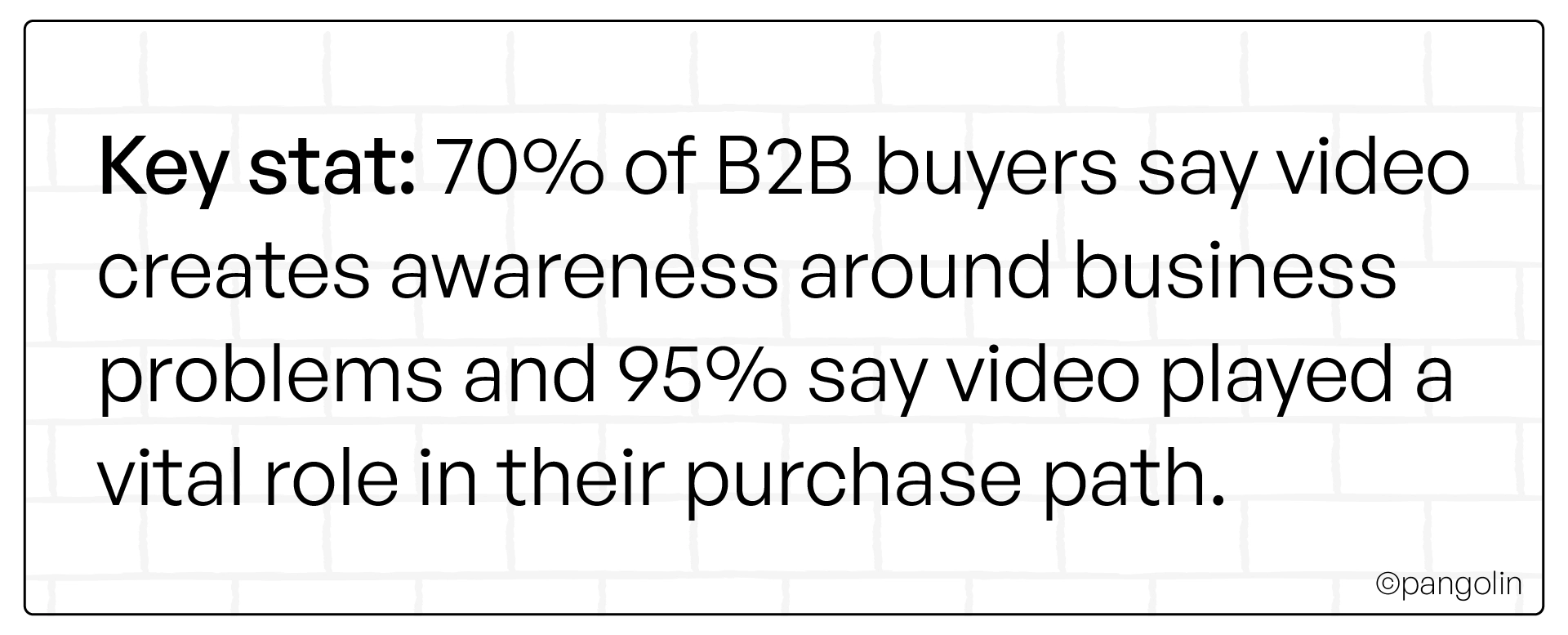
Video ads on LinkedIn generate 3x higher engagement than static content. And for IT consulting specifically, video solves a critical problem: proving you're not just another offshore vendor.
What makes video work:
Here's where most LinkedIn ad guides fail you: they teach you how to run ads, but not what to say in them.
Your messaging matters more than your media buying. Let's fix that.
Instead of: "Full-service IT consulting and digital transformation"
Try: "Cloud-native architecture for regulated industries navigating SOC 2 compliance"
See the difference? One could apply to 10,000 firms. The other immediately signals specificity.
The four positioning levers for IT consulting:
You don't need all four. But you need at least two to differentiate.
Here's how benefits laddering transforms your LinkedIn ad copy:
Feature level (weak):
"We provide cloud migration services using AWS and Azure"
Advantage level (better):
"We migrate enterprise workloads to cloud with zero downtime"
Benefit level (strong):
"We reduced XYZ Corp's infrastructure costs 37% while improving application performance 2.4x"
Emotional benefit level (strongest):
"Stop choosing between innovation and stability, get both"
Most IT consulting firms never climb past the feature level. The firms winning on LinkedIn live at the benefit and emotional benefit levels.
LinkedIn ads build the credibility that makes those leads actually convert.
Awareness stage content (Top of Funnel):
Consideration stage content (Middle of Funnel):
Decision stage content (Bottom of Funnel):
The best LinkedIn campaigns run all three stages simultaneously, just to different audience segments.
Random acts of advertising don't work. You need a system.
If you're targeting specific companies (not just job titles), you need an ABM approach.
How ABM works on LinkedIn:
The results: Companies using ABM report 70% complete sales-marketing alignment vs. 51% for non-ABM users. For enterprise IT consulting deals, that alignment is the difference between 18-month and 9-month sales cycles.
Most LinkedIn advertisers drown in metrics that don't matter while missing the ones that do.
Stop obsessing over:
LinkedIn Conversions API (CAPI):
This integration feeds your sales pipeline data back to LinkedIn, enabling better optimization.
The results speak for themselves:
If you're not using Conversions API, you're flying blind.
Tool stack for serious LinkedIn advertisers:
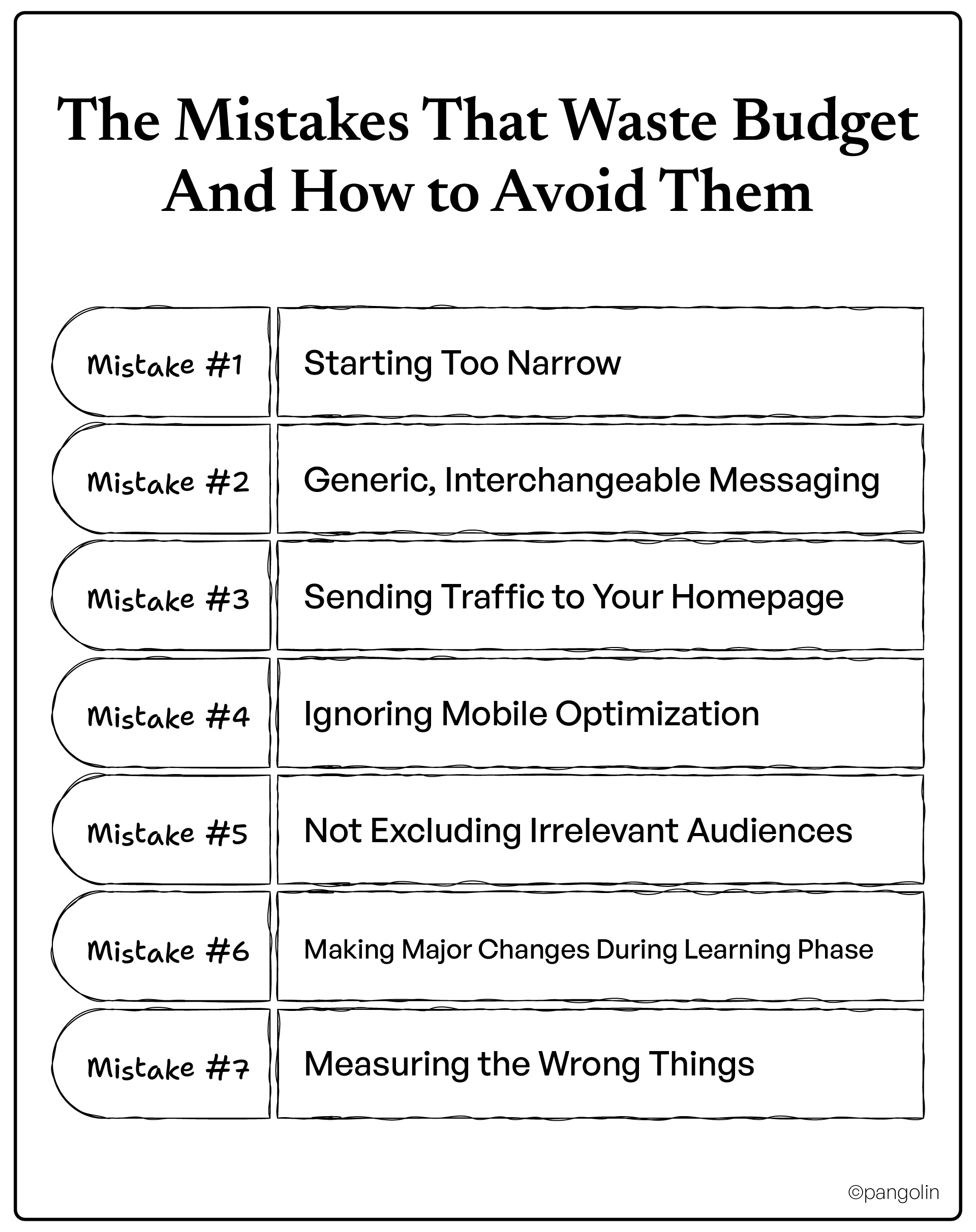
Let's talk about what kills LinkedIn campaigns because knowing what not to do is as valuable as knowing what to do.
You think: "I'll target CTOs at Series B fintech companies in New York with 100-500 employees."
Reality: Your audience is 847 people. You'll never gather enough data to optimize.
The fix: Start broader. You can always narrow based on performance data.
Your ad: "Leading provider of digital transformation services"
Your competitor's ad: "Your trusted digital transformation partner"
Prospect's reaction: scroll
The fix: Lead with specific outcomes for specific industries. "Reduced cloud infrastructure costs 37% for Series B fintech" beats "We're cloud experts"
You paid $8 for a click. Then you sent them to a generic website where they have to figure out what you do.
Conversion rate: 1-2% if you're lucky.
The fix: Use Lead Gen Forms (13%+ conversion rates) or dedicated landing pages that match ad messaging exactly.
Over 60% of LinkedIn usage happens on mobile. Your ad looks great on desktop. On mobile, the headline's cut off and the CTA button is buried.
The fix: Design mobile-first. Square or vertical formats. Headlines under 150 characters. Descriptions under 70 characters to avoid truncation.
You're paying to show ads to:
None of these people will ever buy from you.
The fix: Build comprehensive exclusion lists. Review and update quarterly.
LinkedIn's algorithm needs 48-72 hours to optimize your campaigns. But you panic after 24 hours and change everything.
Now the algorithm starts over. You never get out of the learning phase.
The fix: Set campaigns up correctly, then give them time to work. Make data-driven adjustments after gathering sufficient data.
You celebrate 10,000 impressions and 200 clicks. Meanwhile, sales has rejected all 12 leads as unqualified.
The fix: Align on lead quality criteria before launching. Track all the way to pipeline contribution, not just top-of-funnel metrics.
LinkedIn ads don't exist in isolation. They're one piece of a larger growth system.
The fix: Active company page, employee advocacy program, regular thought leadership content.
The fix: Dedicated landing pages that match ad messaging. Clear value proposition. Compelling CTAs. Fast load times. Mobile optimization.
The fix: Automated nurture sequences that deliver value before asking for meetings. Educational content, case studies, ROI frameworks.
The fix: Share account insights. Coordinate on target lists. Provide sales with context on prospect engagement.
The fix: Create comprehensive content that supports your LinkedIn campaigns. Use LinkedIn to promote your best content. Repurpose content across channels.
Here's an uncomfortable truth: 70% of ABM users report complete sales-marketing alignment vs. only 51% for non-ABM users.
That 19-percentage-point difference shows up in revenue.
What alignment actually looks like:
The IT consulting firms winning on LinkedIn aren't just running better ads. They've built systems where marketing and sales function as one revenue team.
Let's address the elephant in the room: the average B2B buying journey takes 211 days.
That means someone who clicks your ad today probably won't become a customer for 7+ months. Maybe longer for enterprise IT consulting deals.
This frustrates CFOs. It should inform your strategy instead.
Your prospects aren't ready to buy today. But they're forming opinions about which firms they'll consider when they are ready.
LinkedIn ads do two things simultaneously:
The firms that cut LinkedIn ads when they don't see an immediate pipeline are the same firms that wonder why they have no inbound leads six months later.
Month 1: You're unknown. CTR is okay. Cost per lead is high. Few sales conversations.
Month 3: Some prospects recognize your brand. Retargeting audiences grow. Cost per lead drops. More sales conversations, fewer from scratch.
Month 6: You're a known entity in your niche. Prospects reference your content in sales calls. Cost per lead is 30-40% lower than month 1. Sales cycles shorten because trust is pre-built.
Month 12: You're a category leader in your specialty. Inbound inquiries reference specific campaigns. Your brand does the heavy lifting. Sales becomes consultative, not convincing.
This is what winning looks like. Not overnight success. Compounding returns from consistent, strategic execution.
You picked up this guide because you're frustrated. Your IT consulting firm has deep technical expertise. You can deliver results. But the market sees you as interchangeable - another vendor in a sea of vendors.
LinkedIn ads won't fix that by themselves. But strategic LinkedIn advertising, combined with clear positioning and full-funnel thinking, can transform how the market perceives you.
The question isn't "Can LinkedIn ads work for IT consulting firms?"
The data already answered that: 113% ROAS, 227% more effective than other platforms, 80% of B2B leads.
The question is: "Are you willing to do the strategic work that makes those results possible?"
Because here's what that work requires:

Most IT consulting firms aren't willing to do this work. They want a "LinkedIn ads expert" to run some campaigns and magically generate qualified leads.
That's why most IT consulting firms stay stuck competing on price.
The firms that do this work? They're the ones charging premium rates, winning enterprise deals, and expanding into new markets. They're the ones their prospects actively seek out instead of evaluating alongside ten other vendors.
The Chicago River didn't become swimmable overnight. It took decades of strategic, focused effort and the belief that dramatic transformation was possible when everyone said it wasn't.
Your IT consulting firm's positioning can transform too. The decision is whether you're ready to do the work.
If you're ready to move beyond commodity positioning and build a LinkedIn ads system that actually delivers ROI, here's what to do next:
If you're an ITES, KPO, or IT consulting firm looking to escape commodity positioning and build systematic demand generation, Pangolin specializes in exactly this transformation.
We work with mid-sized IT services firms (50-500 employees) navigating:
Our approach combines:
Explore our industry expertise:
Relevant solutions:
Minimum $2,000-$3,000 per month for at least 90 days to gather meaningful data. Most successful campaigns allocate 40% to proven tactics and 20% to testing once they identify what works. Anything less than $2,000/month makes it difficult to run simultaneous tests and optimize effectively.
The benchmark range is 5-15%, with anything above 5% considered excellent performance. Lead Gen Forms typically convert 2-5x better than external landing pages because they're pre-filled with LinkedIn profile data.
Expect initial engagement metrics within 1-2 months, qualified lead growth at 3-4 months, and significant pipeline impact at 5-6 months. Remember, the average B2B buying journey is 211 days which means someone who engages with your ad today probably won't become a customer for 6-9 months.
LinkedIn delivers 113% ROAS vs. Google's 98% for B2B and provides unmatched targeting precision for decision-makers. But the best strategy uses both: LinkedIn for awareness, credibility-building, and qualification; Google for capturing high-intent search traffic from prospects actively looking for solutions.
Layer job function (IT, Engineering, Operations) + seniority (Director, VP, C-level) + company attributes (size, industry, growth stage) + skills (specific technologies). Start broader than you think (300,000+ audience size), then refine based on performance data. Too narrow too soon prevents gathering enough data to optimize.
Track these metrics: CTR above 0.60%, conversion rates above 5%, and most importantly, pipeline contribution and ROAS. Ignore vanity metrics like impressions and social engagement unless they correlate with actual lead generation and sales conversations.
Generic, interchangeable messaging that could apply to any consulting firm. When you position as "leading digital transformation provider," you're competing with 10,000 other firms saying the same thing. Specificity wins: "Cloud-native architecture for regulated fintech" beats "IT consulting services" every time.

