In August 2024, California ground squirrels shocked researchers by abandoning their lifelong vegetarian diet and systematically hunting voles. These squirrels, herbivores for millions of years, watched the vole population explode to 7x normal levels and made a choice: adapt or starve. So they adapted. They started ambushing voles at burrow entrances, biting their necks, and consuming them. By the end of the season, researchers documented at least 37 kills by multiple squirrels who'd never eaten meat before.
Your IT services company faces a similar moment right now.
The referrals that built your business? Plateaued. The word-of-mouth that kept sales steady? Not enough anymore. The old playbook, networking events, cold calls, waiting for inbound, can't feed the growth targets your CEO just set. You need qualified leads at scale. And for 68% of IT services companies, that means Google Ads.
Here's the problem: you're burning $5,000, $10,000, or $20,000 per month on Google Ads and getting clicks from job seekers, DIY hobbyists, and tire-kickers who'll never sign a contract. Your average cost per click sits at $8 to $11, sometimes $50+ for competitive terms. Leadership wants to know why marketing can't prove ROI. Sales complains the leads are garbage. And you're stuck justifying every dollar while competitors seem to dominate the Map Pack and paid results.
The gap between wasting budget and generating qualified pipeline isn't luck. It's strategy, specifically, B2B strategies designed for long sales cycles, multi-stakeholder decisions, and high-value contracts. Not the B2C tactics most Google Ads content assumes.
This guide shows you exactly how IT services companies turn expensive clicks into predictable, qualified leads. We're talking real frameworks with actual benchmarks: what Google Ads costs for IT companies, which campaigns work for 5-month B2B sales cycles, how to stop bleeding budget on wrong-fit prospects, and how to prove ROI to skeptical leadership.
Like those squirrels, you adapt or you starve. Let's make sure you thrive.
Let's rip the band-aid off with hard data. If you're running Google Ads for IT services right now, here's what you're competing against:
Industry cost benchmarks for 2025:
Now here's the silver lining: businesses earn $2 for every $1 spent on Google Ads when campaigns are structured properly. With optimization, that return jumps to $8 per dollar.
The difference between those two outcomes? Understanding that IT services require fundamentally different PPC strategies than pizza shops, plumbers, or even B2C SaaS companies.
Most Google Ads content assumes you're selling impulse purchases with short conversion windows. But IT services operate in a completely different universe:
The B2B IT services reality:
When you apply B2C tactics, urgent calls-to-action, limited-time offers, impulse-focused messaging, to B2B IT services, you get clicks from people who'll never become customers. You're fishing with the wrong bait in the wrong pond.
What works instead: full-funnel strategies addressing awareness, consideration, and decision stages. Campaigns that acknowledge decision-makers are researching for months before they contact you. Messaging that builds credibility, not urgency.
54.8% of IT services companies cite generating qualified leads as their biggest marketing challenge. The problem isn't traffic, it's attracting the right traffic at the right stage of the buying journey.
Traditional Google Ads thinking:
B2B IT services thinking:
This mindset shift alone will save you thousands in wasted spend.
Here's where most IT companies blow it from day one: they track form submissions and call it "conversion tracking." But that 23-year-old submitting your contact form asking if you have "entry-level positions available"? That counted as a conversion. So did the guy looking for free YouTube tutorials on network troubleshooting.
Set up qualified lead tracking instead.
This isn't optional anymore. Without proper conversion tracking, you're flying blind while bleeding budget.
Random campaigns with random keywords generate random results. Strategic architecture generates predictable pipeline.
Organize campaigns by service type -
Pro tip: Use Single Keyword Ad Groups (SKAGs) for precision targeting. One tightly themed ad group beats scattered keywords every time.
Stop guessing what decision-makers search for. Here's what actually works:
These searches come from people realizing they have a problem but not yet researching solutions. Educational content and awareness-building win here.
Decision-makers at this stage are actively evaluating options. Differentiation and proof points matter most.
These are buying signals. The sale happens here or goes to a competitor.
Industry-specific goldmines:
Vertical-specific keywords face less competition and attract better-fit prospects who value specialized expertise.
Compliance/certification keywords (high-intent):
Companies searching for compliance-specific IT have budget, urgency, and decision-making authority. These convert like crazy.
Here's the ugly truth: 20-30% of your Google Ads budget is wasted on wrong-intent searches if you're not using negative keywords aggressively.
Add these as phrase or exact match negatives immediately -
Why this matters: "IT services" triggers searches for "IT services jobs" constantly. Every click from a job seeker is $8-$50 down the drain.
These searchers want to learn, not buy. They'll never convert to clients.
(unless you offer these, add what you DON'T provide)
If someone searches "IT marketing services" but you're a managed IT provider, that's a wasted click.
Price-focused searchers rarely become high-value clients.
Add competitor names if you're NOT intentionally targeting their customers. If you ARE targeting competitors, create dedicated campaigns.
How to organize negative keywords
One hour per week managing negative keywords saves $500-$2,000 per month in wasted spend. That's a 10X+ return on time invested.
Generic ad copy like "Full-Service IT Solutions for Your Business" converts at 2%. Strategic, stage-appropriate messaging converts at 10%+.
Headline: Is Network Downtime Costing You $5,000+ Per Hour?
Description: Discover how 500+ companies prevent costly IT outages.
Free infrastructure assessment reveals your hidden risks.
Why it works: Addresses pain point directly, provides education, low-friction offer (free assessment).
Headline: Managed IT Services for Healthcare Providers
Description: HIPAA-compliant infrastructure + 24/7 monitoring.
Trusted by 200+ medical practices. SOC 2 certified.
Why it works: Industry-specific, differentiation through compliance, social proof, trust signals.
Headline: Get Your Custom IT Support Quote in 24 Hours
Description: Fixed monthly pricing. No long-term contracts.
SOC 2 certified. Serving Chicago businesses since 2010.
Why it works: Removes friction (fast turnaround), addresses objections (no contracts), builds trust (local, established, certified).
B2B tech buyers don't care about the same trust signals as B2C consumers. Here's what actually builds credibility:
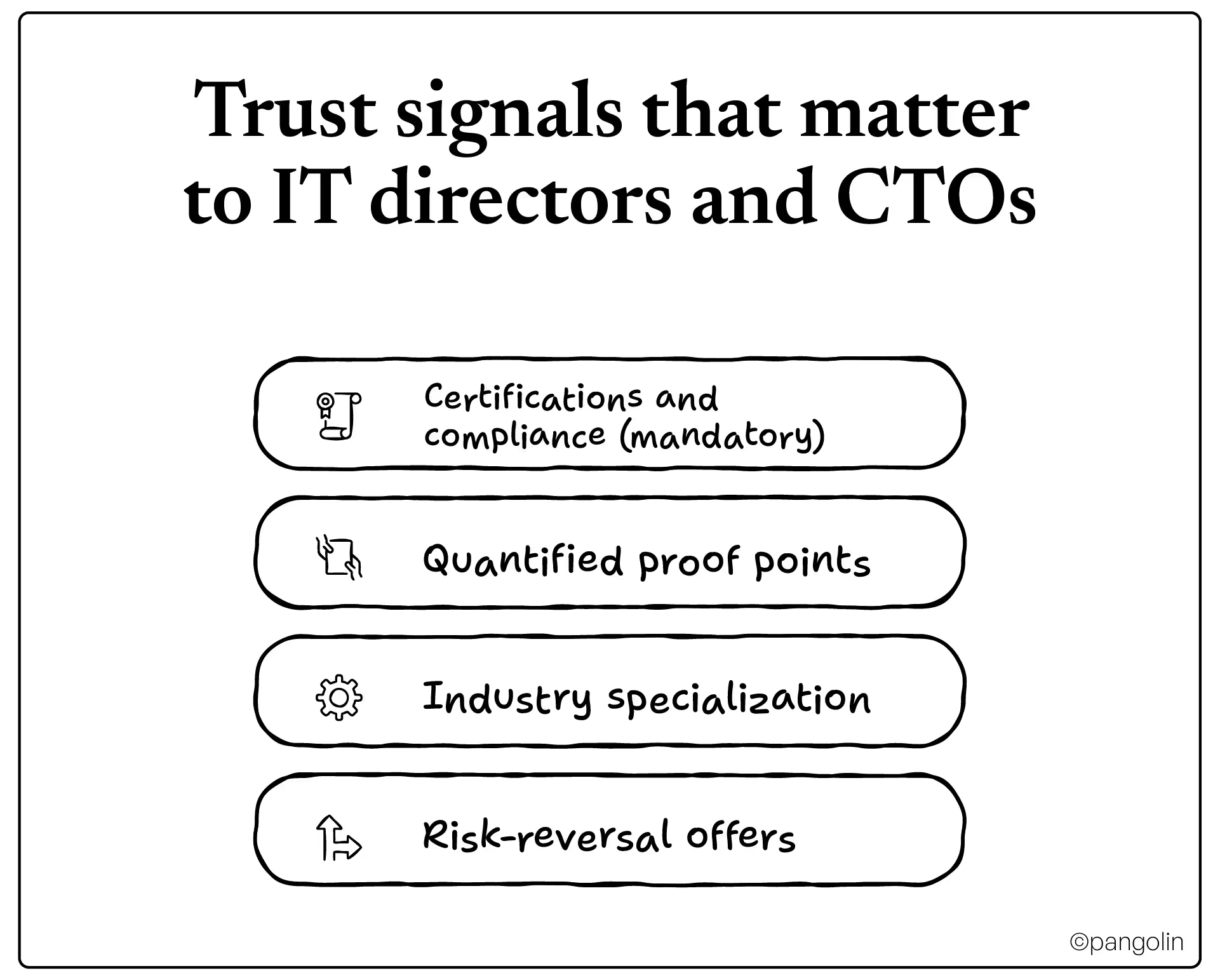
Include these in ad copy whenever relevant to the search query.
Numbers beat adjectives every time.
Vertical expertise commands premium pricing and attracts better-fit clients.
Decision-makers want to evaluate without commitment. Make it easy.
Extensions increase CTR by 10-15% and provide more information before the click:
Companies with 10-15 landing pages see 55% more leads than those with fewer pages. But here's the catch: each page needs one conversion goal only.
Multiple CTAs kill conversion rates. When you offer "Request Demo," "Get Quote," "Schedule Call," AND "Download Guide" on the same page, decision-makers freeze. Choice paralysis is real.
Pick one goal per landing page:
Don't mix them. Create separate landing pages for each.
Bad headline:
"Comprehensive IT Solutions for Growing Businesses"
Why it fails: Generic, feature-focused, says nothing concrete.
Good headline:
"Cut IT Costs 25% Without Sacrificing Security or Support"
Why it works: Specific outcome, addresses pain point (cost), removes objection (quality concern).
More winning headline formulas:
Address the specific pain point in the first 5-7 words. Everything else is supporting evidence.
80% of landing page traffic comes from mobile devices. Long forms on mobile = abandoned conversions.
Form length by funnel stage:
Awareness stage (top-funnel offers like guides, assessments):
3-4 fields maximum. You're building the relationship, not qualifying yet.
Consideration stage (mid-funnel offers like consultations):
5-6 fields. You need some qualification but not full discovery.
Decision stage (bottom-funnel offers like quotes, demos):
7-9 fields OK. These prospects are ready to have detailed conversations. Extra fields actually improve lead quality by pre-qualifying.
Form best practices:
B2B decision-makers evaluate differently than consumers. They need:
Client logos (recognizable brands):
Testimonials from relevant roles:
Include role, company, specific outcomes. IT directors trust other IT directors.
Security and compliance badges:
These matter infinitely more than generic "secure checkout" badges.
Technical credibility:
Numbers, certifications, partnerships, proof beats promises.
Performance Max campaigns use Google's AI to automatically optimize across all Google channels: Search, Display, YouTube, Gmail, Maps, and Discovery.
You provide:
Google's algorithm decides:
Sounds magical, right? It can be, or it can burn $10,000 before you realize it's not working.
Performance Max delivers results when you have:
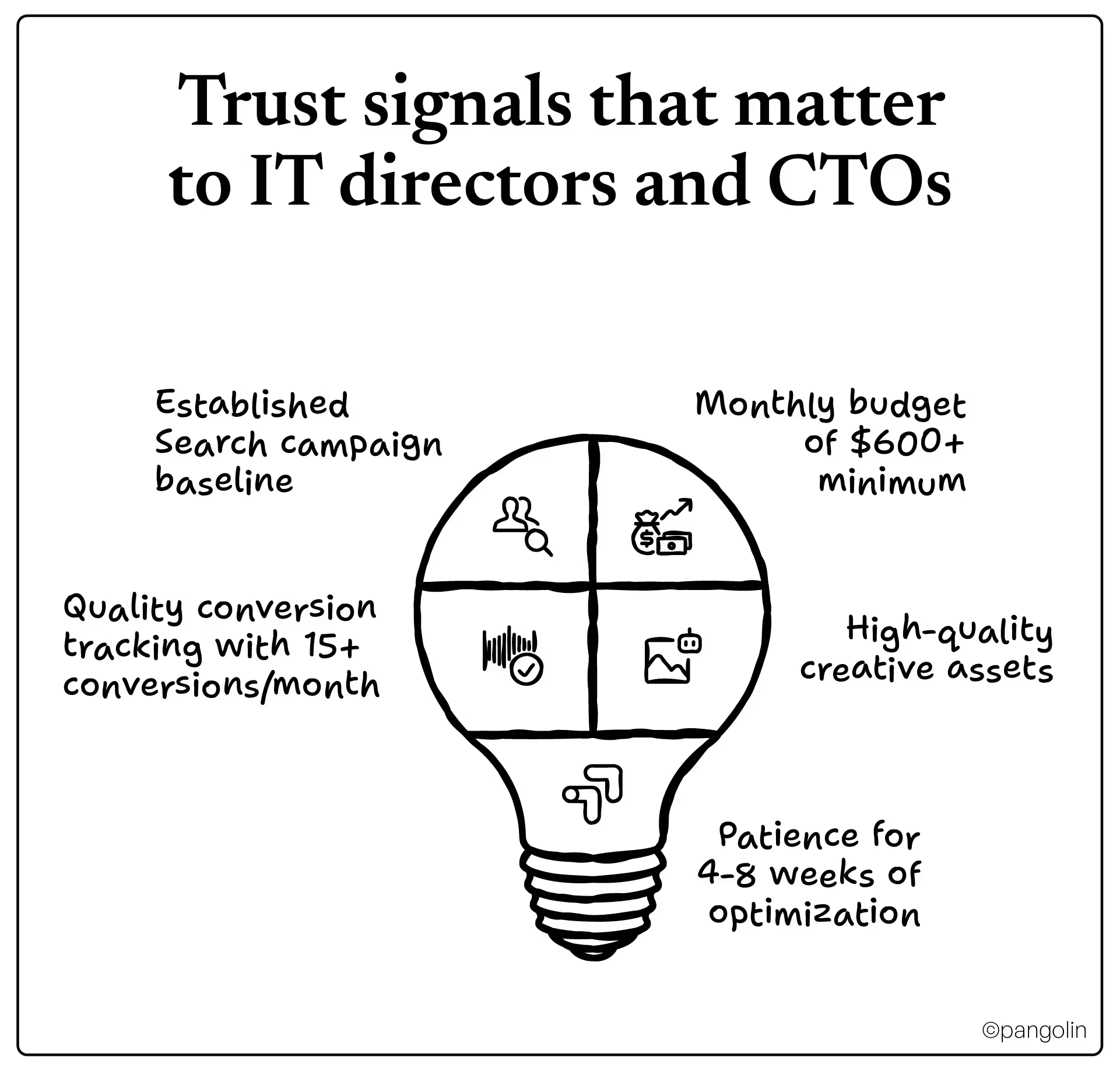
Don't launch Performance Max as your first campaign. You need conversion data and performance benchmarks from Search first.
Performance Max needs volume to optimize. Under $600/month, it won't gather enough data.
The AI needs conversion data to learn. Without it, you're gambling.
Multiple images, videos, headlines, descriptions. The algorithm tests combinations, give it good raw materials.
Performance Max takes time to learn. Judging in week one wastes the investment.
Avoid Performance Max if you:
Haven't run successful Search campaigns yet
You need baseline data. Performance Max without Search data is guesswork.
Have limited budget (<$500-600/month)
Won't generate enough volume for algorithm to optimize effectively.
Need granular control over targeting
Performance Max is a "black box", you can't micromanage like traditional campaigns.
Serve very niche/specialized services
Broad AI optimization struggles with hyper-targeted audiences.
Can't wait 4-8 weeks for results
If you need leads next week, stick with proven Search campaigns.
Bottom line: Use Performance Max alongside Search campaigns, not as a replacement. Allocate 20-30% of budget to Performance Max after Search is performing well.
Remember: 70% of the buyer journey happens before first contact. Decision-makers visit your site, read content, check pricing, then disappear for 3 months to evaluate competitors and build internal consensus.
Retargeting keeps you top-of-mind during that evaluation period.
Display retargeting strategy:
Audience segments by behavior:
Frequency cap: 3-5 impressions per person per week. More = ad fatigue and brand damage.
Budget allocation: 15-20% of total Google Ads budget to retargeting.
Pro tip: Create separate audiences by service type. Someone who visited "Cybersecurity Services" gets different retargeting than someone who visited "Cloud Migration."
Ignore these vanity metrics:
Track these business metrics instead:
Lead quality metrics:
Revenue metrics:
Funnel velocity:
These metrics tell you if Google Ads is actually growing your business or just burning budget.
The last-click trap: Google Ads default attribution credits only the final touchpoint before conversion. But if a prospect clicked your blog post from Google Ads in January, visited from organic search in February, then submitted a demo request from a retargeting ad in March, which campaign "earned" the conversion?
All of them. That's why multi-touch attribution matters.
Attribution models for B2B IT services:
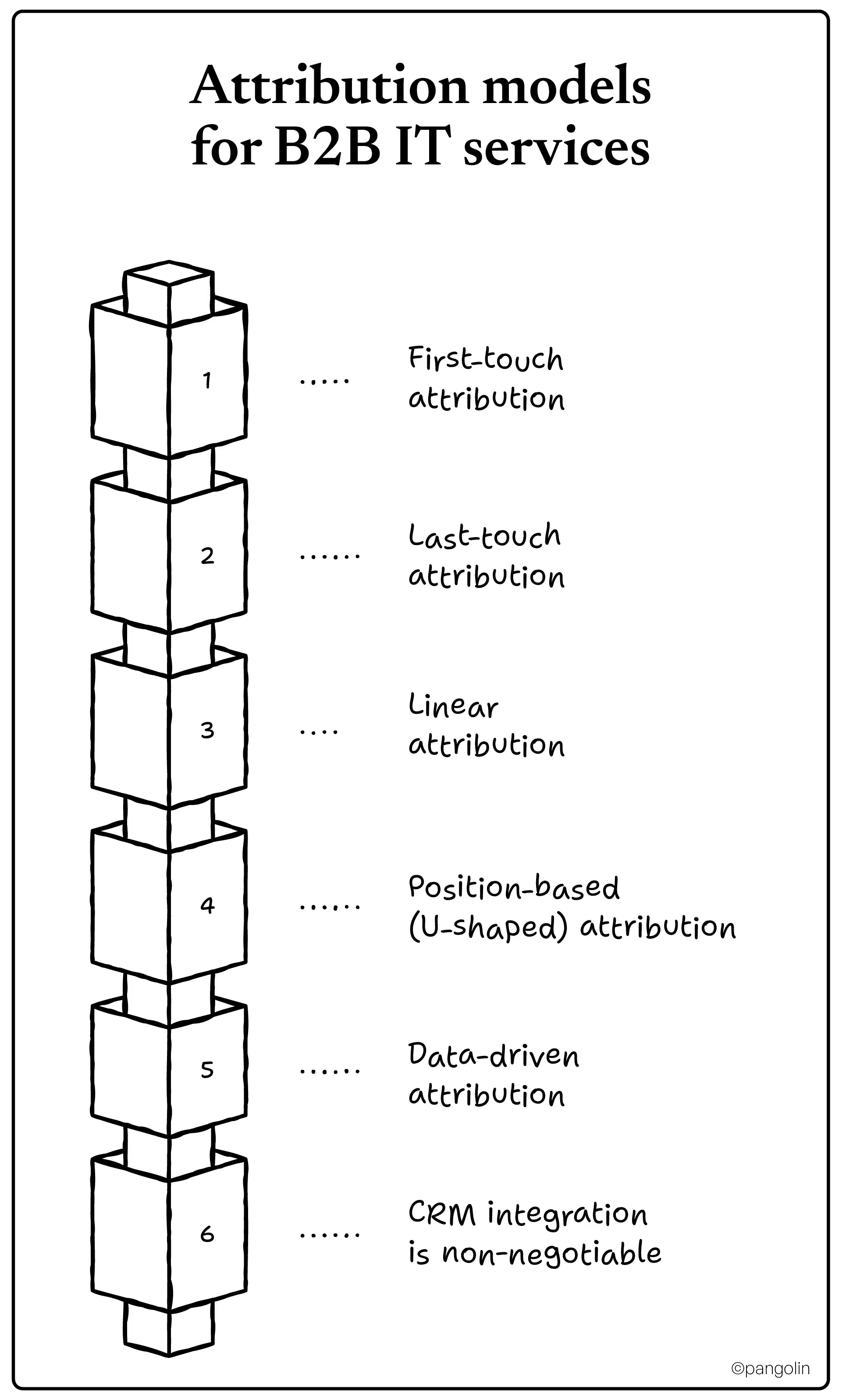
Connect Google Ads to your CRM (HubSpot, Salesforce, Pipedrive) to:
Without CRM integration, you're guessing at which campaigns actually generate revenue.
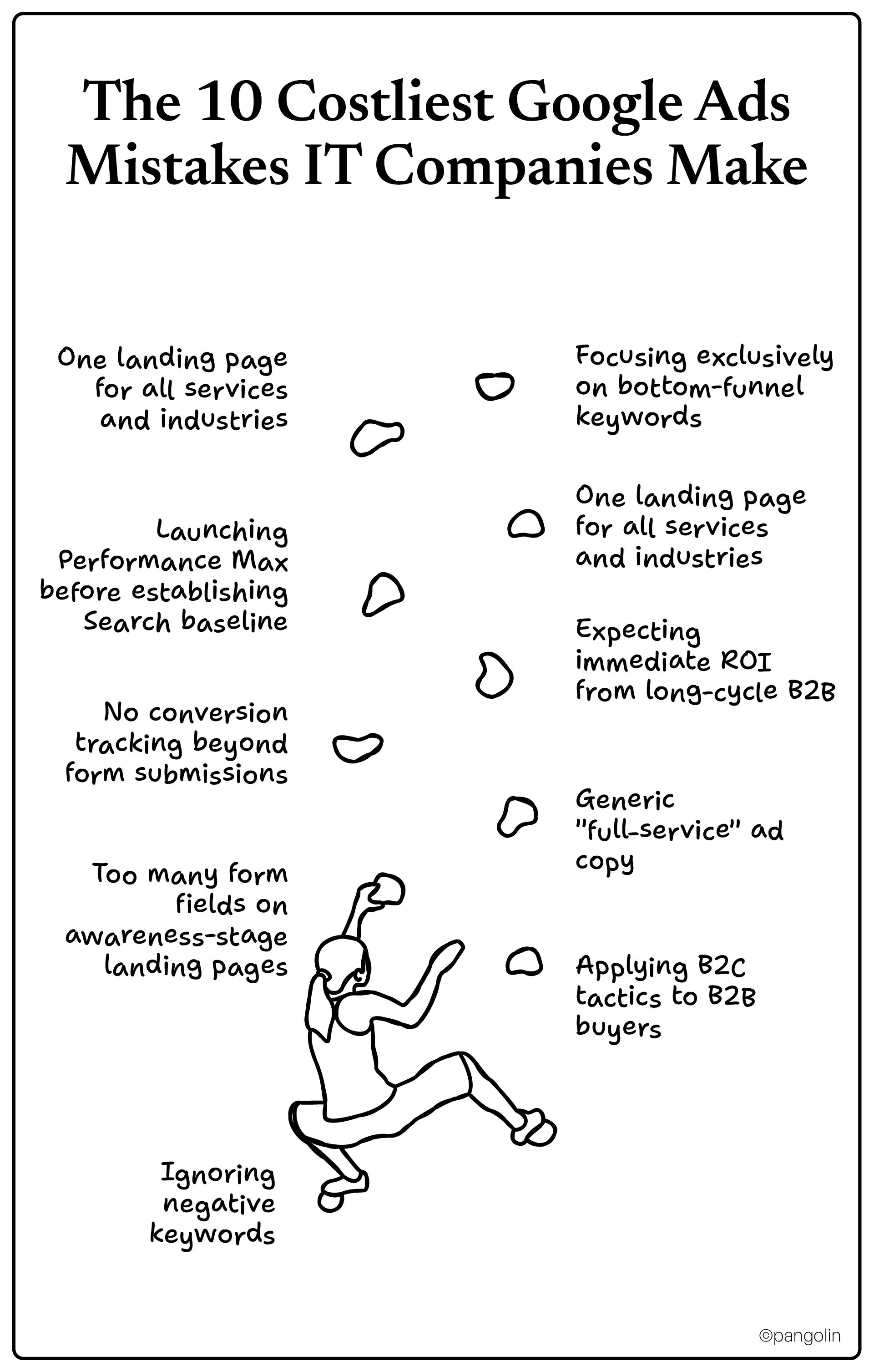
Urgency-driven messaging ("Act now! Limited time!") fails spectacularly for CIOs evaluating 5-year IT infrastructure decisions.
Fix: Use trust-building, education-focused messaging that acknowledges long buying cycles.
Wasting 20-30% of budget on job seekers, DIY searchers, and wrong-intent clicks.
Fix: Implement comprehensive negative keyword lists and review search terms weekly.
Blends into noise. Every IT company claims "comprehensive solutions".
Fix: Lead with specific outcomes and pain points: "Cut ransomware risk 80%" beats "comprehensive cybersecurity."
8+ fields kill mobile conversions (and 80% of traffic is mobile).
Fix: Use 3-4 fields for top-funnel, 5-6 for mid-funnel, 7+ only for bottom-funnel offers.
Counting every form fill as "success" when 60% are unqualified wastes optimization opportunity.
Fix: Implement qualified lead tracking with CRM integration to track through to revenue.
Judging campaigns in 30 days when sales cycles average 5+ months guarantees failure.
Fix: Allow 90-120 days minimum for optimization. Track leading indicators (qualified lead volume) early.
Google's AI needs data to optimize. Without it, you're gambling $10K+.
Fix: Run Search campaigns for 2-3 months minimum. Launch Performance Max only after proving Search works.
Generic pages convert 2-3%. Specific pages convert 10%+.
Fix: Create separate landing pages by service type, industry vertical, and funnel stage.
Leaves pipeline entirely dependent on in-market buyers (expensive, competitive).
Fix: Build full-funnel strategy with 20% budget to awareness, 30% to consideration, 50% to decision.
Last-click attribution undervalues awareness campaigns that start relationships.
Fix: Implement position-based or data-driven attribution. Integrate CRM for offline conversion imports.
Week 1-2: Tracking and structure setup
Week 3-4: First campaigns launch
Success metrics for Month 1:
Refinement:
Expansion:
Success metrics for Month 2:
Advanced campaigns:
Systematic optimization:
Success metrics for Month 3:
Those California ground squirrels didn't overthink adaptation. When their environment changed and traditional food sources couldn't sustain them, they evolved. Fast.
Your IT services company faces the same inflection point.
The referral networks and word-of-mouth that built your business won't scale to your growth targets. Your CEO wants predictable pipeline. Sales needs qualified leads, not tire-kickers. And you're stuck proving marketing ROI with Google Ads campaigns that bleed budget on job seekers and DIY hobbyists.
The good news: IT companies consistently generate $2-$8 return for every $1 invested in Google Ads when campaigns are structured correctly.
The difference between those numbers, wasting budget versus generating qualified pipeline, isn't luck. It's strategy. It's understanding that B2B IT services require full-funnel campaigns, not bottom-funnel urgency tactics. It's knowing that $11 average CPC can be profitable when you're closing $50K annual contracts. It's tracking qualified leads and revenue, not clicks and impressions.
You now have the frameworks:
Implementation is where most IT companies stumble. Not because the tactics are complex, they're not. But because systematic optimization, weekly negative keyword management, continuous landing page testing, and multi-touch attribution require expertise and dedicated time most solo marketers don't have.
Pangolin Marketing helps IT services companies build complete Google Ads systems that generate qualified leads, not just traffic. We specialize in B2B tech marketing with proven frameworks for ITES companies , combining strategic positioning with tactical execution that actually moves the needle.
Our approach:
Schedule a consultation to discuss your Google Ads strategy, or explore our
Growth Marketing services for complete commercial infrastructure.
Because like those squirrels, you either adapt or you starve. Let's make sure you thrive.

Aniket leads content marketing at Pangolin, writing and editing for B2B tech clients who need sharp messaging and consistent output. He came from journalism and brings that newsroom discipline to content work, turning drafts around quickly and keeping quality high.