For decades, scientists couldn't explain how massive stones, some weighing 700 pounds, moved across Death Valley's flat desert floor, leaving long tracks behind them. No one saw them move. No earthquakes. No animals strong enough to push them. The mystery persisted until researchers discovered the pattern: thin ice sheets form overnight, and when morning winds blow, the ice pushes the stones across the muddy surface. The movement was always there. It just took the right measurement to see it.
Your marketing channels work the same way.
Right now, you're crediting the last touchpoint, the demo request form, the sales call, the final email, with 100% of the deal. But what about the LinkedIn ad that introduced your company? The blog post that educated the buyer? The webinar that moved them from "interested" to "evaluating"?
Those touchpoints moved the deal forward. You just can't see them in your current attribution model.
Here's the painful truth: 48% of marketers cite attribution as their biggest data challenge. And IT marketing? It's even harder. Your sales cycles stretch 6–18 months. Your deals involve 6–10 stakeholders. Buyers interact with you across LinkedIn, Google Ads, your website, email, webinars, events, and direct sales calls.
Last-click attribution gives 100% credit to the final touchpoint and ignores everything that came before. It dramatically undervalues top-of-funnel activities, the awareness and education channels that make the final conversion possible.
Without proper attribution, you can't optimize spend. You can't prove ROI. You can't justify your budget to leadership. You're flying blind.
This guide shows you how to implement multi-touch attribution so you can finally see which channels truly drive revenue and make 15–25% more efficient spend allocation.
Let's start with why attribution is so broken in IT marketing, and why it matters more for you than most industries.
B2C eCommerce has it easy. Someone sees a Facebook ad, clicks, buys. Attribution is straightforward. One touchpoint, one conversion.
IT services? Not even close.
Your sales cycles stretch 6–18 months. A prospect sees your LinkedIn post in January. Visits your website in March. Downloads a whitepaper in May. Attends your webinar in July. Requests a demo in September. Closes in November.
That's six touchpoints over ten months, and that's a short IT sale.
Worse, your deals involve 6–10 stakeholders:
Each stakeholder interacts with different content. The CTO reads your technical blog posts. The CFO downloads your ROI calculator. The IT Director attends your demo. Procurement reviews your case studies.
If you're only tracking last-click, you're crediting the demo request form and ignoring the nine other touchpoints that brought those stakeholders to the table.
Last-click attribution is the default in most analytics platforms. It's simple. It's easy to understand. And it's catastrophically wrong for B2B.
Here's what last-click tells you: "This deal came from the demo request form."
Here's what actually happened: A prospect saw your LinkedIn ad → read three blog posts → attended a webinar → downloaded a whitepaper → visited your pricing page twice → then submitted the demo request.
Last-click gives 100% credit to the final touchpoint and zero credit to everything else.
The result? You conclude that demo forms drive all your revenue. You stop investing in LinkedIn ads, blog content, and webinars, the channels that actually moved the deal forward. Your pipeline dries up. You can't figure out why.
Last-click attribution undervalues awareness and consideration channels, leading to budget misallocation and missed revenue opportunities.
Attribution failures cost you in three ways:
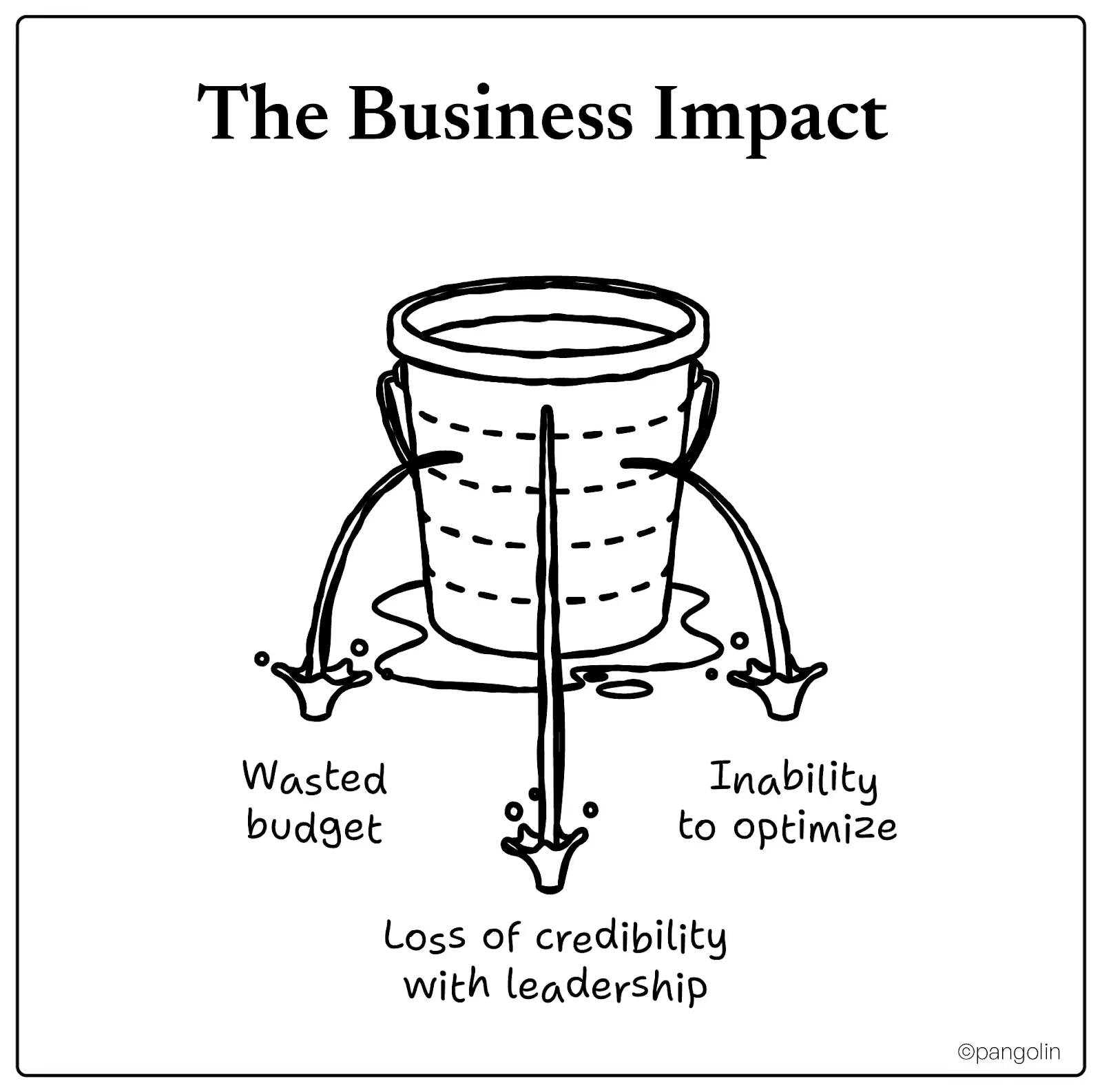
1. Wasted budget. You're overspending on channels that get last-click credit (branded search, direct traffic) and underspending on channels that drive awareness and consideration (content, LinkedIn, webinars).
2. Inability to optimize. Without knowing which channels drive revenue, you can't make data-driven decisions. Marketing becomes guesswork. You scale what feels right, not what performs best.
3. Loss of credibility with leadership. When the CEO asks, "What did marketing contribute to revenue this quarter?" and you point to MQLs and website traffic, vanity metrics that don't tie to closed deals, you lose trust.
And here's the kicker: 48% of marketers cite attribution as their top data challenge. You're not alone in struggling with this. But the companies that solve it? They're pulling ahead.
Attribution isn't one thing, it's a spectrum. Let's break down your options.
Single-touch models assign 100% credit to one touchpoint. They're easy to implement but terrible for complex B2B sales.
How it works: Credits the first interaction, the LinkedIn ad, the Google search, the referral link.
When to use it: Brand awareness campaigns. You want to know which channels introduce new prospects.
Limitation: Ignores everything after the first touch. A prospect could engage with 15 pieces of content, but only the first gets credit. Useless for understanding what moves deals forward.
How it works: Credits the final interaction before conversion, usually a demo request, pricing page visit, or sales call.
When to use it: Never, for complex B2B. This is the default in most tools, but it's fundamentally flawed for IT marketing.
Limitation: Undervalues all awareness and nurture activities. You'll overinvest in bottom-funnel tactics and starve top-of-funnel efforts.
Multi-touch models distribute credit across all touchpoints. They're more accurate but require better data integration.
How it works: Every touchpoint gets equal credit. Ten interactions? Each gets 10%.
When to use it: When you have limited data and want a "fair" starting point.
Limitation: Treats all touchpoints equally, which isn't realistic. The webinar that moved a prospect from "interested" to "evaluating" had more impact than a random website visit. Linear attribution doesn't account for that.
How it works: Recent interactions get more credit than older ones. The logic: touchpoints closer to conversion had more influence.
When to use it: Short-to-medium sales cycles where recency matters.
Limitation: Undervalues top-of-funnel activities. The LinkedIn ad that introduced your brand gets almost no credit because it happened six months ago, even though it started the journey.
How it works: Assigns 40% credit to the first touch, 40% to the lead creation moment, and 20% distributed across middle touchpoints.
When to use it: When you want to emphasize awareness (first touch) and conversion (lead creation) without ignoring nurture.
Limitation: Doesn't account for opportunity creation, the moment a lead becomes a sales-qualified opportunity.
How it works: Assigns 30% credit to three critical moments, first touch, lead creation, and opportunity creation, with the remaining 10% distributed across other touchpoints.
When to use it: Complex B2B sales with distinct funnel stages. This is the best starting point for IT marketing.
Why it works: Recognizes that awareness, consideration, and decision are all critical. You see which channels introduce prospects, which nurture them, and which convert them to opportunities.
How it works: Machine learning analyzes historical data and assigns credit based on actual impact. The algorithm identifies which touchpoints genuinely influence conversions.
When to use it: When you have 6–12 months of clean conversion data and advanced analytics capabilities.
Limitation: Black box. You get better attribution, but you can't easily explain why the model assigns credit the way it does. Also requires significant data volume to train effectively.
Let's talk about what changes when you move from last-click to multi-touch.
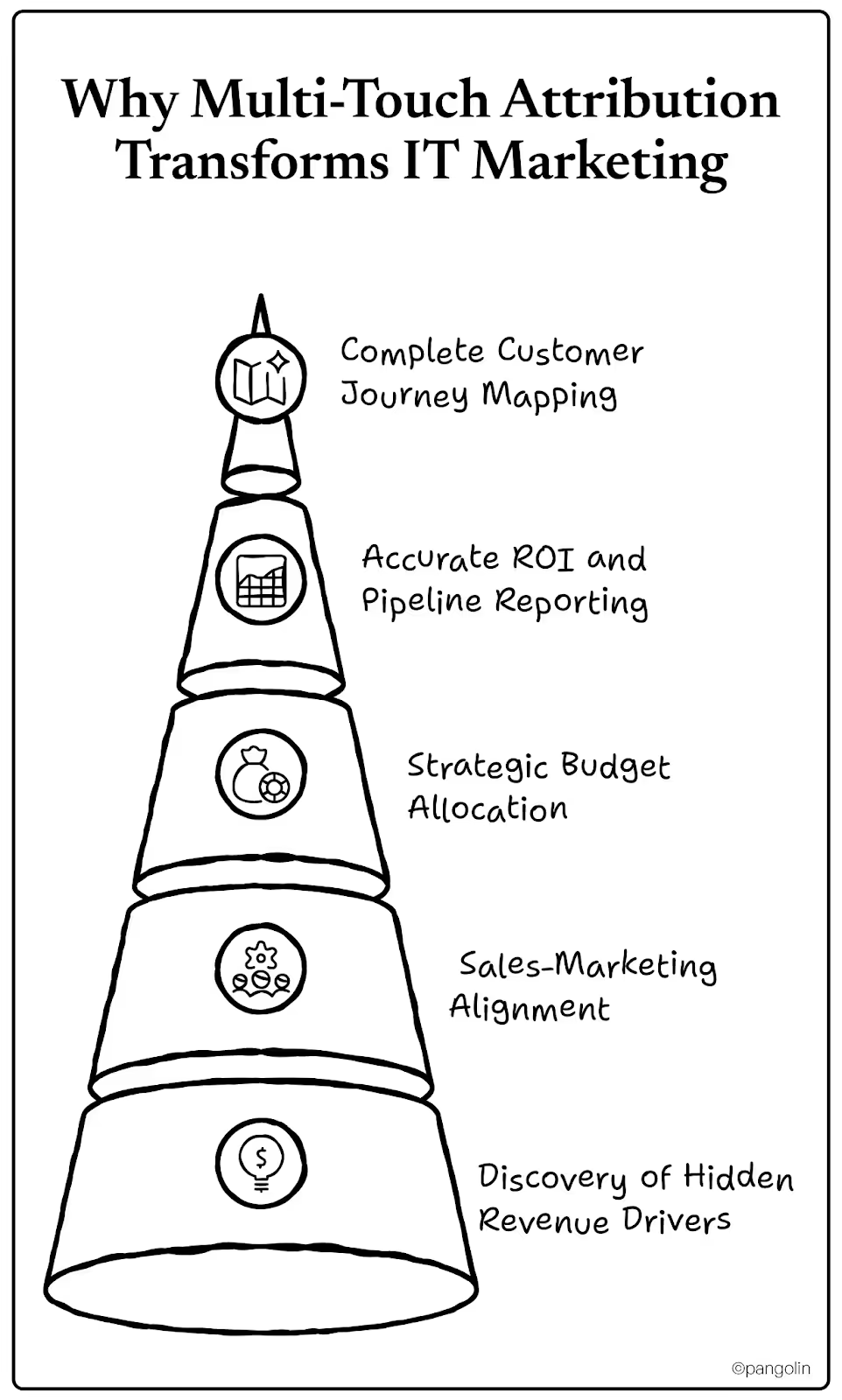
Multi-touch attribution reveals the actual path prospects take.
You discover that most closed deals follow this pattern:
With last-click, you only saw "demo request." With multi-touch, you see everything.
Multi-touch attribution connects marketing activities to revenue, not just leads.
You can finally answer:
This is the data leadership actually cares about, not MQLs, not clicks, not impressions. Revenue.
With accurate attribution, you stop guessing and start optimizing.
You discover:
Now you can confidently shift budget toward channels that genuinely drive revenue. Companies implementing multi-touch attribution report 15–25% more efficient marketing spend.
Sales teams stop complaining about "bad leads" when marketing can prove which campaigns source the best opportunities.
Multi-touch attribution shows:
When both teams see the same data, alignment becomes automatic.
Multi-touch attribution surfaces insights last-click hides.
You might discover:
These insights reshape your strategy. You double down on what works. You kill what doesn't.
Theory is nice. Let's get tactical. Here's how to roll out multi-touch attribution without wasting months.
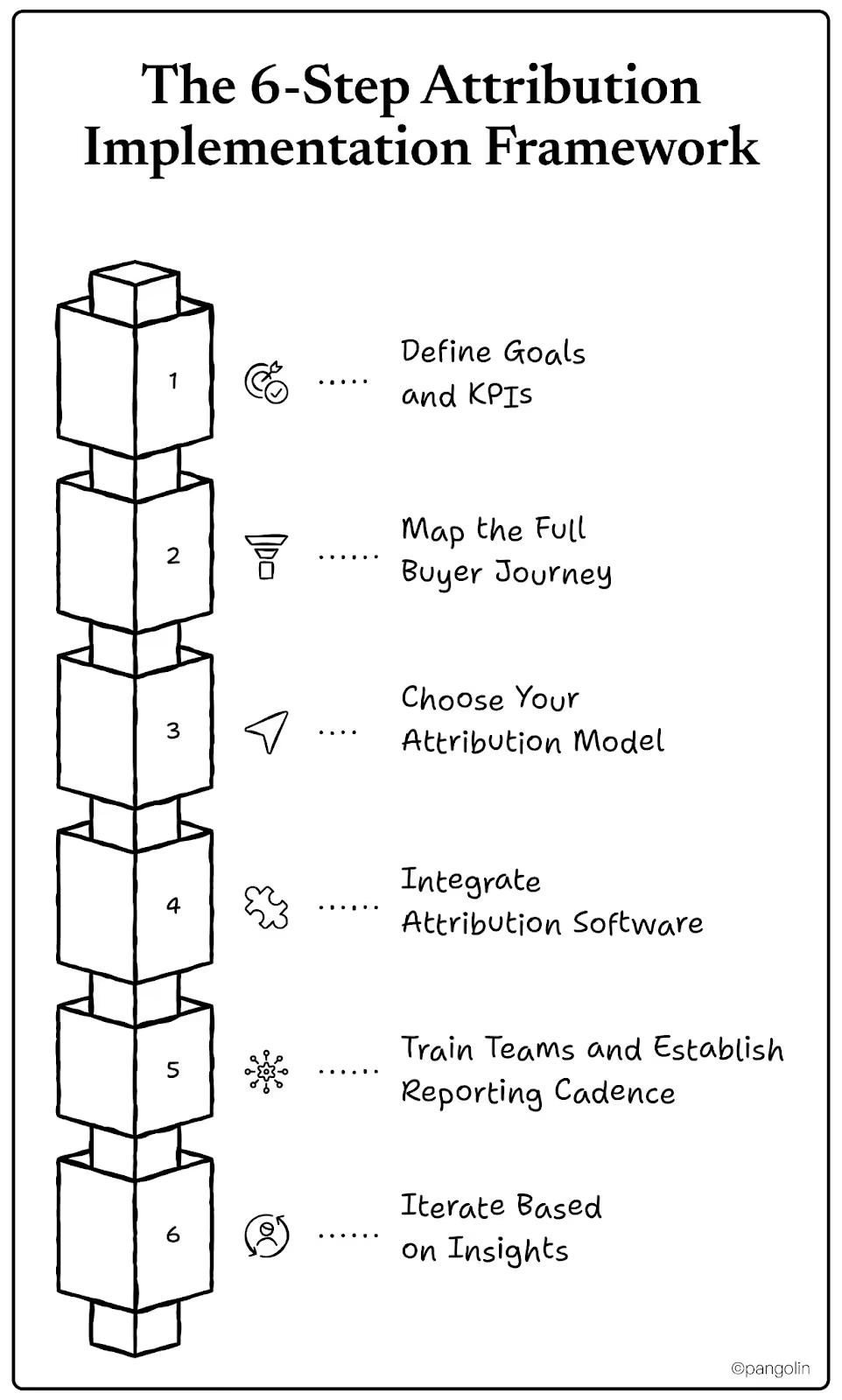
Before you implement attribution, clarify what success looks like.
Ask:
Set clear KPIs:
Document these. Attribution is only valuable if it drives decisions.
You can't attribute what you don't track. Map every touchpoint.
Online channels:
Offline channels:
The key: Every touchpoint must flow into your CRM. If you can't track it, you can't attribute it.
Match model complexity to your organizational maturity and data quality.
If you're just starting: Use W-shaped attribution. It's sophisticated enough to capture the full journey (first touch, lead creation, opportunity creation) but simple enough to implement without advanced data science.
If you have clean data and analytics resources: Use data-driven attribution. Let machine learning identify the touchpoints that truly drive conversions. This is the most accurate, but also the most complex.
If you're budget-constrained: Start with linear attribution. It's not perfect, but it's better than last-click. Every touchpoint gets equal credit. You'll uncover insights last-click missed.
Don't overthink this. Pick a model, implement it, learn from it. You can refine later.
Attribution requires data from multiple sources, CRM, marketing automation, analytics, ad platforms. Integration is non-negotiable.
Free/Entry-Level:
Google Analytics 4 (Free): Offers basic multi-touch attribution and data-driven models. Limited B2B capabilities but good starting point.
Mid-Market Solutions:
Bizible (Adobe Marketo Measure) (Contact for pricing): Deep CRM integration (Salesforce, Marketo). W-shaped and custom models. Best for mid-to-large IT firms.
Dreamdata ($999/month): Built for B2B. Account-level attribution. Tracks full buyer journey. Ideal for ABM-focused IT companies.
HubSpot Marketing Hub ($890+/month): Multi-touch attribution included in Professional and Enterprise tiers. Best if you're already in the HubSpot ecosystem.
Enterprise Solutions:
Adobe Analytics (Contact for pricing): Advanced algorithmic attribution. Requires significant implementation resources. Best for large enterprises with dedicated analytics teams.
Salesforce Marketing Cloud (Contact for pricing): Einstein AI-powered attribution. Native Salesforce integration. Best for Salesforce-centric IT companies.
Integration checklist:
If tools don't integrate, you're back to manual data stitching, which defeats the purpose.
Technology doesn't deliver ROI. People do.
Train your team:
Set reporting cadence:
Build dashboards:
Create executive-level dashboards showing:
Make attribution data accessible. If only you can read the reports, insights won't drive decisions.
Attribution isn't "set and forget." It's a continuous optimization loop.
Month 1–3: Identify obvious gaps. Are channels missing? Are touchpoints untracked? Fix data hygiene issues.
Month 4–6: Test hypotheses. "LinkedIn drives awareness but doesn't convert." Try retargeting LinkedIn engagers with Google Display ads. Measure lift.
Month 7–9: Refine your model. If time-decay undervalues top-of-funnel, switch to W-shaped. If you have enough data, pilot data-driven attribution.
Month 10–12: Optimize spend. Shift budget toward high-ROI channels. Kill underperformers. Scale winners.
The companies that win with attribution treat it as a living system, not a one-time project.
Let's break down your options by firm size, budget, and complexity.
How to choose:
Don't overthink it. Pick a tool that integrates with your existing stack. You can switch later if needed.
Even with the right model and tools, attribution implementations hit snags. Here's what to watch for.
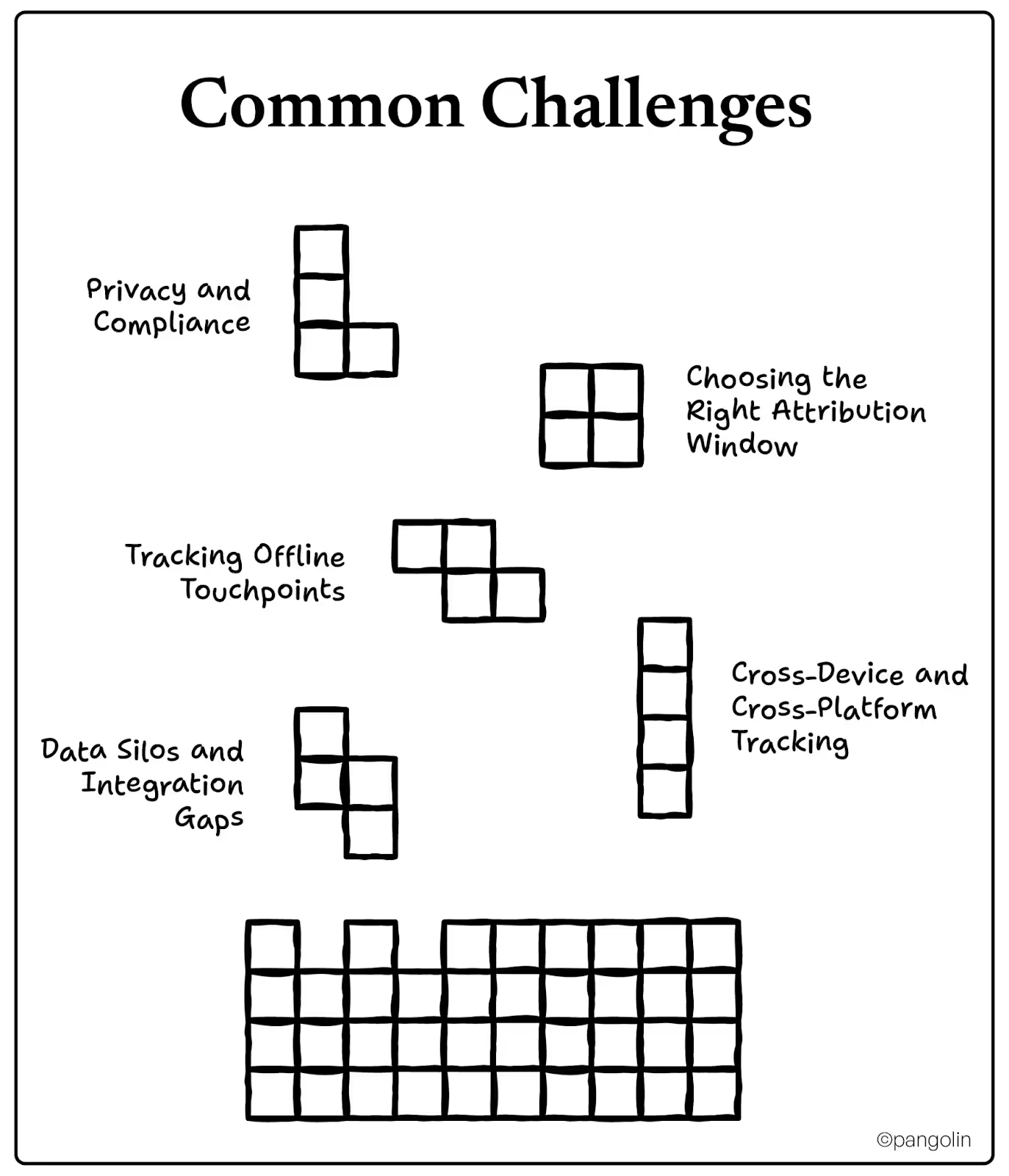
The problem: Your CRM, marketing automation, and analytics platforms don't talk to each other. Leads exist in Salesforce, campaigns live in HubSpot, ad data sits in LinkedIn Campaign Manager. You're manually stitching datasets, or worse, not connecting them at all.
The fix: Prioritize tools with native integrations. Bizible + Salesforce. HubSpot + HubSpot CRM. Google Analytics 4 + Google Ads. If you must use third-party connectors (Zapier, Segment), test thoroughly. Ensure bidirectional data flow.
The problem: How far back should you track touchpoints? 30 days? 90 days? 12 months? Too short and you miss awareness activities. Too long and you credit irrelevant interactions.
The fix: Match your attribution window to your average sales cycle. If your IT services close in 6–9 months, use a 9–12 month attribution window. Track all touchpoints within that window. Review quarterly and adjust.
The problem: Events, conferences, direct mail, phone calls, these happen offline, but they influence deals. If you don't track them, your attribution is incomplete.
The fix:
Every offline touchpoint should create a CRM record. If it's not in the CRM, it's not in your attribution model.
The problem: A prospect sees your LinkedIn ad on mobile, visits your website on desktop, and requests a demo on a tablet. If you're not tracking across devices, they look like three different people.
The fix: Implement unified customer IDs. When someone fills out a form or logs into your site, tie all their sessions (mobile, desktop, tablet) to one CRM record. Tools like Segment and mParticle help unify cross-device data.
The problem: GDPR and CCPA restrict tracking. You can't attribute what you can't legally track.
The fix: Focus on first-party data, information prospects voluntarily provide (form fills, account creation, email subscriptions). Minimize third-party tracking cookies. Be transparent about data usage. Provide opt-out options. Compliance isn't optional.
Let's make this concrete. Here's how a mid-sized IT services firm implemented W-shaped attribution with Bizible.
Company: Cloud infrastructure consulting firm, 150 employees, $30M revenue
Challenge: Marketing couldn't prove ROI. Sales complained leads were low quality. CEO threatened budget cuts.
Goal: Implement multi-touch attribution to identify which channels drive revenue.
Month 1: Conducted attribution audit. Discovered they were using last-click attribution in Salesforce. LinkedIn, webinars, and content got zero credit despite massive investment.
Month 2: Selected Bizible for deep Salesforce integration. Chose W-shaped attribution (first touch, lead creation, opportunity creation).
Month 3: Integrated Bizible with Salesforce, HubSpot, LinkedIn, Google Ads, and Zoom (webinar platform). Tagged all historical campaigns.
Month 4: Launched attribution dashboards. Trained marketing and sales teams on reading reports.
Insight 1: LinkedIn ads didn't generate immediate leads, but accounts engaging with LinkedIn content closed 48% faster than cold accounts. Previously invisible, now proven.
Action: Increased LinkedIn budget by 35%. Built retargeting campaigns for LinkedIn engagers.
Insight 2: Webinars had low attendance (avg. 40 attendees), but webinar leads converted to opportunities at 3.2× the rate of other sources.
Action: Doubled webinar frequency. Promoted past webinar recordings as gated content.
Insight 3: Thought leadership blog posts didn't generate direct conversions, but deals with blog engagement required 38% fewer sales touches.
Action: Scaled content production. Built nurture sequences highlighting relevant blog posts for each persona.
Outcome:
Don't wait for perfection. Start small, prove value, scale.
By day 30, you'll have working attribution. By month 3, you'll have actionable insights. By month 6, you'll have measurably better ROI.
It's a strategic imperative.
Without multi-touch attribution, you're flying blind. You're crediting the wrong channels. You're wasting budget on underperformers. You're starving the channels that actually drive revenue. And you can't prove marketing's impact when leadership asks.
With multi-touch attribution, everything changes:
The companies pulling ahead in IT marketing aren't guessing which channels work. They're measuring, optimizing, and scaling based on attribution data.
Start with W-shaped attribution. Implement it within 30 days. Prove value within 90 days. Scale based on insights.
Need help implementing multi-touch attribution for your IT marketing team? Pangolin specializes in RevOps, marketing analytics, and attribution strategy for B2B IT companies. We'll help you choose the right model, integrate your tools, build dashboards, and train your team so you can prove ROI and optimize spend with confidence.
This piece was authored by Kavya Somani and Aniket Panja, content strategists specializing in B2B marketing frameworks. Design and visual identity were led by Adhiraj Jadhav and Sohini Some. Adil Abdul and Yugandhar LakshmiNarayana shaped the user experience, while Yuva Priyadarshini and Aniket Singh optimized for search and discoverability. Deepti Karn served as project manager.
Special thanks to Avani Nagwann and Shashank Ayyar for their guidance throughout development.

Aniket leads content marketing at Pangolin, writing and editing for B2B tech clients who need sharp messaging and consistent output. He came from journalism and brings that newsroom discipline to content work, turning drafts around quickly and keeping quality high.