TL;DR
Ravi stood at the electrical supplies counter in Pune with three loyalty program cards in his wallet.
One from Polycab, another from Havells and ne from a regional brand whose name he'd already half-forgotten.
All three offered cashback.
All three wanted him to scan QR codes.
All three promised points that would eventually, someday, turn into something he could use.
But when the dealer asked him which brand he wanted for the apartment wiring job he'd just landed, Ravi didn't hesitate. "Polycab," he said.
The dealer raised an eyebrow. "The other brand is offering 2% better cashback this month. You sure?"
Ravi nodded. He was choosing Polycab because two months ago, his wife had a medical emergency, and the insurance that came through his Polycab Experts membership covered the hospitalization. When he scanned that first invoice and found out he qualified for medical coverage for himself and his spouse, something shifted.
That's the difference between transactional loyalty and emotional loyalty. One disappears the moment a competitor offers ₹10 more. The other survives because it's built on something cashback can never buy: genuine care, professional respect, and identity.
This is the story of how electrical brands are moving from cashback wars to community building. And why the ones making that shift are pulling so far ahead that competitors can't catch up with price alone.
Every single brand offers cashback. Polycab, Havells, Crompton, your brand, even the regional player nobody's heard of outside Maharashtra.
When everyone offers the same thing, it stops being a differentiator and becomes table stakes. Worse, it becomes a race to the bottom where the only variable that matters is who can afford to bleed margin fastest.
This is what commoditization looks like.
Electricians juggle 8 to 12 different brand loyalty schemes but actively engage with only 1 to 2. They sign up for yours because the dealer mentioned it at the counter. They scan an invoice or two to see if it works. Then they stop. 50-60% of electricians who express interest drop off before completing their first real action. Of those who do make it through onboarding, more than 50% become inactive within the first month.
Research from across India, the Middle East, and Southeast Asia has shown that.
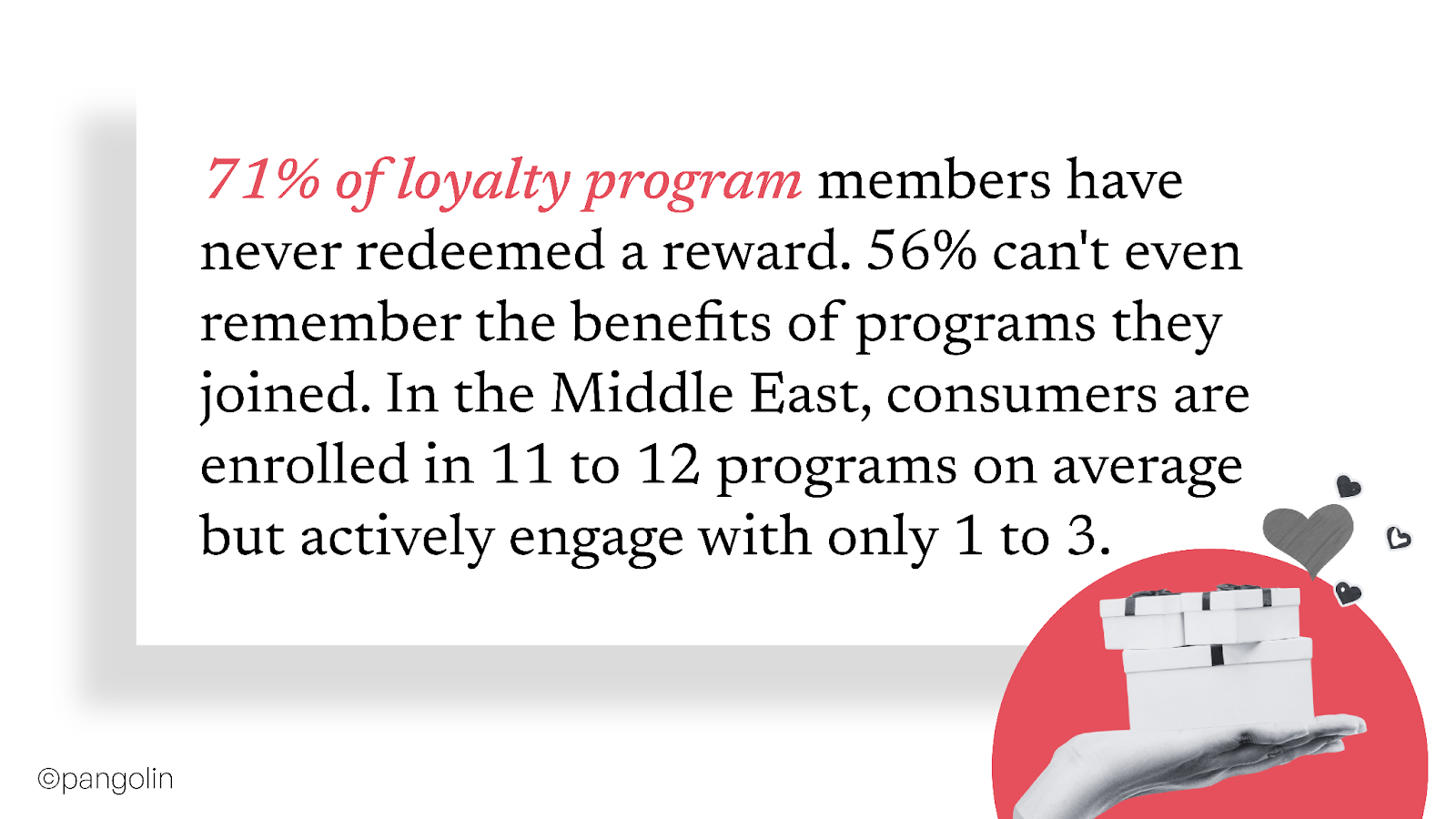
The pattern is identical everywhere. High enrollment meets low engagement, and brands celebrate activity while electricians quietly churn.
Why does this keep happening? Because transactional loyalty is built on a foundation that crumbles the moment someone offers a better deal. There's zero switching cost. There's zero emotional attachment. There's zero reason for an electrician to stay beyond the calculation of "Who gives me the most money right now?"
Emotional loyalty works differently. It drives 43% of business value while features and price together account for only 20%. Emotionally engaged trade partners show 82% higher retention rates. Their Net Promoter Scores climb above 50 while transactional programs languish at 30 to 40. Their lifetime value multiplies 2 to 3 times because they stop shopping around and start consolidating purchases with brands they genuinely prefer.
In the electrical trade, that's the difference between competing on every quote and having electricians specify your brand without being asked. Between margin compression and margin protection. Between loyalty as cost center and loyalty as growth engine.
The problem with most conversations about emotional loyalty is they stay frustratingly abstract. "Build community." "Create shared values." "Foster belonging." None of that feels concrete enough when you're trying to figure out what to actually do on Monday morning with electricians who work 5 to 6 job sites daily with 2% phone battery and patchy WiFi.
So let's get specific.
Emotional loyalty in the electrical trade context means an electrician chooses your brand not because he calculated the best cashback rate but because your program addresses something he cares about beyond money. His professional growth, family's security, status among peers and sense of being respected as a skilled professional.
When Polycab launched medical insurance for electricians and their spouses, they weren't offering a loyalty benefit. They were offering life security. Over 8,000 electrician families now have medical coverage because Polycab understood that an electrician working on scaffolding 30 feet above ground with live wires in cramped spaces worries about what happens to his family if something goes wrong.
That's emotional loyalty. That shifts the internal conversation an electrician has from "What cashback percentage?" to "This brand actually cares about my family." Competitors can copy cashback structures in weeks. They can't replicate the trust that comes from genuinely addressing whole-life needs.
In 2019, when Asian Paints trained 156,000 painters across 18 regions with skill certifications they could monetize immediately, they were building career capital. A painter who completed the academy training could command higher rates from customers because he demonstrated superior color knowledge and technique. That's emotional loyalty rooted in professional growth, not discounts.
When Castrol FastScan enrolled 150,000+ mechanics by solving their cash flow stress, reducing payment cycles from 60 to 90 days down to minutes with direct bank transfers, they weren't just speeding up rewards. They addressed a real daily struggle. Average daily transactions exceed 100,000 with INR 6 crores reimbursed monthly. But the real win was treating mechanics like professionals who needed financial inclusion and respect, not just reward points.
These programs work because they understand a fundamental truth about human psychology. People want to feel valued, they want to grow, their work to mean something beyond the transaction and to belong to communities that respect their craft.
Here's where most brands stumble. They hear "build community" and immediately think of Facebook groups, WhatsApp broadcasts, and quarterly meet-ups. Then they launch generic events nobody attends, post content nobody engages with, and conclude that "community doesn't work for trade partners."
Community in the electrical trade isn't about digital forums. It's about creating a sense of belonging through tangible recognition, shared professional development, peer networks, and family inclusion that makes electricians feel like they're part of something bigger than a transaction.
When an electrician gets to Gold level in Polycab Experts or Platinum level in Havells E-Plus, that level becomes part of his professional brand. He can say to customers, "I'm a Platinum level Polycab Expert." That shows skill and dedication in a way that cashback never could.
The tier badges aren't just pictures in the app. They're things that electricians wear with pride at work to show who they are. They become living proof. They make people want to do things. An electrician buys everything from one brand to get to the next level, which increases their share of wallet. He tells peers to unlock referral benefits at higher levels. He finishes training modules to keep or improve his standing.
Schneider Electric's partner program rewards electricians for completing product certifications, safety courses, and installation tutorials. Training becomes gamified. Learning modules add points. Certifications unlock rewards and career development opportunities.
This works because it addresses the electrician's future, not just his present income. When training helps him become more competent in front of customers, command higher rates, and win more jobs, the brand becomes a career partner, not just a supplier.
This is the breakthrough insight that separates leaders from followers in emotional loyalty. Electricians don't just want more money. They want security for their families.
Polycab's medical insurance for electrician and spouse directly addresses this. Havells' ₹1 lakh accident coverage does the same. Some programs are starting to add education scholarships for electricians' children.
When an electrician tells his wife "My loyalty program gave us medical insurance," that's a conversation no competitor cashback offer can touch. That's emotional loyalty anchored in family security. That creates switching costs rooted in life protection, not spreadsheet calculations.
The most advanced community-led loyalty programs that electrical businesses are creating encourage top electricians to help influence product development, give feedback on new products, and serve on regional advisory councils.
This isn't just a token effort; it's real co-creation. Electricians feel like they own something when their ideas are used in product design or program functionality. Because they helped establish the brand, they become advocates who defend it in talks with competitors.
Electricians have greater faith in other electricians than they do in brands. Successful programs use this by having peer recognition systems and referral mechanics that reward users for getting their friends to join the group.
When top performers are recognized at regional events, shown in brand materials, or given exclusive access to new items before anybody else, it reinforces their standing. When they refer friends and get bonuses, that referral becomes social proof. "It must be good if Ramesh is in this program and is telling people about it."
Let's talk about what happens when you get emotional loyalty right at scale. GM Modular's Bandhan loyalty program faced the same challenge every electrical brand faces. Low adoption and high churn. Transactional relationships where electricians, retailers, and wholesalers switched brands for marginally better deals.
Instead of launching another cashback scheme, they built a movement around a single, culturally loaded phrase: "Aur Milega."
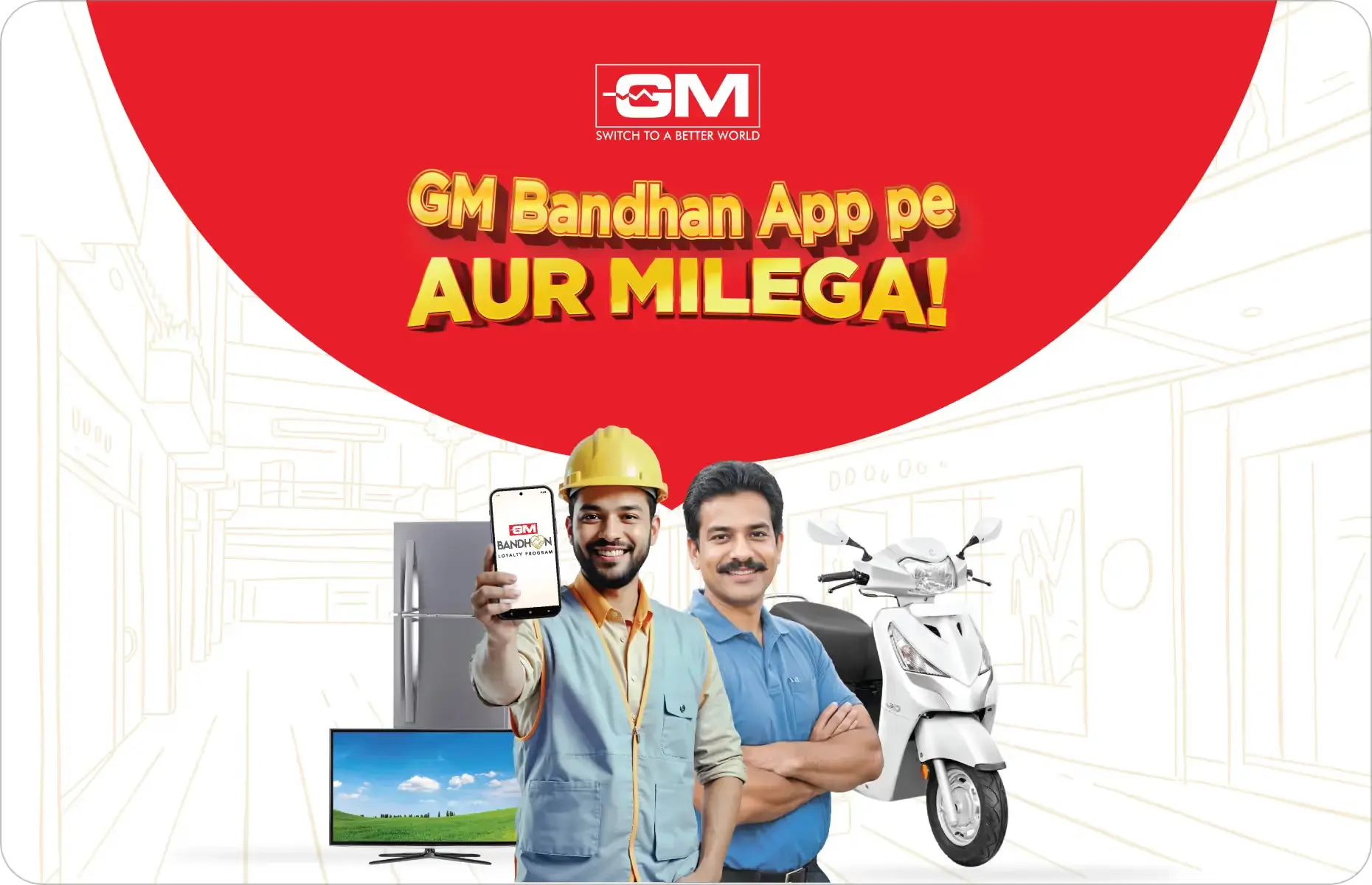
Those two words tap into instant familiarity for every electrician in India. It's the phrase used in bargaining conversations at every counter. But GM Modular flipped it from a question into a promise. You will always get more with Bandhan. More respect, progress, career capital and status.
The campaign was structured in three phases.
Tease. Promise. Proof.
Each phase targeted specific mindsets.
For electricians skeptical about yet another loyalty scheme: "Show me it's worth my time."
For trade partners tired of hollow promises: "Prove you care about my future."
For wholesalers and retailers looking for differentiation: "Make me proud to show this off."
The phrase "Aur Milega" became instantly iconic inside GM Modular. Senior leadership compared it to cultural campaigns like Fogg's advertising for its resonance and simplicity. It earned viral recognition before the public launch even happened.
This is what emotional loyalty looks like when it's executed brilliantly. It's not a loyalty program. It's a movement. It's not asking electricians to join a scheme. It's inviting them into a community that speaks their language, respects their reality, and promises ongoing value that goes beyond transactions.
The activation drove record loyalty app downloads, QR scan rates, and repeat program engagement across retailers, wholesalers, electricians, and counter staff. Not because the cashback was better. Because the emotional narrative was authentic, culturally resonant, and built on respect.
Read the entire case study here.
The biggest fear most brands have when they think about shifting from transactional to emotional loyalty is this: "Do we have to kill our existing program and start from scratch?"
The answer is no. You don't abandon cashback. You transcend it. You layer emotional elements on top of your transactional foundation, creating a bridge from where you are to where you need to be.
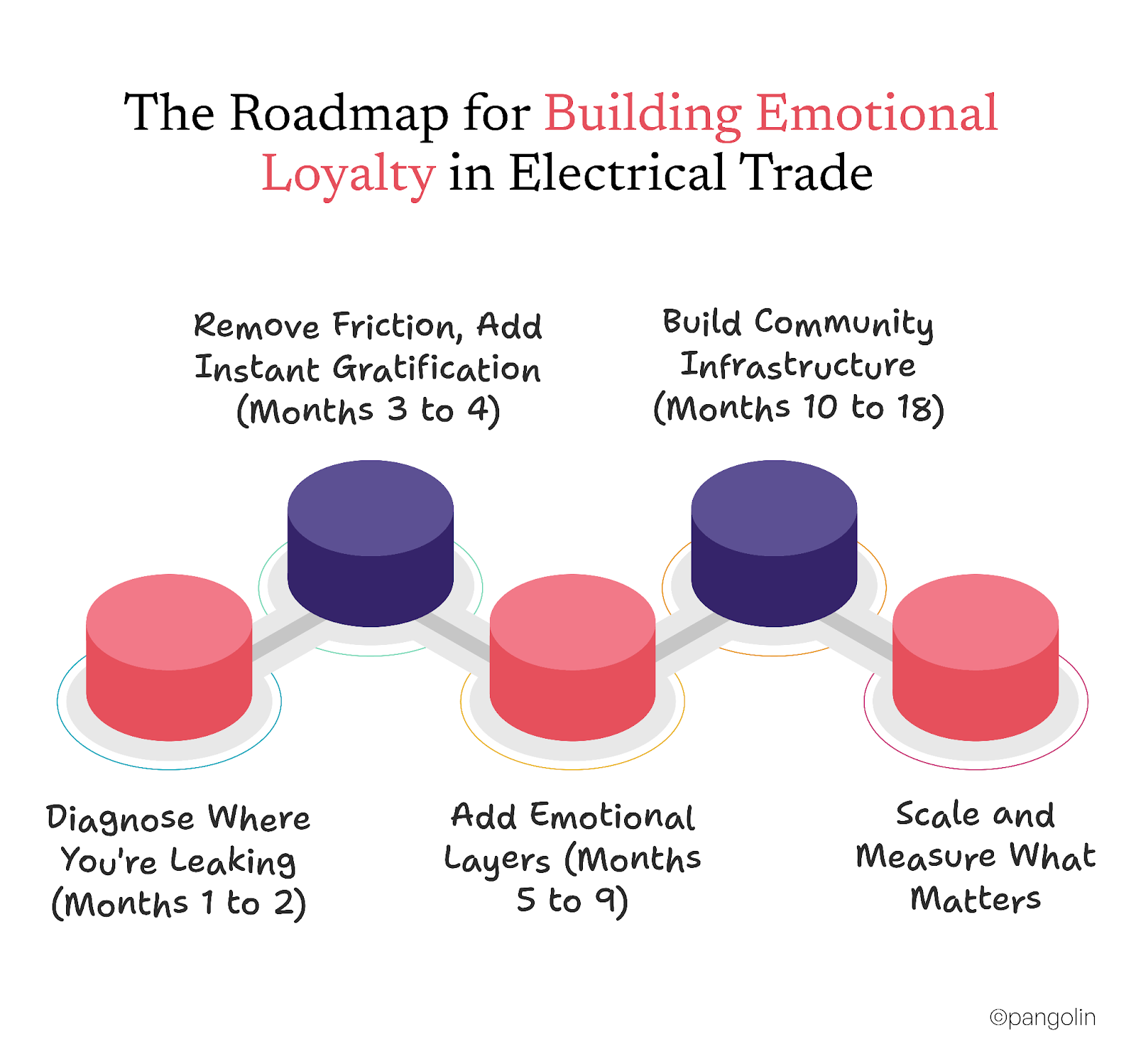
Before you add anything new, understand where your current program is failing. Run the Ground Truth Framework diagnostic to identify where electricians drop off.
Are they not hearing about the program in the first place? That's an awareness and field visibility problem. Are they hearing about it but not signing up? That's a value proposition or friction problem. Are they signing up but not scanning invoices? That's a habit formation and instant gratification problem. Are they scanning but not staying active? That's an emotional engagement and stickiness problem.
You can't fix what you haven't diagnosed. Map your current journey from Unseen to Noticed to Onboarded to Earning to Belonging to Leading. Identify which transition loses the most electricians. That's where you focus first.
Before you layer emotional benefits, fix the transactional foundation. Make signup frictionless. Mobile number and OTP. That's it. Let electricians scan immediately and see points post in real time with instant bank transfer capabilities.
If your current platform can't do instant redemption, that's your first technology upgrade. Delayed rewards kill programs faster than any other single factor. The "Ten-Day Death" is real. When nothing happens for days after an electrician scans, he assumes the system is broken and never returns.
Now you're ready to build on the transactional base. Introduce tier systems with visible status badges. Bronze, Silver, Gold, Platinum. Make progression clear and achievable.
Launch training modules where electricians earn points and certifications for completing product education. Partner with organizations like CSDC or NSDC for recognized credentials electricians can market to customers.
Explore family benefits. Start with something achievable. If medical insurance for 30,000 electricians feels too expensive, pilot with your top 1,000 and expand based on results. If full insurance isn't feasible yet, look at education scholarships, health check-up camps, or family wellness programs.
Add recognition programs. Monthly spotlights for top performers. Regional events where electricians network, learn, and feel valued. Certification ceremonies that make tier progression feel like genuine achievement.
This is where transactional shifts to emotional at scale. Create advisory councils with top-tier electricians who shape product and program direction. When members see their feedback implemented, ownership happens.
Launch referral mechanics that leverage peer trust. Make it easy and rewarding for electricians to bring their networks into the program. Peer-to-peer growth is 10 times more credible than brand marketing.
Build always-on engagement calendars. Not quarterly campaigns. Monthly themes. Weekly content. Real-time responses. Community doesn't happen in bursts. It happens through consistent, ongoing interaction that makes electricians feel like they're part of something active and alive.
Invest in vernacular communication. If your program is English-only, you're excluding electricians across Tier 2 and 3 cities who prefer regional languages.
By now you have emotional loyalty infrastructure running. The question becomes: How do you measure success beyond enrollment numbers?
Track NPS shifts. Transactional programs sit at 30 to 40. Emotional loyalty programs climb above 50. Track referral rates. Five percent is transactional. Fifteen percent signals genuine advocacy. Track share of wallet. If electricians are consolidating 60%+ of purchases with you instead of spreading across 8 brands, emotional loyalty is working.
Track community health metrics. Event attendance. Forum activity. Advisory participation. Training completion rates. These aren't vanity metrics. They're leading indicators of emotional engagement that will compound into retention and lifetime value.
The electrical brands that moved first with family benefits, instant rewards, career development integration, and vernacular communication are already building defensible moats. Polycab's 200,000+ members with 8,000 insurance policies. Havells' comprehensive ecosystem. Crompton's regional training dominance. Asian Paints' skill development positioning.
These aren't advantages competitors can copy by offering slightly better cashback. They're rooted in genuine care, professional respect, and community belonging that takes years to build and minutes to recognize.
You have two paths forward. Continue optimizing the transactional model, offering incrementally better cashback while margins compress and loyalty becomes purely price-driven. Or ask harder questions. What do electricians in your market actually need beyond money? What family benefit would shift perception from supplier to partner? What training would help them earn more in the next five years? What community would make them proud to belong?
Emotional loyalty isn't softer than transactional loyalty. It's harder to build but exponentially more powerful. It delivers 82% higher retention, 2 to 3 times lifetime value, and advocacy that turns electricians into walking testimonials who specify your brand without needing incentives.
The best time to start building emotional loyalty was when Polycab launched medical insurance. The second best time is right now, before another competitor claims the territory you're still thinking about.
Cashback got you in the game. Community keeps you there. The question is whether your loyalty program will be another forgotten app electricians delete after two weeks, or whether it will become part of how they identify themselves professionally. That difference shows up in every metric that matters: retention, share of wallet, referrals, and revenue.