BOFU SEO Strategy for Generating IT Services Leads

January 28, 2026
Table of Contents
Tags
SEO
Campaign Strategy
Industry
B2B Tech
B2B Services

Key Takeaways

  • BOFU content converts at 4.78% vs TOFU at 0.19%, that's 25X higher conversion rates for bottom-funnel keywords​
  • 20 BOFU pieces generated 1,348 conversions vs 397 conversions from 40 TOFU pieces, 3X more results with half the content​
  • 50% of marketers create TOFU content while only 14% create BOFU, yet BOFU drives actual revenue​
  • Identity protection company's "alternatives" page achieved 9% conversion rate from organic search vs typical 1-2% B2B rates​
  • Three BOFU keyword categories: comparison ("[service] vs [competitor]"), alternative ("[competitor] alternatives"), and category + modifier ("managed IT pricing Chicago")​
  • Sales team interviews reveal exact BOFU keywords, questions prospects ask before buying become your target keywords​
  • PPC conversion data identifies which keywords to target with SEO, use paid ads as your keyword testing lab​
  • Six high-converting BOFU content types: comparison pages, alternative pages, pricing pages, case studies, demos/trials, vertical landing pages​
  • Match search intent precisely, if someone searches "pricing," show pricing page (not blog post) or you'll lose them​
  • Bottom-up approach works best: build BOFU first to prove ROI fast, then expand to MOFU/TOFU​
  • B2B appointment setting firm reached position 1 in 4 months with BOFU content, generating 19 qualified leads and 10 opportunities​
  • SurveyMonkey generates $200M annual revenue from BOFU pages alone, proof of long-term value

In 2025, researchers captured the first-ever live footage of a baby colossal squid near Antarctica. For over a century, scientists had studied dead specimens washed ashore, massive creatures with hooks like medieval weapons. They'd documented everything about the squid except the one thing that mattered: how it actually hunted in its natural habitat.​

That's the exact problem with most IT services SEO strategies. Companies obsess over traffic, documenting every click, every ranking, every impression. "We're getting 70,000 visitors from 'what is managed IT services!'" But they never capture what actually matters: how buyers behave when they're ready to purchase.

Here's the brutal math: 20 bottom-funnel content pieces generated 1,348 conversions. Meanwhile, 40 top-funnel pieces generated 397 conversions. Same company. Same time period. The bottom-funnel content produced 3X more conversions with half the effort.​

The conversion rate difference? BOFU (Bottom of Funnel) content converts at 4.78%. TOFU (Top of Funnel) content converts at 0.19%. That's 25X higher conversion rates for BOFU.​

Yet 50% of marketers focus on creating TOFU content while only 14% create BOFU content. They're optimizing for the wrong end of the funnel, chasing traffic instead of revenue.​

This isn't about abandoning awareness content. It's about recognizing that the IT services buyer searching "managed IT services Chicago pricing" is 25X more valuable than the one searching "what is managed IT." And right now, your competitors are capturing those high-intent searches while you're writing another blog post about IT fundamentals.

Let's fix that.

The Traffic Trap: Why You're Drowning in Clicks But Starving for Revenue

The Question Every VP Marketing Is Asking

Walk into any marketing meeting at an IT services company and you'll hear this:

Marketing Manager: "We drove 50,000 visitors last month! Traffic is up 40% year-over-year!"

Sales Leader: "Great. How many qualified leads did we close?"

Marketing Manager: "Well, we generated 200 form fills..."

Sales Leader: "We closed 6. That's a 3% close rate. What are we paying you for?"

Sound familiar?​

Here's what's actually happening: You're ranking for informational keywords that attract researchers, not buyers. You own position 1 for "what is managed IT services", driving thousands of clicks from people who aren't ready to buy anything.​

Meanwhile, your competitor ranks for "managed IT services Chicago pricing" and "alternatives to [incumbent provider]", capturing the 50 people per month who are actually comparing vendors and ready to sign contracts.​

The math: Lower traffic, 25X higher conversion rate = more revenue.​

The Data That Should Change Everything

One identity protection company focused exclusively on bottom-funnel keywords. Their "Lifelock alternatives" page achieved a 9% conversion rate from organic search. That's not a typo. Nine percent. When typical B2B conversion rates hover around 1-2%.​

Another example: An IT services company tracked 8 clicks on the keyword "SDR team outsource." Result? 2 opportunities. That's a 25% conversion rate.​

Compare that to "what is managed IT services", 5,000 clicks, maybe 10 conversions. 0.2% conversion rate.​

The lesson: You don't need more traffic. You need better traffic.

"Would you rather rank #1 for 'what is a KPI' and get 70,000 clicks that are garbage, or get 50 clicks a month on 'Enterprise Data Warehouse' that actually convert?" ,  B2B SEO Expert​

Why Most IT Companies Have This Backwards

The typical content strategy:

  1. Create 100 TOFU blog posts ("What is..." "How to..." "Why...")
  2. Drive tons of traffic
  3. Wonder why nobody converts
  4. Blame sales for "not following up on leads"​

The reality: Those aren't leads. They're readers. Researchers. People in month 1 of a 6-month evaluation who won't buy anything for half a year.​

Meanwhile, someone searching "managed IT services pricing Chicago" or "alternatives to [your competitor]" is in month 6. They're comparing final vendors. They're ready to sign a contract this quarter.​

And you're invisible to them because you spent all your content budget on "what is" articles.​

What BOFU Actually Means (And Why It Matters for IT Services)

The Three Funnel Stages Explained

Let's kill the confusion about TOFU, MOFU, and BOFU:​

TOFU (Top of Funnel / Awareness):

  • Search intent: Learning, exploring, understanding problems
  • Keywords: "What is managed IT," "How does cloud migration work," "IT support vs in-house"
  • Content: Educational blog posts, guides, explainer videos
  • Conversion rate: 0.19%​
  • Mindset: "I think we have a problem. Let me learn about it."

MOFU (Middle of Funnel / Consideration):

  • Search intent: Evaluating options, comparing solutions
  • Keywords: "Managed IT vs MSP," "Cloud migration checklist," "How to choose IT provider"
  • Content: Comparison guides, case studies, webinars
  • Conversion rate: 1-2%​
  • Mindset: "I know I need a solution. What are my options?"

BOFU (Bottom of Funnel / Decision):

  • Search intent: Ready to buy, comparing specific vendors
  • Keywords: "Managed IT Chicago pricing," "[Competitor] alternatives," "Best IT services for manufacturing"
  • Content: Pricing pages, product demos, alternative pages, vertical-specific landing pages
  • Conversion rate: 4.78%​
  • Mindset: "I'm signing a contract this quarter. Who's the best choice?"

The conversion multiplier: BOFU converts at 25X the rate of TOFU.​

The IT Services Buying Journey Reality

Here's how IT services purchases actually happen:​

Month 1-2 (Awareness/TOFU) 

CTO realizes current IT setup is failing. Searches "what is managed IT." Reads 10 blog posts. Not ready to talk to vendors yet.

Month 3-4 (Consideration/MOFU) 

IT manager researches options. Downloads comparison guides. Attends webinars. Building internal case for outsourcing.

Month 5-6 (Decision/BOFU) 

CFO demands vendor options and pricing. Team searches "managed IT services Chicago," "[competitor] alternatives," "enterprise IT support pricing." They're comparing 3-4 specific vendors. Decision happens this month.

The problem: Most IT companies only show up in months 1-2. By month 6, when the buying committee is ready to decide, they're not even in consideration because they didn't optimize for BOFU keywords.​

The 84-day sales cycle: IT services average 84-day sales cycles with 6-10 stakeholders. You can't afford to be invisible when they're ready to buy.​

The Three Categories of BOFU Keywords That Actually Convert

Category 1: Comparison Keywords

The pattern: "[Your service] vs [Competitor]" or "[Solution A] vs [Solution B]"​

Why they work: Buyer is in active evaluation mode, comparing specific options. They've narrowed it down. They're making a decision now.​

Examples for IT services:​

  • "Managed IT vs MSP"
  • "Managed IT vs in-house IT team"
  • "ConnectWise vs Datto"
  • "Microsoft 365 vs Google Workspace for IT firms"
  • "On-premise vs cloud infrastructure"

The opportunity: Most IT companies ignore these because they're afraid to acknowledge competitors. That's a mistake. Buyers are doing these comparisons with or without you. If you're not in the conversation, you lose by default.​

Category 2: Alternative Keywords

The pattern: "[Competitor] alternatives" or "Best alternatives to [Incumbent]"​

Why they work: Captures switchers, buyers actively dissatisfied with current provider and looking for replacement. High intent, high urgency.​

Examples for IT services:​

  • "Best alternatives to [large MSP]"
  • "Managed IT alternatives to Kaseya"
  • "Local IT support alternatives to national MSPs"
  • "Small business IT alternatives to [enterprise provider]"

The case study: Identity protection company's "Lifelock alternatives" page achieved 9% conversion rate from organic search. They listed 5-7 alternatives (including competitors) and positioned themselves as best for a specific use case.​

The psychology: By objectively listing alternatives, you build trust. Buyers think: "They're not trying to hard-sell me. They're helping me make the right choice."​

Category 3: Category + Modifier Keywords

The pattern: "[Service] + [Modifier]" where modifier indicates commercial intent​

Commercial intent modifiers:​

  • Action words: "buy," "get," "hire," "book," "subscribe," "request quote"
  • Commercial terms: "pricing," "cost," "demo," "trial," "discount," "packages"
  • Quality signals: "best," "top," "leading," "premier," "enterprise," "professional"
  • Decision aids: "compare," "review," "vs," "alternative," "options"
  • Specificity: "for [industry]," "for [company size]," "in [location]"

Examples for IT services:​

  • "Managed IT services pricing Chicago"
  • "Best IT support for manufacturing companies"
  • "Enterprise cybersecurity services quote"
  • "24/7 IT help desk pricing"
  • "Cloud migration services for healthcare"
  • "IT consulting firms near me"
  • "Managed security services cost"

The search volume tradeoff: These keywords have lower volume (50-500 searches/month) but convert 10-25X higher than high-volume informational keywords.​

Example comparison:​

  • "What is managed IT": 5,000 searches/month, 0.2% conversion = 10 leads
  • "Managed IT Chicago pricing": 200 searches/month, 5% conversion = 10 leads
  • Same lead volume. But second search has buyers ready to sign contracts.

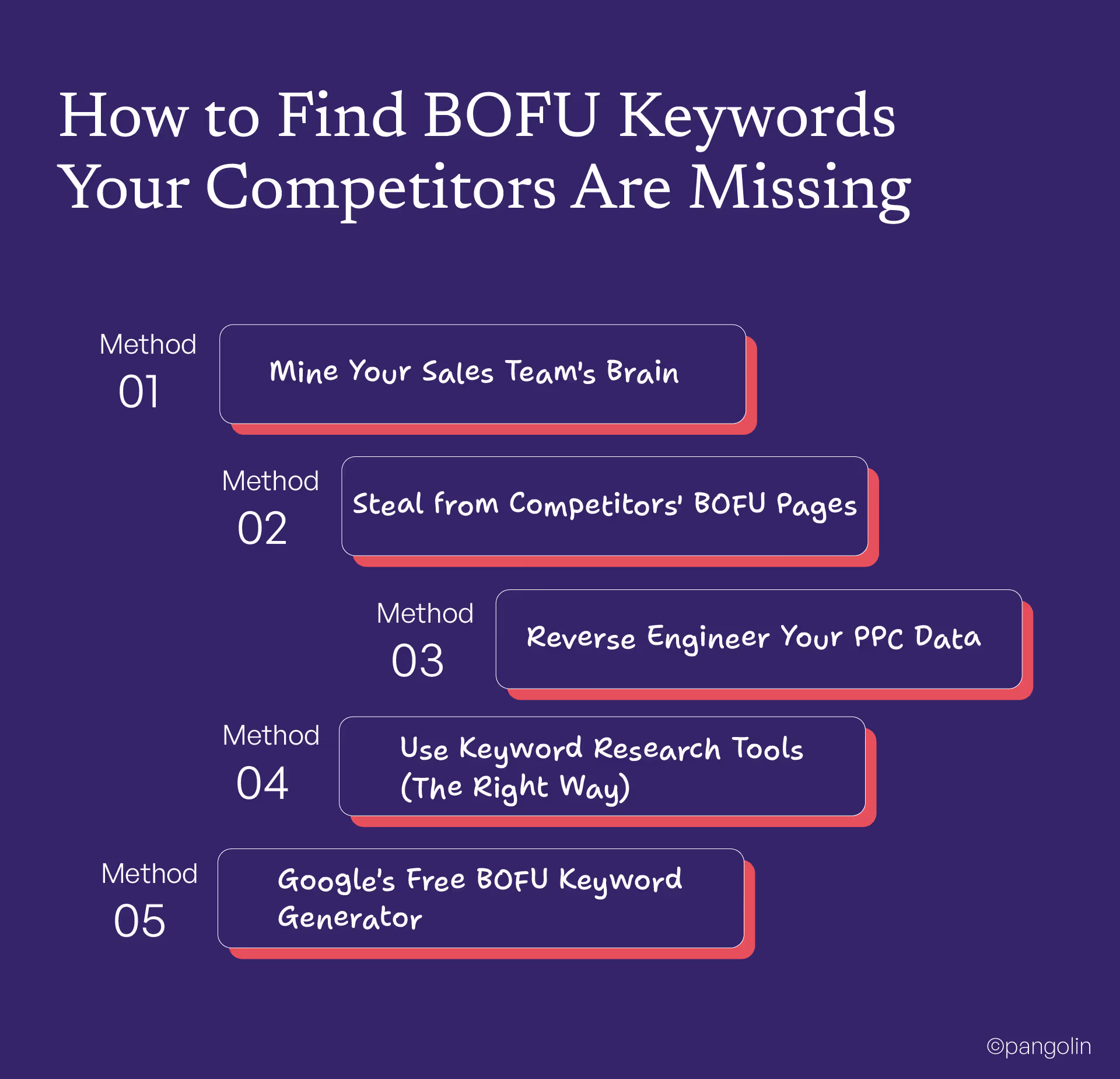
How to Find BOFU Keywords Your Competitors Are Missing

How to Find BOFU Keywords Your Competitors Are Missing

Method 1: Mine Your Sales Team's Brain

Why this works: Your sales team hears the exact questions prospects ask before buying. Those questions = BOFU keywords.​

How to do it:​

  1. Interview 3-5 sales reps
  2. Ask: "What questions do prospects ask right before they're ready to sign?"
  3. Document exact phrases
  4. Turn phrases into keywords

Example questions that become BOFU keywords:​

  • "How much does managed IT cost for a 50-person company?" → "managed IT pricing 50 employees"
  • "What's your SLA for incident response?" → "managed IT SLA response time"
  • "Do you support [specific software]?" → "managed IT for [software] users"
  • "How do you compare to [competitor]?" → "managed IT vs [competitor]"

The gold mine: Sales objections. "Is it worth the cost?" → "managed IT ROI calculator." "How long does implementation take?" → "managed IT implementation timeline."​

Method 2: Steal from Competitors' BOFU Pages

The strategy: Analyze what high-intent keywords competitors rank for, then create better content.​

How to do it:​

  1. Use SEMrush or Ahrefs
  2. Enter competitor domain
  3. Filter for keywords containing: "pricing," "vs," "alternative," "best," "for [industry]"
  4. Sort by traffic value (high intent = high $)
  5. Identify gaps where they rank but you don't

The opportunity: Most competitors half-ass their BOFU content. You can outrank them with better, more comprehensive pages.​

Method 3: Reverse Engineer Your PPC Data

Why this works: Keywords that convert in paid ads = BOFU opportunities for SEO.​

How to do it:​

  1. Pull Google Ads data for last 90 days
  2. Sort keywords by conversion rate (not just volume)
  3. Identify top 20 converting keywords
  4. Check organic rankings, are you ranking for these?
  5. Build SEO content around PPC winners

The shortcut: PPC gives you validated conversion data. You don't have to guess which keywords convert, paid ads already proved it.​

Example: "Managed IT services Chicago" converts at 8% in PPC. You're not ranking organically. Create a Chicago-specific landing page optimized for that keyword.​

Method 4: Use Keyword Research Tools (The Right Way)

The tools: SEMrush, Ahrefs, Google Keyword Planner​

The right way to use them:​

  1. Start with seed keywords: your core services
  2. Filter by commercial intent indicators
  3. Look for BOFU modifiers in results
  4. Prioritize by conversion potential (not search volume)

BOFU modifier list to filter for:​

  • Pricing, cost, quote, estimate
  • Demo, trial, free, buy
  • Best, top, leading, compare
  • Vs, alternative, option, review
  • For [industry], for [size], in [location]
  • Software, tool, platform, solution, service

The mistake everyone makes: Sorting by search volume and targeting high-volume, low-intent keywords. BOFU is about conversion potential, not traffic potential.​

Method 5: Google's Free BOFU Keyword Generator

The tools: Google autocomplete, People Also Ask, Related Searches​

How to use them:​

  1. Type your service + BOFU modifier ("managed IT pricing...")
  2. Note autocomplete suggestions
  3. Scroll to bottom of SERP, check "Related searches"
  4. Click top result, check "People Also Ask" box
  5. Expand PAA questions, reveals buyer intent patterns

Example autocomplete results:

  • "managed IT pricing" → "managed IT pricing models," "managed IT pricing calculator," "managed IT pricing per user"
  • Each = separate BOFU keyword opportunity​

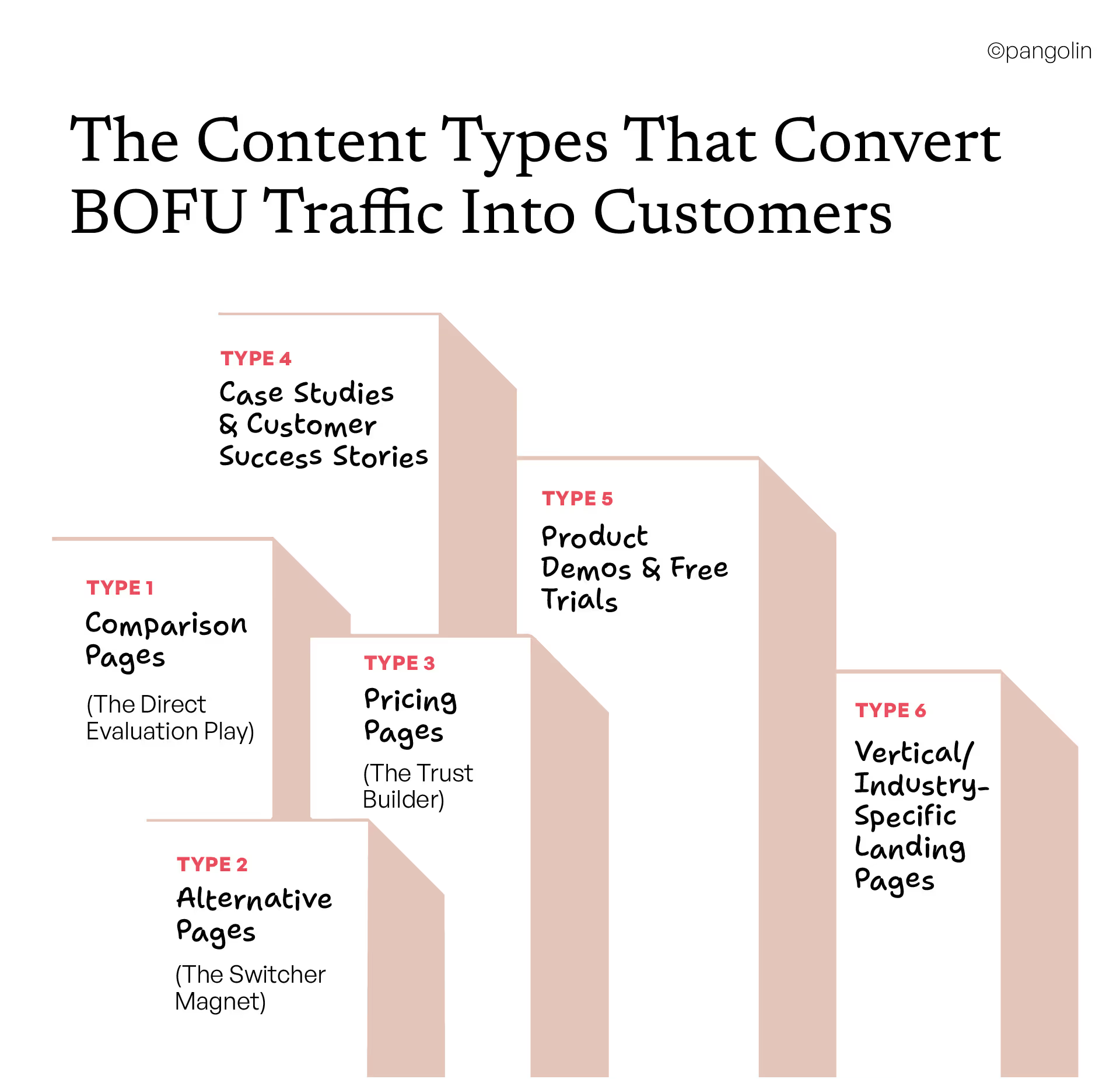
The Content Types That Convert BOFU Traffic Into Customers

The Content Types That Convert BOFU Traffic Into Customers

Type 1: Comparison Pages (The Direct Evaluation Play)

The format: "[Your solution] vs [Competitor]" or "[Solution A] vs [Solution B]"​

Why it converts: Addresses buyer at exact moment they're comparing final options.​

How to structure it:​

  • Side-by-side comparison table: Features, pricing, support, integrations
  • Honest assessment: Acknowledge where competitor wins (builds trust)
  • Clear differentiation: Highlight your unique advantages
  • Use cases: "Best for X" vs "Best for Y"
  • Strong CTA: "See why [500 companies] chose us"

Example: "Managed IT Services: In-House Team vs MSP vs Hybrid Model"​

The psychology: Buyers respect objectivity. If you only bash competitors, you lose credibility. If you honestly assess options, you become a trusted advisor.​

Type 2: Alternative Pages (The Switcher Magnet)

The format: "Best [Competitor] Alternatives for [Audience]"​

Why it converts: Captures dissatisfied customers actively looking to switch providers.​

The proof: "Lifelock alternatives" page = 9% conversion rate from organic search (vs. typical 1-2% B2B rate).​

How to structure it:​

  • List 5-7 legitimate alternatives (including competitors)
  • Objective overview of each option
  • Pros/cons for each
  • "Best for" scenarios
  • Position yourself as best fit for specific use case
  • CTA: "See how we compare"

The risk worth taking: Yes, you'll send some prospects to competitors on your list. But you capture the search visibility and establish yourself as the objective resource.​

Example: "Top 7 Alternatives to [Large National MSP] for Mid-Market Companies"​

Type 3: Pricing Pages (The Trust Builder)

The format: Transparent pricing with clear packages/tiers​

Why it converts: Removes #1 objection; shows you have nothing to hide.​

How to structure it:​

  • Clear tier names (not "Bronze/Silver/Gold", use value-based names)
  • Feature comparison table
  • Price ranges or starting prices
  • "Most Popular" badge on recommended tier
  • ROI calculator or value calculator
  • CTA: "Get Custom Quote" or "See Exact Pricing for Your Company"

The common mistake: Hiding pricing behind "Contact sales" form. This kills trust and conversions.​

The exception: Complex enterprise deals where pricing truly varies. Show starting prices or price ranges.​

Example: "Managed IT Services Pricing: Small Business ($3K-5K/month) vs Mid-Market ($10K-25K/month) vs Enterprise (Custom)"​

Type 4: Case Studies & Customer Success Stories

The format: Problem-Agitation-Solution framework with quantified results​

Why it converts: Social proof + measurable outcomes = credibility for high-stakes IT decisions.​

How to structure it:​

  • Client profile: Industry, size, location (recognizable name if possible)
  • Problem: Specific pain points they faced
  • Solution: What you implemented
  • Results: Quantified outcomes ("reduced downtime 73%," "cut IT costs $120K/year")
  • Quote: From actual decision-maker (IT manager, CFO, CEO)
  • CTA: "Get similar results"

Vertical-specific is better: "Manufacturing IT Case Study" beats generic "IT Case Study".​

The proof: Companies with case studies see 8%+ conversion rates vs 4.4% average.​

Type 5: Product Demos & Free Trials

The format: Video demos, interactive product tours, limited free trials​

Why it converts: Removes risk; lets prospects experience value firsthand.​

How to structure it:​

  • Guided video demo: 2-3 minute walkthrough of key features
  • Self-serve interactive tour: Let prospects explore at their own pace
  • Free trial: 14-30 days, low-friction signup
  • Live demo option: "Book a personalized demo"
  • No credit card required: Reduces barrier

The CTA variants:​

  • "Watch 2-Minute Demo"
  • "Try Free for 14 Days"
  • "Book Live Demo"
  • "Get Hands-On Access"

Type 6: Vertical/Industry-Specific Landing Pages

The format: "[Service] for [Industry]" pages​

Why it converts: Hyper-relevant to specific buyer needs; shows you understand their world.​

Examples for IT services:​

  • "Managed IT for Manufacturing Companies"
  • "Cybersecurity for Healthcare Providers (HIPAA Compliance)"
  • "IT Support for Law Firms (Client Confidentiality)"
  • "Cloud Services for Financial Services (Regulatory Compliance)"

How to structure it:​

  • Industry-specific pain points: "Manufacturing can't afford downtime on production lines"
  • Compliance requirements: "HIPAA-compliant data backup and disaster recovery"
  • Vertical expertise signals: Certifications, industry client logos
  • Industry case studies: "How we helped [recognizable company in industry]"
  • Speak stakeholder language: Different concerns for IT managers vs CFOs vs CEOs

The less competitive advantage: "Best IT services" is brutal. "Best IT services for manufacturing" is much easier to rank for.​

Optimizing BOFU Content for Maximum Conversions

The Cardinal Rule: Match Search Intent Exactly

The mistake that kills conversions: Someone searches "managed IT pricing." You rank #1. They click. They land on a blog post about "5 benefits of managed IT." They bounce.​

Why this happens: Content mismatch. Search intent = transactional (want to see pricing). Content type = informational (educational blog).​

The fix: Match content format to search intent:​

  • "Managed IT pricing" → Pricing page (not blog post)
  • "[Competitor] vs [Your company]" → Comparison page (not generic landing page)
  • "Best IT services for manufacturing" → Vertical-specific landing page (not homepage)

How to know what to create: Look at top 3 SERP results. What format are they? Product pages? Comparison articles? List posts? Match that format.​

On-Page SEO for BOFU Pages

The technical checklist:​

  • H1 tag: Include target BOFU keyword
  • Meta title: Target keyword + benefit (60 characters max)
  • Meta description: Target keyword + compelling CTA (150 characters max)
  • URL slug: Clean, keyword-rich (/managed-it-pricing-chicago)
  • First paragraph: Include keyword naturally within first 100 words
  • Image alt text: Describe images with relevant keywords
  • Internal links: Link from TOFU/MOFU content to this BOFU page

Structured data/schema markup:​

  • Product schema: For service pages
  • Review schema: For testimonials/ratings
  • FAQ schema: For common buyer questions
  • Local business schema: For location-specific pages

Why schema matters: Enhances SERP visibility with rich results (star ratings, price ranges, FAQs).​

Conversion-Focused Page Elements

Clear, action-oriented CTAs:​

  • Bad: "Learn More," "Click Here," "Submit"
  • Good: "Get a Quote," "Book a Demo," "Start Free Trial," "See Pricing"

Trust signals (essential for IT services):​

  • Client logos (recognizable brands)
  • Testimonials with photos + names + titles
  • Case study results ("reduced downtime 73%")
  • Security certifications (SOC 2, ISO 27001, GDPR)
  • Industry awards
  • Years in business

Risk reversal:​

  • Free trials ("Try 30 days free")
  • Money-back guarantees
  • "No credit card required"
  • "Cancel anytime"
  • "30-day satisfaction guarantee"

Remove friction:​

  • Simple forms (name, email, company, that's it)
  • Mobile-optimized (most B2B research happens mobile)​
  • Fast page load (every second delay = 7% conversion drop)​
  • Social proof immediately visible (don't bury testimonials)

Internal Linking: The Funnel Flow Strategy

The concept: Guide visitors from awareness → consideration → decision.​

How to implement it:​

  1. TOFU blog post: "What is Managed IT Services?"
    • Include link: "Ready to compare options? See Managed IT vs In-House"
  2. MOFU comparison page: "Managed IT vs In-House IT"
    • Include link: "See pricing and packages"
  3. BOFU pricing page: Conversion happens here

The bottom-up approach: Build BOFU pages first, then create TOFU/MOFU that funnels to them.​

Why this matters: Without internal linking strategy, BOFU pages sit orphaned with no traffic.​

The Biggest BOFU SEO Mistakes (And How to Avoid Them)

Mistake #1: Targeting Too-Generic Keywords

The problem: Going after "best IT services", massively competitive, no differentiation.​

Why it fails: Even if you rank, you blend in with 1,000 other generic providers.​

The fix: Niche down with modifiers:​

  • Add location: "best IT services Chicago"
  • Add vertical: "best IT services for manufacturing"
  • Add company size: "best IT services for 50-100 employee companies"
  • Combine: "best managed IT services for manufacturing companies in Illinois"

Less competitive + more relevant = higher conversion.​

Mistake #2: Hiding Pricing Behind Forms

The problem: Buyer searches "managed IT pricing." Lands on your page. Sees "Contact sales for pricing." Leaves.​

Why it fails: Kills trust. Signals you're hiding something or prices are unreasonable.​

The fix: Show starting prices, price ranges, or pricing models:​

  • "Starting at $3,000/month for companies with 20-50 employees"
  • "Typical range: $5K-15K/month depending on user count and services"
  • "Three pricing tiers: Essential ($3K), Professional ($8K), Enterprise (Custom)"

The exception: True enterprise deals with massive variance. Even then, show ballpark ranges.​

Mistake #3: Weak, Vague CTAs

The problem: CTA says "Learn More" or "Submit".​

Why it fails: No clear value. No urgency. No action specificity.​

The fix: Action-specific, benefit-driven CTAs:​

  • "Get a Free Quote"
  • "Book a 30-Minute Demo"
  • "Calculate Your IT Costs"
  • "See Pricing for Your Company Size"
  • "Start 14-Day Free Trial"

Mistake #4: Creating Blog Posts for Transactional Keywords

The problem: Keyword = "managed IT pricing Chicago" (transactional intent). Content = blog post titled "A Guide to Managed IT Pricing in Chicago" (informational).​

Why it fails: Intent mismatch. Buyer wants to see actual pricing. You gave them an article.​

The fix: Match content type to SERP results:​

  • If top 3 results are product/pricing pages → create product/pricing page
  • If top 3 results are comparison articles → create comparison article
  • Don't force blog format on transactional keywords​

Mistake #5: Ignoring Mobile Optimization

The problem: BOFU page loads slowly or looks broken on mobile.​

Why it matters: Most B2B research happens on mobile; broken mobile = instant bounce.​

The fix:​

  • Mobile-first design
  • Fast load times (target under 3 seconds)
  • Thumb-friendly CTAs (big buttons, easy to tap)
  • Simplified forms for mobile
  • Test on actual devices

Mistake #6: Keyword Cannibalization

The problem: You have 3 pages targeting "managed IT pricing", pricing page, blog post, FAQ page.​

Why it fails: Google doesn't know which to rank; they compete with each other instead of with competitors.​

The fix:​

  • Audit content for keyword overlap
  • Consolidate pages or differentiate targets
  • Use canonical tags if necessary
  • One primary BOFU page per keyword cluster

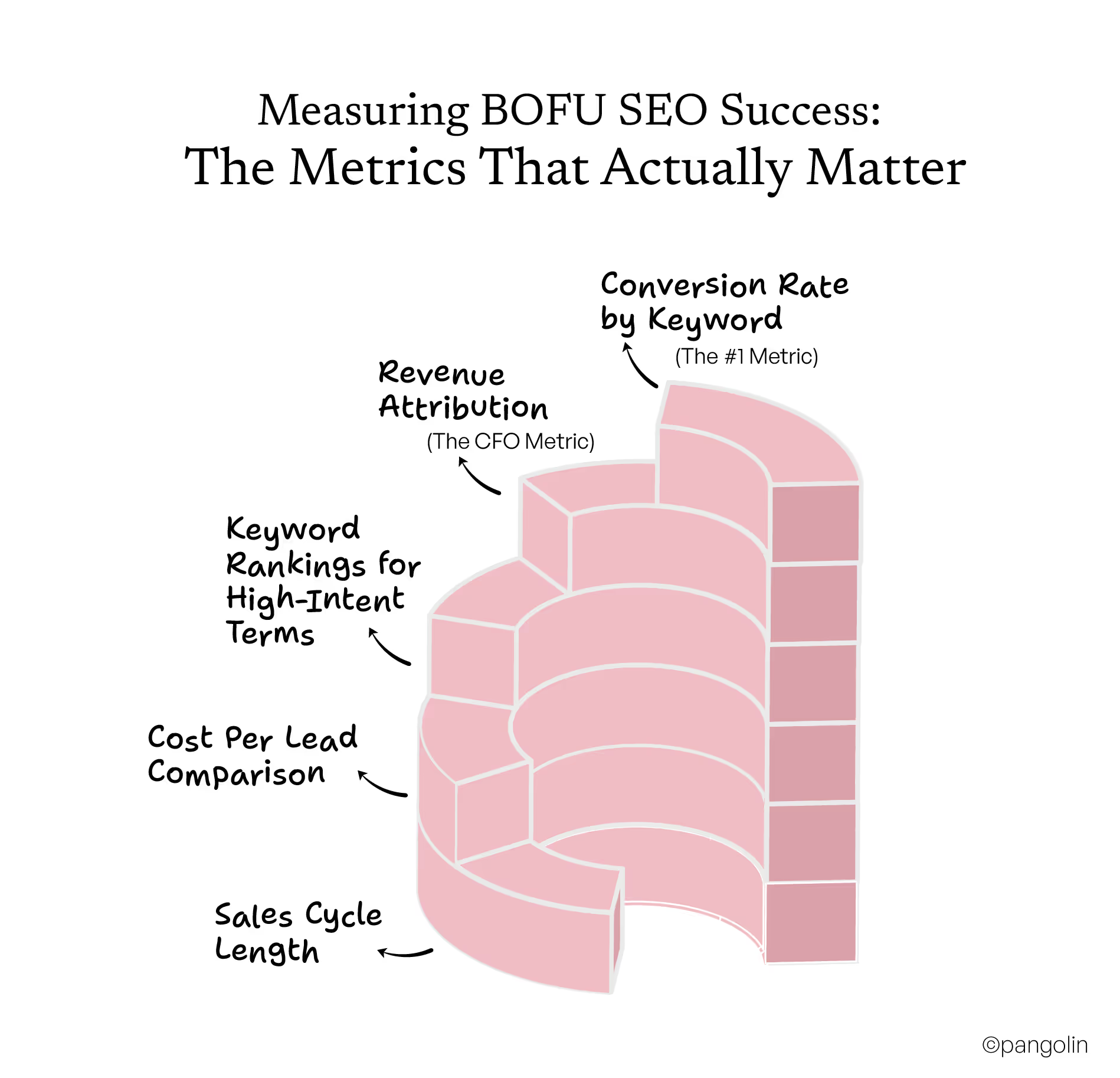
Measuring BOFU SEO Success: The Metrics That Actually Matter

Measuring BOFU SEO Success: The Metrics That Actually Matter

Conversion Rate by Keyword (The #1 Metric)

What to track: Which BOFU keywords drive demos, trials, quotes?​

Formula: (Conversions from keyword ÷ Clicks from keyword) × 100​

Benchmark: BOFU content should convert 4-5%+ (vs 0.5% for TOFU)​

How to track it:

  • Google Analytics: Behavior → Site Search → Conversion tracking
  • Google Search Console: Performance → Queries → Link to GA conversions
  • Tag BOFU pages in GA for segmented reporting

The goal: Identify your 20% of BOFU keywords driving 80% of conversions, double down on those.​

Revenue Attribution (The CFO Metric)

What to track: How much closed revenue came from BOFU pages?​

Why it matters: Proves content ROI in dollars, not vanity metrics.​

How to track it:​

  1. Tag BOFU pages in CRM (first touch, last touch)
  2. Track leads from BOFU pages through pipeline
  3. Calculate: Revenue from BOFU leads ÷ BOFU content cost = ROI

The benchmark: SurveyMonkey generates $200 million annual revenue from BOFU pages alone.​

Keyword Rankings for High-Intent Terms

What to track: Position 1-3 rankings for target BOFU keywords​

Why it matters: Position 1 gets 27.6% CTR; position 10 gets 2.5%. BOFU keywords with low volume require top-3 rankings.​

Tools: SEMrush, Ahrefs, Google Search Console​

The goal: Own position 1-3 for your 20-30 priority BOFU keywords.​

Cost Per Lead Comparison

What to track: BOFU SEO CPL vs paid ads CPL​

The benchmark:​

  • SEO average: $31 per lead
  • PPC average: $110+ per lead
  • BOFU SEO (once established): $15-25 per lead

Why it matters: Proves SEO efficiency vs. paid; justifies continued investment.​

Sales Cycle Length

What to track: Time from first touch to closed deal for BOFU leads vs TOFU leads​

Why it matters: BOFU content should shorten sales cycles by answering objections upfront.​

The hypothesis: BOFU leads close faster because they're already in decision mode.​

The 90-Day BOFU SEO Implementation Blueprint

Month 1: Research & Foundation (Weeks 1-4)

Week 1-2: Discovery

  • Sales team interviews: What questions do buyers ask before closing?​
  • Current audit: Which BOFU keywords are you ranking for? Which are you missing?​
  • Competitor analysis: Which BOFU terms are competitors ranking for?​
  • PPC data mining: Which paid keywords convert best?​

Deliverable: Prioritized list of 20-30 BOFU keywords​

Week 3-4: Strategy

  • Keyword mapping: Match keywords to content types (comparison, alternative, pricing, case study)​
  • Content roadmap: What to create and in what order​
  • Set up tracking: GA goals, conversion tracking, attribution​

Deliverable: 90-day content production calendar​

Month 2: Content Creation & Launch (Weeks 5-8)

Week 5-6: Core BOFU Pages

  • Create 5-7 priority BOFU pages:​
    • 2 comparison pages ("[Your solution] vs [Competitor]")
    • 2 alternative pages ("Best [Competitor] alternatives")
    • 1 pricing page (transparent, tiered)
    • 2 vertical-specific landing pages ("[Service] for [Industry]")

Week 7-8: Optimization & Launch

  • On-page SEO optimization (H1, meta, schema)​
  • CRO elements (CTAs, trust signals, forms)​
  • Internal linking from existing TOFU/MOFU content​
  • Initial link building campaign​

Deliverable: 5-7 live, optimized BOFU pages​

Month 3: Measurement & Scaling (Weeks 9-12)

Week 9-10: Analyze & Optimize

  • Review conversion data: Which pages/keywords performing best?​
  • A/B test headlines, CTAs, form fields​
  • Identify quick wins: pages close to ranking on page 1​

Week 11-12: Scale What Works

  • Create 10 more BOFU pages for secondary keywords​
  • Build supporting TOFU/MOFU content that funnels to BOFU​
  • Expand link building to top performers​
  • Document playbook for repeatable process​

Deliverable: 15-20 total BOFU pages, conversion data report, scaling plan​

Start at the Bottom, Build Your Way Up

Here's the counterintuitive truth: Don't start with TOFU and work your way down the funnel. Start with BOFU and work your way up.​

Why this works:​

  1. Prove ROI fast: BOFU content converts 25X higher, show pipeline impact within 90 days
  2. Secure budget: Once you prove BOFU drives revenue, you get green light to expand
  3. Build authority: Topical authority from BOFU content helps TOFU rank faster
  4. Avoid the traffic trap: Don't waste 12 months creating TOFU content that doesn't convert

The math doesn't lie:​

  • BOFU converts at 4.78% vs TOFU at 0.19% (25X difference)
  • 20 BOFU pieces generated 3X more conversions than 40 TOFU pieces
  • Single alternative page achieved 9% conversion rate
  • BOFU pages generate $200M annual revenue for SurveyMonkey

Your 90-day action plan:

  1. Week 1-2: Interview sales team + analyze PPC data + audit competitors​
  2. Week 3-4: Identify 20-30 high-intent BOFU keywords​
  3. Week 5-8: Create 5-7 core BOFU pages (comparison, alternative, pricing, vertical-specific)​
  4. Week 9-12: Track conversions, optimize top performers, scale what works​

The shift in thinking: Stop asking "How do I get more traffic?" Start asking "How do I capture buyers at the decision moment?"​

Because the IT services company winning in 2025 isn't the one with 100K monthly visitors from "what is managed IT." It's the one capturing the 500 people searching "managed IT services Chicago pricing" and "alternatives to [incumbent provider]", the buyers ready to sign contracts this quarter.​

Stop chasing traffic. Start capturing revenue.

FAQs

What is BOFU SEO and why does it matter for IT services?
How much better does BOFU content convert compared to TOFU?
What are examples of BOFU keywords for IT services companies?
Should I stop creating TOFU content and only focus on BOFU?
How do I find BOFU keywords for my IT services company?
What types of BOFU content should I create for IT services?
How long does it take to see results from BOFU SEO ?
Why should I show pricing on my website if deals vary?
Won't alternative pages send leads to my competitors?
How do I optimize BOFU pages for both SEO and conversion?
What's the biggest mistake IT companies make with BOFU SEO?
How do I measure BOFU SEO success?
Can you show me real examples of BOFU SEO working for B2B companies?
Should I use PPC data to inform my BOFU SEO strategy?
How does BOFU SEO fit with our overall content strategy?
Tags
SEO
Campaign Strategy
Industry
B2B Tech
B2B Services

Still exploring? Deep‑dive articles

View All