79% of leads never convert without systematic retargeting, IT companies waste $200-$800 per lead by failing to nurture warm prospects
Retargeting delivers 43-150% higher conversion rates and 3,600% email ROI, turning existing leads into customers costs less and converts better than cold acquisition
Multi-channel orchestration (email + display + social + search) provides the 7-9 touchpoints B2B buyers need across 3-6 month sales cycles
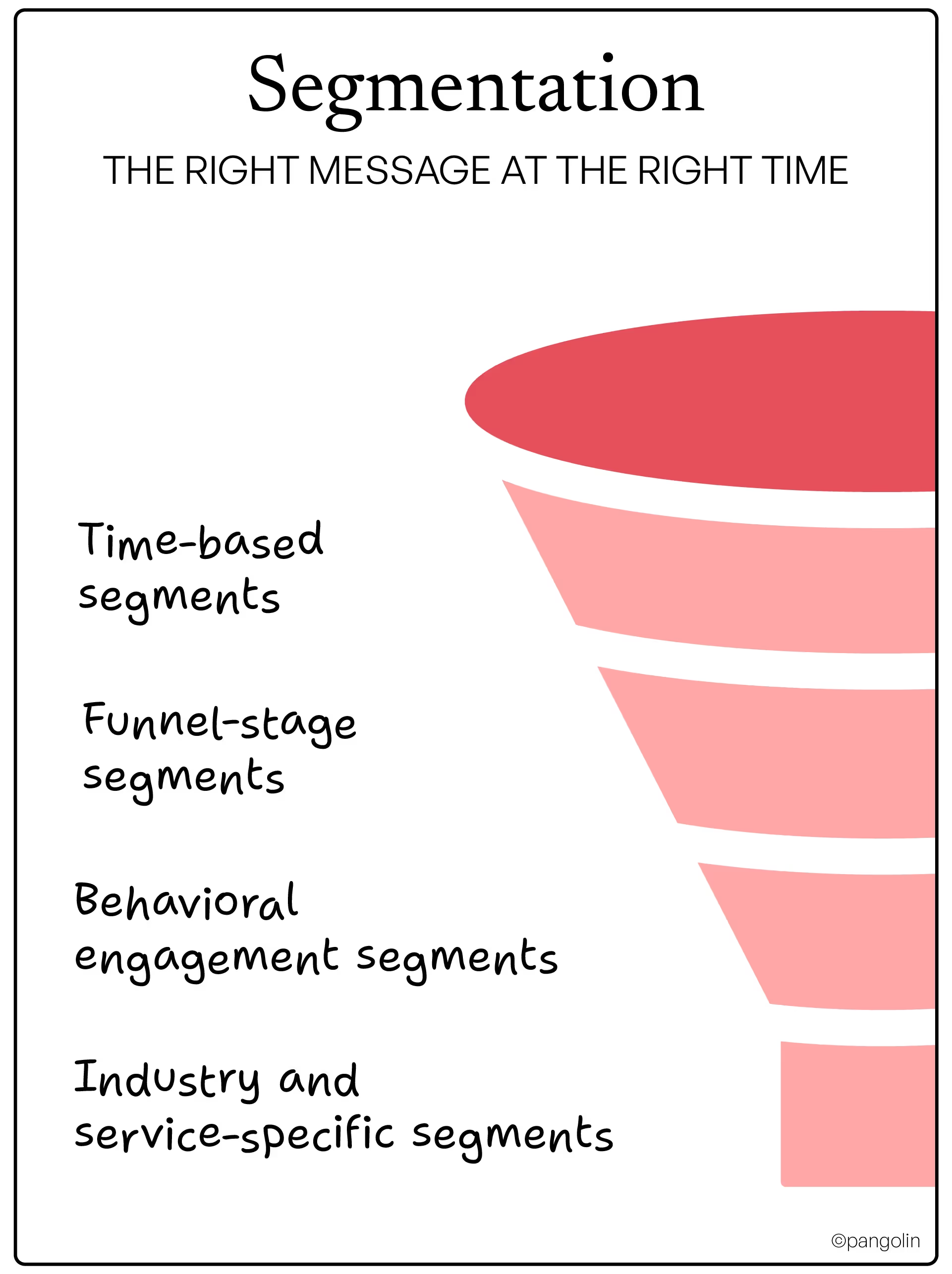
Segmentation by time, funnel stage, and behavior ensures relevant messaging, blog readers need education while pricing page visitors need quotes
AI-powered automation scales personalization without adding headcount, 42% engagement lift and 544% marketing automation ROI
Landing page alignment and mobile optimization are non-negotiable, 80% of retargeting traffic comes from mobile devices
In 2020, Chatsworth Bakehouse launched from a London flat during the pandemic as an "honesty bakery", customers picked up fresh goods and left payment in a jar. The founders didn't plan to go viral. They just showed up consistently where their customers were, week after week, building familiarity and trust through repeated touchpoints.
Their story spread organically on Instagram, and within two years they opened a second location with 45% repeat customers and 55% new customers, the perfect balance of retention and acquisition.
Your IT services company faces the same fundamental challenge, just with $50,000 annual contracts instead of croissants.
You're spending $200 to $800 per lead generating awareness. Decision-makers visit your website, read your content, check your pricing, then... disappear.
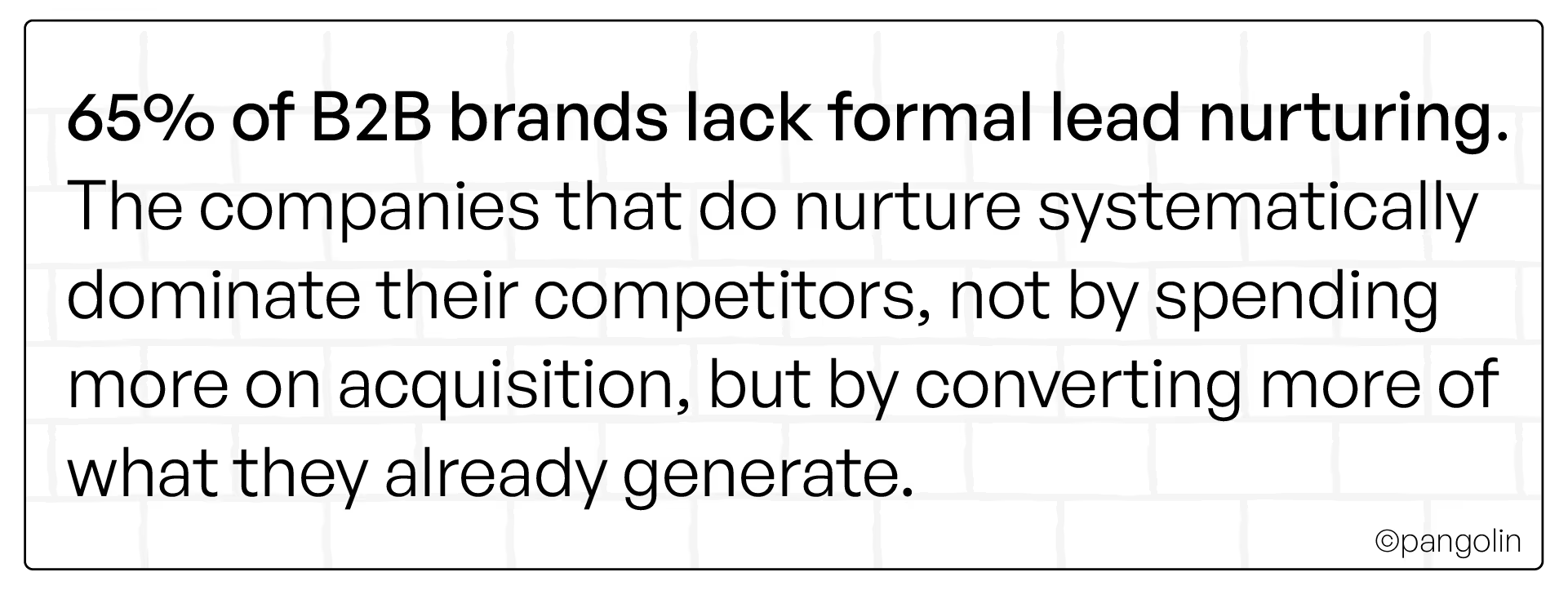
79% of them never convert to sales. Not because your services aren't excellent. Not because they don't need IT support. Because 65% of B2B brands lack any formal lead nurturing process, and 44% of sales reps are too busy to follow up consistently.
Meanwhile, those warm leads, prospects who already know you, already showed interest, go cold. They sign with competitors who bothered to stay in front of them. You keep bleeding budget on expensive new lead generation while ignoring the goldmine of people who've already raised their hands.
Here's what changes everything: Retargeted users convert 43% higher than first-time visitors. With optimization, that jumps to 150% higher conversion rates. Email retargeting delivers 3,600% ROI, $36 back for every $1 spent. Marketing automation (which includes retargeting workflows) averages 544% ROI.
This isn't about chasing strangers. It's about nurturing relationships with people who already know you exist, guiding them from awareness to consideration to decision through systematic touchpoints.
Like Chatsworth Bakehouse showing up consistently where customers were, retargeting keeps you visible throughout the 3-6 month B2B buying journey.
This guide shows you exactly how IT services companies turn website visitors into $50K contracts through multi-channel retargeting, AI-powered personalization, and automated workflows that scale without adding headcount.
Let's make sure your warm leads turn into revenue, not statistics.
The 79% Problem: Why Your Leads Are Walking Away
What warm leads actually are (and why they matter most)
Not all prospects are created equal. Understanding where someone sits on the temperature spectrum determines everything about how you engage them.
Cold leads:
Never heard of your company
No previous interaction or awareness
Require extensive education and trust-building
Long conversion timeline (6+ months minimum)
Expensive to acquire and convert
Warm leads:
Aware of your brand and what you do
Shown interest through specific behaviors
Not ready to buy immediately but considering options
This is where retargeting dominates
Specific warm lead behaviors that signal opportunity:
Newsletter subscribers who haven't engaged beyond signup
Blog readers who consumed 3+ articles
Website visitors who didn't convert (80%+ of all traffic)
Webinar attendees who didn't request demos
Social media followers actively engaging with posts
Form abandoners who started quote requests but didn't finish
Pricing page visitors (high intent, just not ready yet)
Demo requesters who didn't actually schedule
Hot leads:
Ready to purchase right now
Actively evaluating specific vendors
Requesting quotes, demos, detailed proposals
Need closing tactics, not nurturing
Here's the tragedy: Most IT companies obsess over cold acquisition and hot lead closing while completely ignoring the warm middle, where the highest ROI lives.
The business impact of letting warm leads go cold
Let's talk hard numbers:
Typical IT services scenario:
Monthly ad spend: $10,000
Leads generated: 50 ($200 cost per lead)
Conversion rate without retargeting: 10-15%
Customers acquired: 5-8
Same scenario with retargeting:
Monthly ad spend: $10,000 (same)
Leads generated: 50 (same)
Conversion rate with retargeting: 43-150% higher
Customers acquired: 7-20
That's 2-12 additional customers from the exact same lead generation investment. At $50,000 average annual contract value, that's $100,000 to $600,000 in additional revenue from money you're already spending.
The compounding problem most IT companies miss:
Warm leads you ignore sign with competitors who DO retarget
You keep pouring budget into expensive cold acquisition
Sales team gets frustrated with "low-quality leads" that weren't nurtured
CEO questions marketing ROI and threatens budget cuts
You're stuck on a treadmill generating new leads while existing ones evaporate
Real-world wake-up call:
79% of leads never convert without systematic nurturing
44% of sales reps say they're too busy for consistent follow-up
65% of B2B brands completely lack formal lead nurturing
If you're in that 65%, you're not competing on level ground. You're giving away revenue to companies that figured this out.
The Retargeting ROI Advantage: Real Numbers That Matter
Why retargeting crushes cold acquisition
Stop relying on hope and start relying on data. Here's what actually happens when IT services companies implement retargeting:
Conversion performance:
43% higher conversion rate for retargeted users vs. first-time visitors
Potential 150% conversion rate increase with optimized retargeting
3x more likely to click on ads (retargeted audiences vs. cold)
10x higher CTR than standard display ads (0.7% vs. 0.07%)
50%+ more likely to complete purchase with retargeting exposure
ROI by channel:
Email retargeting: 3,600-3,800% ROI
That's $36-$38 back for every $1 spent
Highest ROI of any marketing channel
Works for form abandoners, pricing page visitors, content downloaders
Marketing automation (includes retargeting workflows): 544% ROI
$5.44 return per dollar invested
76% see ROI within first year
12% see ROI in less than 30 days
Dynamic video retargeting: 40% additional ROI increase
On top of baseline retargeting performance
Particularly effective for demonstrating technical capabilities
Display ad retargeting: Up to 400% engagement rate increase
Compared to cold display advertising
Cost-effective reach across Google Display Network
Client success examples:
147% conversion rate increase
400% response rate jump
From wasted ad spend to predictable, qualified pipeline
The psychology of why retargeting works
It's not manipulation, it's meeting B2B buying behavior where it actually happens:
Brand impact:
57% brand recall increase from retargeting exposure
70% of consumers more likely to convert after seeing retargeting ads
92% of marketers believe retargeting outperforms other advertising strategies
Why it aligns with B2B IT buying:
7-9 touchpoints required before B2B purchase decision
70% of buyer journey complete before first vendor contact
Decision-makers research for 3-6 months before engaging
Retargeting provides those touchpoints systematically, not randomly
The trust-building mechanism:
Reinforces brand awareness without being intrusive
Reminds prospects at optimal moments (when browsing, researching)
Builds familiarity through strategic repetition
Demonstrates you're an established, credible provider (not fly-by-night)
Think about it: when you search for "managed IT services," do you trust the company you've never seen before, or the one whose helpful content you've been reading for two months?
Retargeting doesn't create demand. It nurtures the demand that already exists.
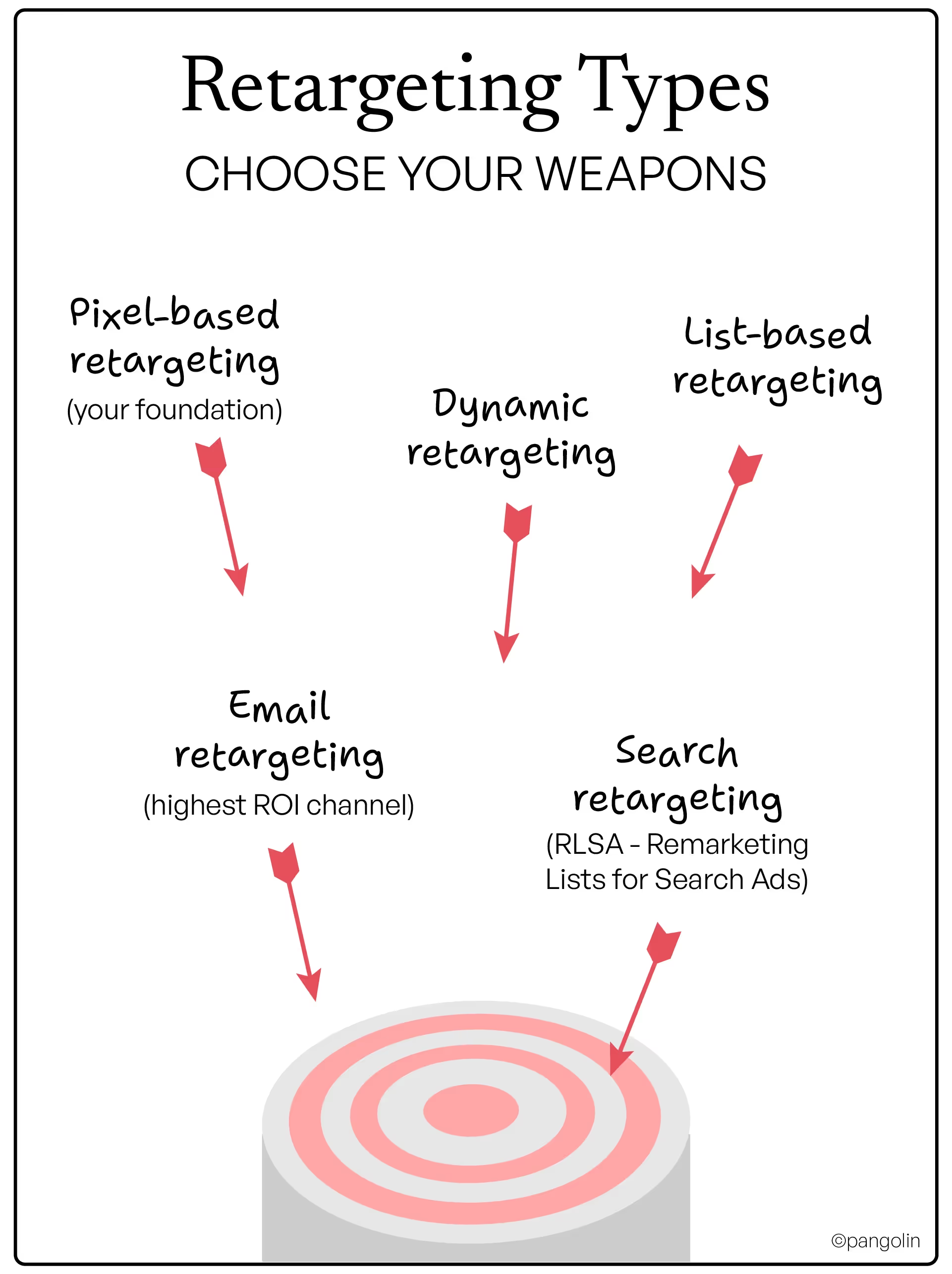
Retargeting Types: Choose Your Weapons
Pixel-based retargeting (your foundation)
How it works:
Place a tracking pixel on your website. When someone visits, they're cookied. As they browse the internet, Google Display Network, social media, news sites, your ads appear, reminding them you exist.
Setup: Install once, runs automatically Speed: Real-time (prospect sees ads within hours)
Best use: Behavioral targeting based on specific actions
For IT services:
Visited cybersecurity page → Show cybersecurity-focused ads
Viewed multiple service pages → Qualification signal, increase ad spend
List-based retargeting
How it works:
Upload email lists or contact databases to advertising platforms (Google, Facebook, LinkedIn). Target known prospects across channels even if they haven't visited recently.
Setup: Requires existing CRM or email database
Speed: 24-48 hours for list processing Best use: Targeted campaigns to specific accounts or segments
Dormant opportunities from CRM (went dark, reignite interest)
Account-based marketing (ABM) for enterprise targets
Dynamic retargeting
How it works:
Automatically generates personalized ads featuring specific services the prospect viewed. No manual ad creation for each variation, the platform builds them dynamically.
Setup: Requires product/service feed and dynamic ad templates
Speed: Automated once configured Best use: Multiple service offerings with varied messaging needs
For IT services:
Prospect visits your cybersecurity page → Sees ad: "Cybersecurity Services for [Industry], Get Assessment" Different prospect visits cloud migration → Sees ad: "Cloud Migration Consulting, Free Roadmap"
Each sees messaging tailored to their specific interest, automatically.
Search retargeting (RLSA - Remarketing Lists for Search Ads)
How it works: Target previous website visitors when they search related keywords on Google. Your search ads appear with higher bids, better positioning, or custom messaging for warm audiences.
Setup: Add remarketing lists to Google Ads Search campaigns
Speed: Immediate once lists are built Best use: Recapturing prospects still actively researching
For IT services:
Previous visitor searches "managed IT services [city]" → You bid 50% higher, appear in top position
Pricing page visitor searches "[your company] vs [competitor]" → Show comparison-focused ad
Form abandoner searches "IT support pricing" → Personalized ad with quote CTA
Email retargeting (highest ROI channel)
How it works: Automated email sequences triggered by specific behaviors: form abandonment, pricing page visits, content downloads, demo interest without scheduling.
Setup: Configure workflows in email platform (HubSpot, ActiveCampaign, Klaviyo)
Speed: Trigger within minutes to hours of behavior Best use: Direct, personalized communication with highest ROI
For IT services examples:
Form abandonment:
Subject: "Still evaluating IT services? Here's what you need to know"
Body: Addresses common objections, includes ROI calculator, easy next step
Pricing page visit without conversion:
Subject: "Custom IT pricing for companies like [Company Name]"
Body: Case study from similar company, testimonial, calendar link
Content download without further engagement:
Subject: "You downloaded our Cloud Migration Guide, here's your next step"
Body: Related resource, webinar invitation, consultation offer
Email retargeting stats:
3,600-3,800% ROI (highest of any channel)
90% of users provide email for small incentive
71% expect personalization, 76% frustrated without it
Social media retargeting
How it works: Facebook, Instagram, and LinkedIn show ads to people who visited your website, engaged with content, or match uploaded lists.
Setup: Install platform pixels, create custom audiences Speed: 24-48 hours for audience building Best use: Platform-specific engagement where prospects spend time
For IT services by platform:
LinkedIn (essential for B2B):
Target by job title (IT Director, CTO, VP Operations)
Different messaging based on how long ago they visited:
1-day visitors (scorching hot):
Urgency: High, they're actively researching right now
Messaging: "Still evaluating IT services? Let's talk this week"
Offers: Book consultation, schedule demo, get custom quote
Why: Highest conversion potential, strike while iron is hot
7-day visitors (warm, still engaged):
Urgency: Medium, considering options, building knowledge
Messaging: Educational + social proof
Offers: "See how [Similar Company] cut IT costs 30%", case studies, testimonials
Why: Nurture toward decision with proof and differentiation
30-day visitors (cooling, need re-engagement):
Urgency: Low but salvageable
Messaging: Special incentives, time-sensitive offers
Offers: "Free IT infrastructure assessment (limited slots available)"
Why: Warm them back up before they become cold leads
Strategy in action:
Don't show the same ad to someone who visited yesterday and someone who visited 28 days ago. Fresh visitors need next-step clarity. Older visitors need compelling reasons to re-engage.
Funnel-stage segments (match awareness level)
Where someone is in their buying journey dictates what they need to hear:
Top-of-funnel (Awareness stage):
Who they are:
Blog readers who consumed educational content
General website visitors (homepage, about page)
Single-page views, short time on-site
Social media followers who engage occasionally
What they need:
Education and thought leadership
Industry insights and trends
Problem identification (not solutions yet)
Messaging examples:
"5 Signs Your IT Infrastructure Is Vulnerable to Ransomware"
"The Hidden Costs of Reactive IT Support"
"HIPAA Compliance Mistakes That Cost Healthcare Companies Millions"
Offers:
Downloadable guides, checklists, assessments
Webinar invitations
Blog subscription
Mid-funnel (Consideration stage):
Who they are:
Service page visitors (specific offerings like cybersecurity, cloud services)
Multiple website sessions over days/weeks
2+ minutes time on-site, consumed substantive content
Demo video viewers
What they need:
Differentiation from competitors
Social proof and validation
Comparison frameworks
Messaging examples:
"Why [Company] Chose Us Over [Competitor]: 3 Key Reasons"
"Managed IT Services Comparison: In-House vs. Outsourced vs. Hybrid"
"How We Helped [Industry] Companies Cut IT Costs 25% Without Sacrificing Security"
Offers:
Case studies with measurable results
ROI calculators and assessment tools
Comparison guides
Live webinar or workshop invitations
Bottom-of-funnel (Decision stage):
Who they are:
Pricing page visitors (highest intent signal)
Quote request form starters (abandoned before completing)
Demo page visitors
Multiple return visits over short timeframe
What they need:
Easy, clear next step
Risk-reversal and guarantees
Urgency without pressure
Messaging examples:
"Get Your Custom IT Quote in 24 Hours"
"Schedule Free Infrastructure Assessment, See Exactly What Needs Fixing"
"99.99% Uptime Guarantee or You Don't Pay"
Offers:
Custom quotes and pricing
Free assessments/audits
Demo or consultation scheduling
Trial periods or pilot programs
Behavioral engagement segments
Go beyond time and funnel, segment by how deeply they engaged:
Each segment sees ads and landing pages tailored to their specific context. Generic doesn't convert. Specific does.
Multi-Channel Orchestration: Synergy That Converts
Why single-channel retargeting fails
Email-only retargeting misses prospects who ignore inbox. Display-only misses those with ad blockers. Social-only misses LinkedIn users on Facebook-only campaigns.
The B2B reality: Your prospects need 7-9 touchpoints before purchasing. Single-channel retargeting provides 2-3 maximum. You're losing deals because you're not showing up enough times in enough places.
Multi-channel delivers the full journey:
Day 1: Prospect visits pricing page, doesn't convert
Action: Pixel fires, adds to "Pricing Page Visitors" audience
Within 1 hour: Email retargeting triggered
Subject: "Still evaluating? Here's what companies like yours need to know"
Content: ROI calculator, testimonial from similar company, low-pressure CTA
Day 2: Opens email, clicks through, browses case study
Creative: Video testimonial from IT director at similar-sized company
Message: "See why [Company] chose us for managed IT services"
Day 4: Display ad on business news sites
Creative: "Cut IT costs 25% without sacrificing security or support"
CTA: "Get free assessment"
Day 5: Second email
Subject: "Your custom IT assessment is ready to schedule"
Content: Direct calendar link, FAQ addressing common objections
Day 7: Coordinated push across channels
Email: "Last chance for free infrastructure assessment this month"
LinkedIn: Limited-time offer creative
Display: Same messaging with countdown timer
Search: Higher bids when they search "managed IT services [city]"
Result: Prospect has seen your brand 7+ times across 4 channels in 7 days. You've provided value, built familiarity, and made conversion easy. Single-channel retargeting can't compete with this orchestration.
Optimal frequency (the Goldilocks zone)
Too few touchpoints = forgotten. Too many = annoying. Get it just right:
Frequency cap: 3-5 impressions per person per week
Any more than 10 impressions/week yields diminishing returns and irritation
Spread across channels (1-2 email, 2-3 display/social, 1-2 search)
Creative rotation: Every 2-4 weeks
Same ad for months kills performance (people tune out)
Fresh creative maintains engagement
Test new headlines, images, CTAs continuously
Follow-up timeline best practices:
First touch: Within 24 hours of key behavior
Form abandonment, pricing page visit, demo interest
Second touch: 3 days later
Different channel, add social proof or new information
Third touch: 7 days after initial behavior
Time-sensitive element (limited availability, special offer)
Long-term nurture: Move to 1-2 touches per week
Maintain awareness without overwhelming
Retargeting windows by segment:
Blog/content readers: 30-60 days
Service page visitors: 45-90 days
Pricing page visitors: 60-90 days (highest intent deserves longest window)
Form abandoners: 7-30 days for immediate recovery, then longer nurture
Personalization Beyond "Hi [First Name]"
Behavioral personalization that actually works
Generic retargeting is just expensive brand awareness. Behavioral personalization drives conversion:
Past behavior triggers:
Page-specific messaging:
Viewed cybersecurity services → "Cybersecurity Solutions for [Industry]: Stop Ransomware Before It Starts"
Visited pricing page → "Custom IT Pricing for [Company Size] Companies, No One-Size-Fits-All"
Downloaded whitepaper → "You read our Cloud Migration Guide. Here's how we helped [Similar Company] migrate in 30 days"
Browsing history adaptation:
Spent time on managed IT + cybersecurity pages → Combo offer: "Complete IT Support + Advanced Threat Protection"
Visited "About Us" and team pages → Trust-building focus: "Meet the team protecting 500+ businesses"
Geolocation customization:
"IT Services for [City] Businesses"
Local case studies: "How we helped [Local Company] avoid downtime during [Local Event]"
Example: "Get Your Free IT Infrastructure Assessment This Week, See Exactly What's Vulnerable (Limited Slots)"
Same prospect, different stages, completely different messaging. That's how you nurture without pushing too hard too fast.
Trust-building for B2B IT buyers
B2B decision-makers don't respond to the same trust signals as consumers buying shoes. They need:
Client logos from recognizable brands:
Show 6-8 logos of companies in target industries
"Trusted by 200+ Healthcare Organizations" with specific examples
Better: Match logos to prospect's industry/size
Testimonials from relevant roles with specific outcomes:
Bad: "Great service!" - John S., Business Owner
Good: "Cut our IT costs 32% while improving uptime to 99.97%, and their team prevented three ransomware attacks in our first year." - Jennifer Martinez, IT Director, Denver Medical Group (85 employees)
Include role, company context, and measurable results. IT directors trust other IT directors.
Security and compliance badges that matter:
SOC 2 Type II certification
ISO 27001 compliance
HIPAA business associate agreement
PCI DSS Level 1 Service Provider
Better Business Bureau A+ rating
Industry association memberships
These credentials matter infinitely more than generic "secure checkout" or "trusted site" badges.
Technical credibility indicators:
"15 certified engineers on staff (8 with CISSP, 12 with Microsoft certifications)"
"Microsoft Gold Partner since 2010"
"AWS Advanced Consulting Partner"
"Managing $50M+ in client infrastructure"
Numbers, certifications, partnerships. Proof beats promises every time in B2B IT.
Landing Page Alignment: Where Conversions Die or Thrive
Message match is mandatory (not optional)
This kills more retargeting ROI than any other mistake:
The cardinal sin:
Ad says: "Get Your Free Cybersecurity Assessment"
Landing page shows: Generic contact form titled "Learn More About Our Services"
Why it fails: Cognitive dissonance. Prospect expected cybersecurity assessment, got sales form. Trust evaporates. They bounce.
The fix: Dedicated landing pages for each retargeting segment
Examples of proper alignment:
Ad promise: "Download our Cloud Migration Roadmap"
Landing page: Exactly that, form to download Cloud Migration Roadmap PDF, no bait-and-switch
Ad promise: "Custom IT Quote for [Company Size] Businesses" Landing page: Quote request form with fields specific to generating accurate quote (current setup, pain points, timeline)
Ad promise: "See How [Industry] Companies Cut Costs 30%" Landing page: Industry-specific case study with downloadable PDF or video walkthrough
Match the headline. Match the visual. Match the offer. Exactly. Every time.
Conversion optimization essentials
One conversion goal per page. Period.
Don't offer "Request Demo," "Get Quote," "Download Guide," AND "Schedule Call" on the same page. Choice paralysis freezes decision-making. Pick one goal, optimize everything toward it.
Mobile optimization (80%+ of retargeting traffic):
Load time under 3 seconds (use Google PageSpeed Insights)
Touch-friendly buttons: 44x44 pixels minimum
Form fields optimized for mobile keyboards (use correct input types)
No horizontal scrolling or pinch-to-zoom required
Click-to-call button prominently displayed
Vertical single-column layout (not side-by-side)
Form strategy by funnel stage:
Awareness stage (guides, checklists):
Name
Email
Company (optional)
3-4 fields maximum. You're building relationship, not qualifying yet.
Consideration stage (consultations, assessments):
Name
Email
Company
Phone
Company size
Industry or primary challenge
5-6 fields. Some qualification needed but don't overdo it.
Decision stage (quotes, demos):
Name
Email
Company
Phone
Company size
Industry
Current IT setup
Specific needs/challenges
Timeline
7-9 fields acceptable. These prospects are ready for detailed conversation. Additional fields improve lead quality by pre-qualifying.
Social proof placement that converts:
Above-the-fold testimonial from relevant industry/role
Client logos matching target segment (healthcare logos for healthcare prospects)
Security/compliance badges near form ("Your information is protected: SOC 2 certified")
"As featured in" media mentions if applicable
AI and Automation: Scale Without Growing Your Team
AI-driven hyper-personalization
Manual personalization doesn't scale past 50 prospects. AI personalization scales to 50,000:
Individual targeting misses other decision-makers at same company
Coordinated messaging across committee members accelerates deals
How to implement:
LinkedIn Matched Audiences:
Upload target account lists (companies you want to close)
Filter by job title (IT Director + CFO + COO at target companies)
Coordinate messaging across roles:
IT Director sees: Technical capability, security features, integration ease
CFO sees: Cost savings, ROI data, predictable pricing models
CEO sees: Strategic value, risk mitigation, business continuity
Operations sees: Efficiency gains, uptime statistics, support responsiveness
Platform integrations:
Demandbase, 6sense (ABM platforms with retargeting built-in)
Google Customer Match (upload company domain lists)
Firmographic filters: company size, revenue range, industry, employee count
Multi-stakeholder orchestration: Same company, different decision-makers, coordinated but customized messaging. IT Director doesn't need to see cost savings, they need technical proof. CFO doesn't need to see security features, they need ROI models.
Long sales cycle nurturing (the 3-6 month reality)
B2B IT services don't sell overnight. Your retargeting needs to match that timeline:
Average nurturing duration: 3-6 months for mid-market IT services Enterprise deals: 12-18 months not uncommon
Requires: Patience, persistence, and systematic approach
The "small flame" principle:
Think of warm leads like a campfire you're trying to grow:
Too much fuel (contact) at once = you smother the flame (prospect pulls away from aggressive sales tactics)
Too little fuel (contact) = flame dies out (they forget you exist and sign with competitor)
Just right = regular, valuable touchpoints that gently build the relationship into a roaring fire
Behavior tells you when prospects are ready for next touch. Listen to it.
Cross-device retargeting (follow everywhere)
Your prospects don't stay on one device:
The multi-device journey:
9 AM: Researches IT services on desktop at office
12 PM: Continues reading case study on mobile during lunch
6 PM: Reviews pricing on tablet at home before making decision
Without cross-device tracking: You lose continuity. Prospect appears as three different people. Your retargeting breaks.
With cross-device tracking:
Google and Facebook platforms track users across devices automatically
Seamless experience regardless of where they browse
Appears on desktop, mobile, and tablet without interruption
Prevents "I forgot about them when I switched devices" problem
Enable cross-device:
Use platform native pixels (Google, Facebook track cross-device by default when logged in)
Ensure tracking codes on all site pages (desktop and mobile versions)
Don't exclude mobile from retargeting campaigns (rookie mistake)
Measurement and Continuous Optimization
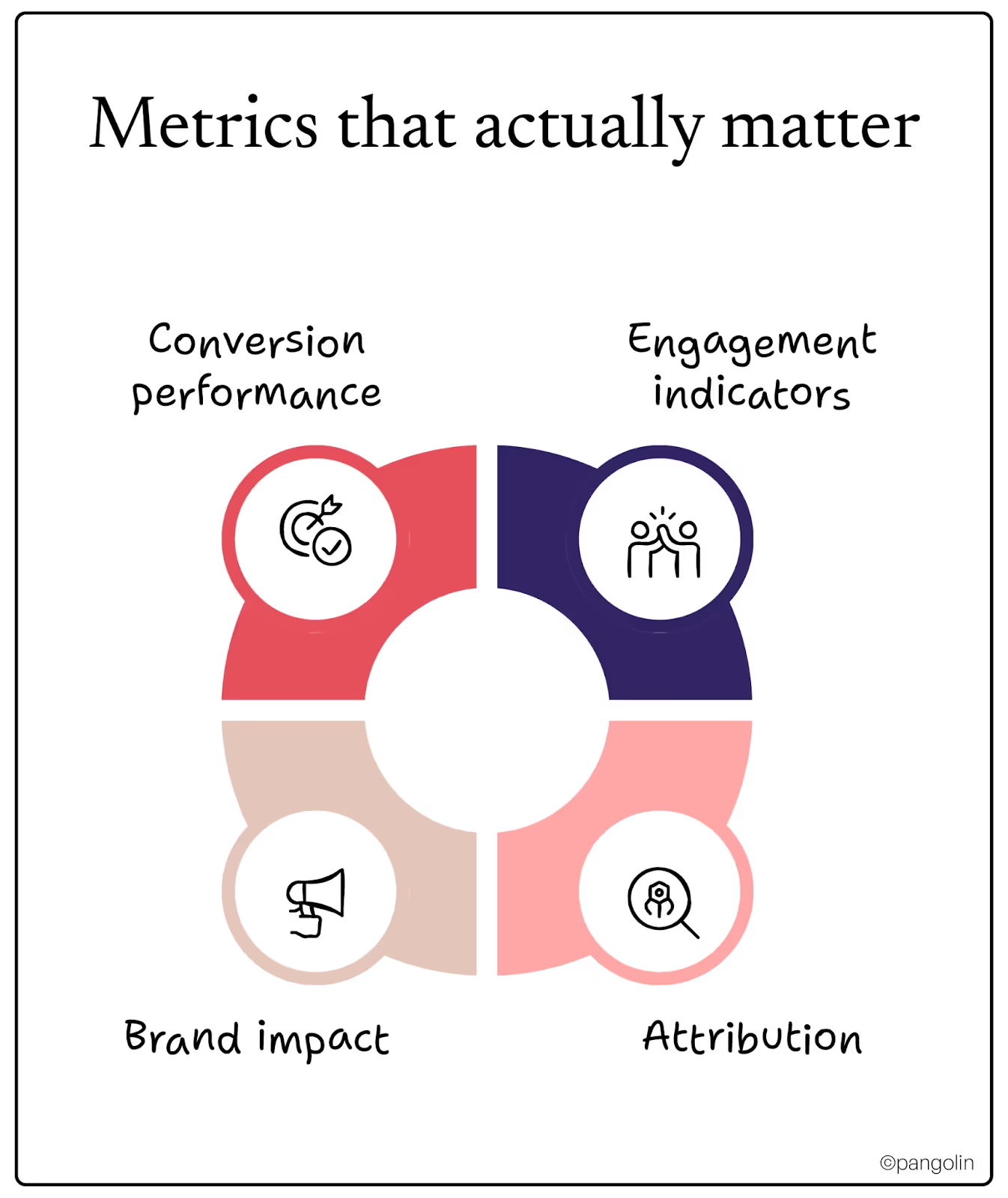
Metrics that actually matter (not vanity)
Ignore these:
Impressions (meaningless without context)
Reach (doesn't equal revenue)
Ad position (top spot doesn't guarantee conversions)
Total clicks (includes accidental, unqualified, and competitors)
Track these instead:
Conversion performance:
Conversion rate: Retargeted vs. non-retargeted visitors
Should see 43-150% lift
Cost per acquisition (CPA) by segment
Which audiences convert most cost-effectively?
Return on ad spend (ROAS)
Revenue generated ÷ retargeting spend
Lead-to-customer conversion rate
What % of retargeted leads actually close?
Revenue attributed to retargeting
The number that matters to your CEO
Engagement indicators:
Click-through rate (CTR) by creative variant
Which messages resonate?
Time on site after retargeting click
Are they genuinely engaged or bouncing?
Pages viewed per session
Deep engagement = higher qualification
Form completion rate
Landing page effectiveness measure
Email open/click rates
Email retargeting health check
Brand impact:
Brand recall lift (survey-based measurement)
Are prospects remembering you?
Branded search volume increase
Retargeting should drive direct brand searches
Direct traffic growth
People typing your URL directly = top-of-mind awareness
Social media engagement from retargeted audiences
Attribution (most important for long cycles):
Multi-touch attribution: Credit all touchpoints, not just last click
First-touch attribution: What started the relationship?
Last-touch attribution: What closed the deal?
Position-based (40/40/20): 40% to first touch, 40% to last, 20% distributed across middle touches
Best for B2B IT: Position-based acknowledges both introduction and conversion matter
Testing and refresh cadence
Creative fatigue is real and destroys performance:
People tire of seeing identical ads repeatedly. After 2-4 weeks, engagement drops even if messaging was initially strong. Solution: Systematic refresh schedule.
What to test continuously:
Headlines:
Outcome-focused: "Cut IT Costs 25%"
Question-based: "Is Your IT Infrastructure Vulnerable?"
Social proof: "Trusted by 200+ Companies Like Yours"
Urgency: "Limited Free Assessments Available This Month"
Images:
People (team photos, client interactions)
Technology (servers, security imagery)
Data visualization (charts showing results)
Local imagery (for geotargeting)
CTAs:
"Get Free Quote" vs. "Schedule Assessment" vs. "Calculate Your ROI"
"Learn More" (generic, low-performing) vs. "See Pricing" (specific, higher-performing)
Offers:
Free infrastructure assessment
ROI calculator and cost comparison
Case study download
Webinar or workshop invitation
Limited-time consultation
Landing pages:
Form length (3 fields vs. 6 fields vs. 9 fields)
Headline variations
Testimonial placement
CTA button color, size, text
Testing frequency:
A/B test continuously: Always have variants running
Creative refresh: Every 2-4 weeks minimum
New segments: Test monthly (refine targeting)
Landing pages: Bi-weekly tests
Strategy review: Quarterly overhaul based on accumulated data
Real-time optimization discipline:
Monitor daily: Check performance metrics every day
Pause underperformers: Kill ads with <0.3% CTR within 3-5 days
Scale winners: Increase budget 20-30% on high-performers immediately
Adjust bids: Shift spend to highest-converting segments weekly
Channel rebalancing: Move budget to top-performing channels monthly
Common Retargeting Mistakes (And How to Avoid Them)
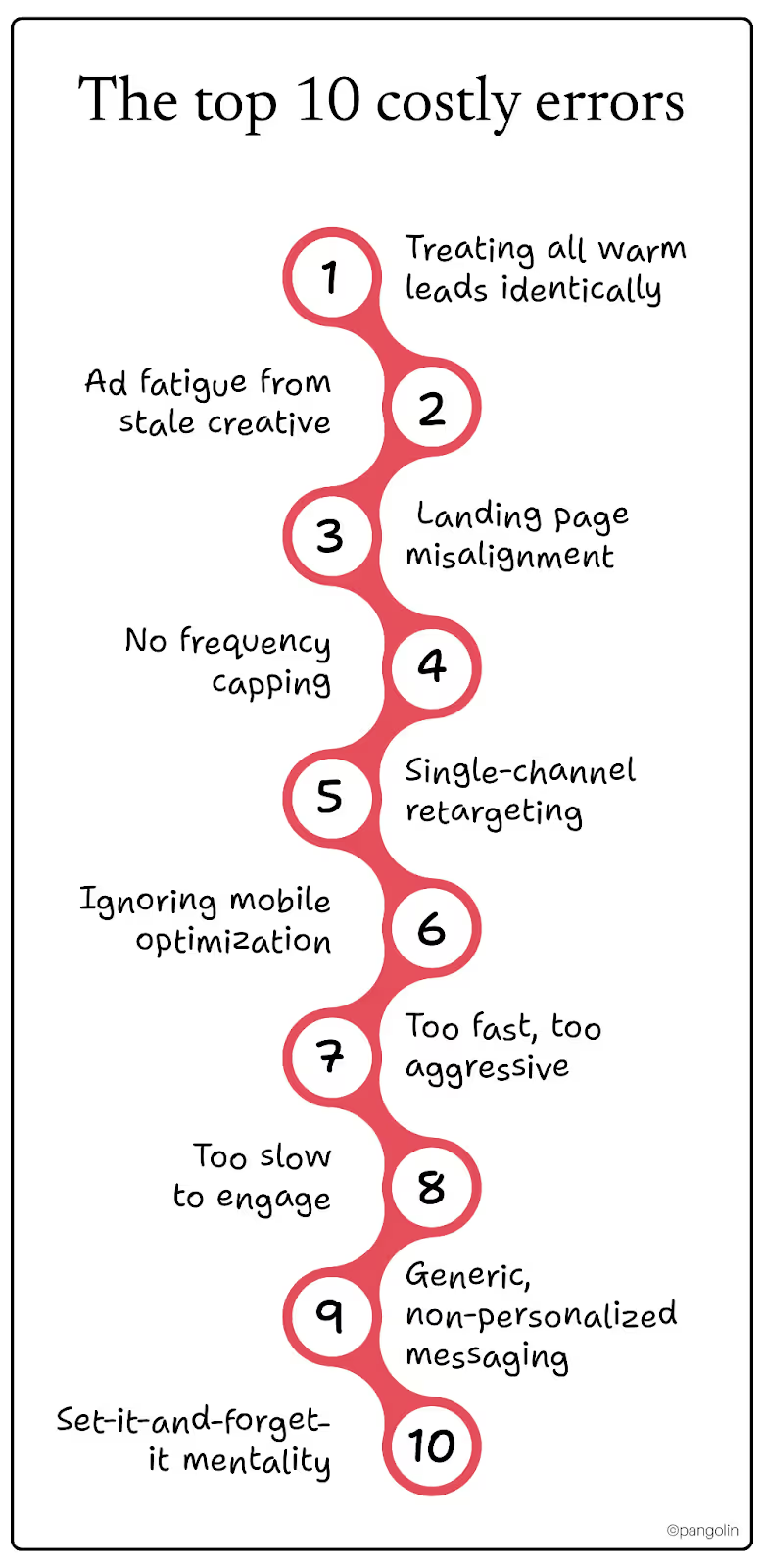
The top 10 costly errors
1. Treating all warm leads identically
The mistake: Showing same ad to blog reader who visited once and pricing page visitor who returned five times.
Why it fails: Blog reader needs education; pricing visitor needs quote. Generic messaging converts neither.
The fix: Segment by behavior (pages visited, time on-site, engagement depth) and tailor accordingly.
2. Ad fatigue from stale creative
The mistake: Running same ad creative for 3+ months without refresh.
Why it fails: People tune out repetitive messaging. Performance crashes after 2-4 weeks.
The fix: Rotate creative every 2-4 weeks. Test new headlines, images, offers continuously.
3. Landing page misalignment
The mistake: Ad promises "Free Cybersecurity Assessment," landing page shows generic contact form.
Why it fails: Cognitive dissonance. Prospect expected specific offer, got bait-and-switch.
The fix: Dedicated landing pages for each ad offer. Message match is mandatory.
4. No frequency capping
The mistake: Bombarding prospects with 15-20 ad impressions per day.
Why it fails: Creates resentment and ad fatigue. Prospects actively avoid your brand.
The fix: Cap at 3-5 impressions per person per week across all channels.
5. Single-channel retargeting
The mistake: Email-only or display-only campaigns without cross-channel integration.
Why it fails: Misses 7-9 touchpoints B2B buyers need. Single channel provides 2-3 maximum.
The fix: Orchestrate email + display + social + search for complete coverage.
6. Ignoring mobile optimization
The mistake: Desktop-optimized landing pages when 80%+ traffic comes from mobile.
Why it fails: Slow load times, tiny buttons, broken forms on mobile = lost conversions.
The fix: Mobile-first design. Test on actual devices. Sub-3-second load times mandatory.
7. Too fast, too aggressive
The mistake: Immediate hard-sell follow-up within minutes of website visit.
Why it fails: Scares B2B buyers who need time to research and build consensus.
The fix: Value-first nurturing. Educational content before sales pitches. Gentle relationship building.
8. Too slow to engage
The mistake: Waiting 5-7 days for first retargeting touch after high-intent behavior.
Why it fails: Warm leads cool off and sign with faster competitors.
The fix: First touch within 24 hours of key behaviors (pricing visit, form abandon, demo interest).
9. Generic, non-personalized messaging
The mistake: "Hi there, we noticed you visited our site" templates for everyone.
Why it fails: 76% of consumers frustrated by non-personalized content. Generic = ignored.
The fix: Behavioral personalization. Reference specific pages, content, or actions in messaging.
10. Set-it-and-forget-it mentality
The mistake: Launching campaigns then never optimizing, testing, or refreshing.
Why it fails: Performance decays over time. Competitors improve while you stagnate.
The fix: Weekly monitoring, monthly optimization, quarterly strategic refresh mandatory.
From 79% Loss to Conversion Machine
The brutal reality: IT services companies spend thousands generating leads at $200-$800 each, then watch 79% evaporate because they lack systematic retargeting.
Meanwhile, competitors running retargeting see:
43-150% higher conversion rates
3,600-3,800% ROI from email retargeting ($36-38 per $1)
544% ROI from marketing automation
Predictable pipeline from leads they've already paid to generate
The difference isn't spending more. It's converting more of what you already have.
Like Chatsworth Bakehouse showing up consistently where customers were, building familiarity through repeated, valuable touchpoints, retargeting keeps you visible throughout the 3-6 month B2B buying journey. Not with aggressive sales pitches. With helpful content that guides prospects from awareness to consideration to decision.
Shashank Ayyar
Co-Founder, Pangolin
Advises tech founders and enterprises on brand clarity, go-to-market systems, and strategic narrative; builds high-impact marketing engines for B2B SaaS and service companies; advocates for "tech for good" and value-driven growth in the IT sector.
Avani Nagwann
Co-Founder & CEO, Pangolin
Avani is the co-founder and "Co-Dreamer" at Pangolin, a specialist B2B marketing agency where she leads the firm’s mission to leverage "tech for good."
FAQs
What's the difference between retargeting and remarketing?
How long should retargeting campaigns run for IT services?
What's a good conversion rate for retargeting campaigns?
How much should IT companies budget for retargeting?
What platforms work best for B2B IT services retargeting?