Zomato, India’s food delivery giant, launched its Pro and Pro Plus membership programmes to drive loyalty through discounts and perks on delivery and dining.
By Q2 FY22, these programmes had attracted around 1.5 million members and over 25,000 restaurant partners in India.
Zomato began phasing out Pro and Pro Plus in 2022, stopping new sign‑ups and renewals, and formally moved away from them as it revamped its loyalty strategy in 2023.
On an earnings call, Zomato’s management described discontinuing the loyalty programme as a business call, noting ‘there are pros and cons of the kind of loyalty programme that is out there in the market today,’ and said they were working on something ‘more differentiated,’ asking customers and investors to ‘wait and watch.’
The shift underlines a key lesson many companies miss: discount‑heavy schemes tend to attract bargain‑seekers rather than durable loyalty, especially when programme economics become unsustainable.
This mirrors what happens in B2B trade channels. When your entire value proposition is points for purchases, you've created a vending machine. Insert invoice, get cash. The switching cost is zero. Competitors win with slightly better payment terms, and your program becomes another line item your trade partners ignore.
Before diving into the loyalty onboarding checklist, you need to understand the kill pattern. Programs don't fail randomly. They fail in sequence, at predictable transition points.
The vanity metrics trap hits first. Leadership tracks total signups while engagement craters. You celebrate 50,000 members in month one, but only 30% take any action within seven days. By day 30, that number barely moves. You've built a database of the inactive, not a community of the engaged.
The vending machine model compounds the damage. When your entire value proposition is points for purchases, you've created a commodity with zero switching costs. The moment a competitor offers slightly better credit terms, your "loyal" partner is gone.
You've trained them to be mercenaries, not advocates.
KYC friction kills 50-60% of interested partners between noticing your program and completing onboarding. An electrician tries to sign up during his lunch break at a construction site. The app asks for Aadhaar verification, PAN card upload, bank details, and a workshop photo. His phone has 12% battery and patchy connectivity. Five minutes in, the app crashes. He never comes back.
These patterns stack. By month three, you have high enrollment, terrible engagement, and a leadership team asking increasingly uncomfortable questions about ROI.
Most loyalty program managers can't answer a simple question: "Where exactly is your program breaking?"
They know engagement is low. They see churn climbing. But they can't pinpoint which stage-to-stage transition is hemorrhaging partners.
The Ground Truth Framework solves this by mapping the partner journey across six stages and analyzing each through four reality lenses.
The six stages:
The four lenses:
When you map your program across these stages, leaks become visible. You stop saying "engagement is low" and start saying "we're losing 60% of partners between Noticed and Onboarded because KYC takes 15 minutes on low-end Android phones."
That specificity is what makes fixes possible.
Launch day is not day one. The programs that survive their first year win or lose in the planning phase, before a single partner enrolls.
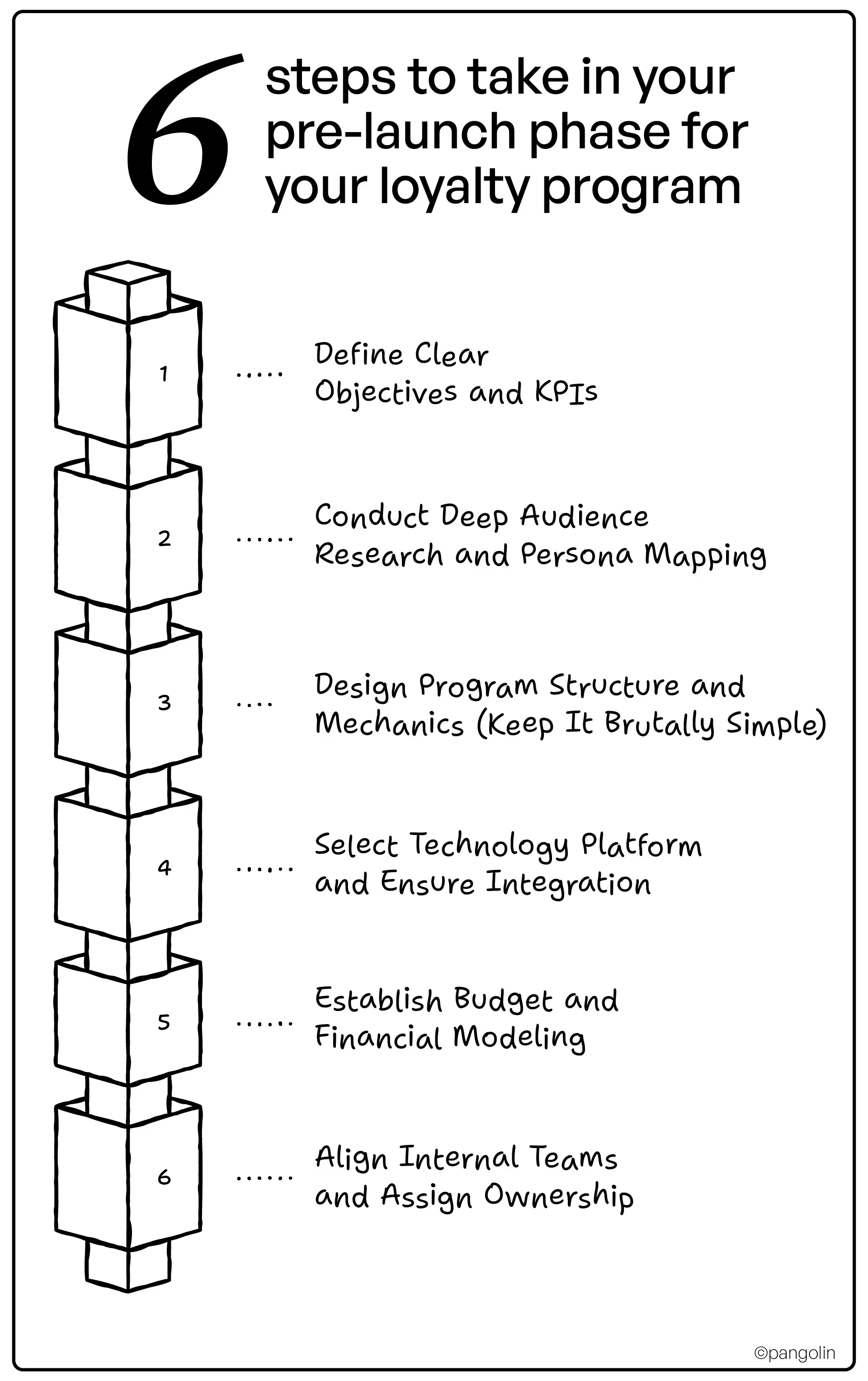
Start by figuring out which metrics look good in PowerPoint and which ones can tell you how well a program is doing.
Metrics that leaders love for vanity:
Metrics that really matter in the real world:
Set SMART goals that fit with your business strategy. "Increase partner retention" is not clear. "Get 50% of users to be active every week and 35% of them to redeem their rewards within 90 days of the full launch" is a clear goal with a deadline.
Before the launch, figure out the baseline metrics. You can't prove the program's effect later if you don't know your current partner retention rate or average customer lifetime value.
Most programs don't work because people who have never worked on a job site design them in boardrooms.
Real trade partner constraints are not at all like what headquarters thinks they are:
An electrician works on 5 to 6 job sites every day, and by noon, their phone battery is at 2% and the connection is spotty at construction sites.
He needs to be happy right away, talk to people on WhatsApp first, and get support from his peers.
A mechanic does 10 to 15 jobs a day with small profit margins. They are a trusted advisor who won't suggest junk just to get points. He needs to trust that the parts are real, get technical training, and get health benefits for his family.
A small store stays open for 12 hours and serves 50 to 100 customers while managing several brands. When working capital is tight, margin support and credit flexibility are more important than points that can be used in 60 days.
Use ethnographic research and "day in the life" shadowing to learn about real barriers, reasons for doing things, and preferred ways of communicating. Don't ask them questions in an office. Follow them around at work and see where things get tense.
For B2B trade channels, tiered programs with emotional drivers work better than just giving cash back because they create a sense of status and belonging. An electrician wears his Gold tier badge at work to show customers that he is skilled. That's loyalty that competitors can't steal by lowering prices.
Balance emotional drivers with rewards for doing business:
Set clear rules for how to earn and how to redeem. "Scan invoice, get 2% of value in points, redeem anytime after 100 points" is better than a complicated matrix with different rates for different types of products.
Your loyalty platform needs to work on a cheap Android phone with bad internet for five minutes. You will lose 60% of potential members if onboarding takes too long or needs stable WiFi.
Criteria for choosing a platform:
For trade channels in developing markets, mobile-first, vernacular interfaces that work offline and sync when connectivity is restored should be your top priority.
Don't test on the flagship phone that your product manager carries; test on the devices that your partners actually use.
Integration is not up for debate. If your loyalty platform doesn't talk to your CRM, you'll have to enter data by hand and rewards will take longer to post, which will kill engagement.
Industry standards say that about 10% of a loyalty program's budget should be set aside as a base, but B2B programs need more advanced modeling than that.
Parts of the budget:
Figure out how much you think it will cost:
Total Cost = Setup + (Rewards × Redemption Rate × Members) + Marketing + Operations
Make models of different situations. What happens if enrollment goes up to 150% of the goal? What if the redemption rates go above 40% instead of the planned 25%? Make buffers.
Keep track of ROI, which includes the increase in customer lifetime value, the improvement in retention, and the value of advocacy.
A program that costs $500,000 a year but boosts partner CLV by 2.5 times and cuts churn by 40% pays for itself many times over.
This is where most planning for the launch of a program goes wrong. Marketing comes up with the program, but sales won't sell it, tech doesn't prioritize integration work, and finance only cares about the cost of enrollment.
Make sure everyone is on the same page: the sales team needs pitch scripts, guides for handling objections, and shadow points or commissions for each partner they activate. If sales thinks the program is extra work with no personal benefit, they'll actively try to keep partners from joining.
The marketing team needs to create campaigns for each stage in a lot of different languages. FOMO drivers are needed for Noticed campaigns. Earning campaigns that are onboarded need to build habits. This needs different creative for each transition, not just one generic launch campaign.
The tech team needs to make sure that low-end devices work well, that points can be posted in real time, and that fraud controls work in busy places. Don't just think of loyalty program integration as a "nice to have" for Q3; make it a top priority on the sprint roadmap.
The finance team needs to model ROI in more than just vanity metrics. They need to include retention, CLV lift, and advocacy impact. Give them the tools they need to show the program's value in terms that the CFO can understand.
Create a steering committee with members from different departments who know what their roles, responsibilities, and accountability are. Give an executive sponsor at the VP level or higher who can break down departmental barriers when necessary.
You've planned for months. Now comes the moment where theory meets reality and most programs reveal their fatal flaws.
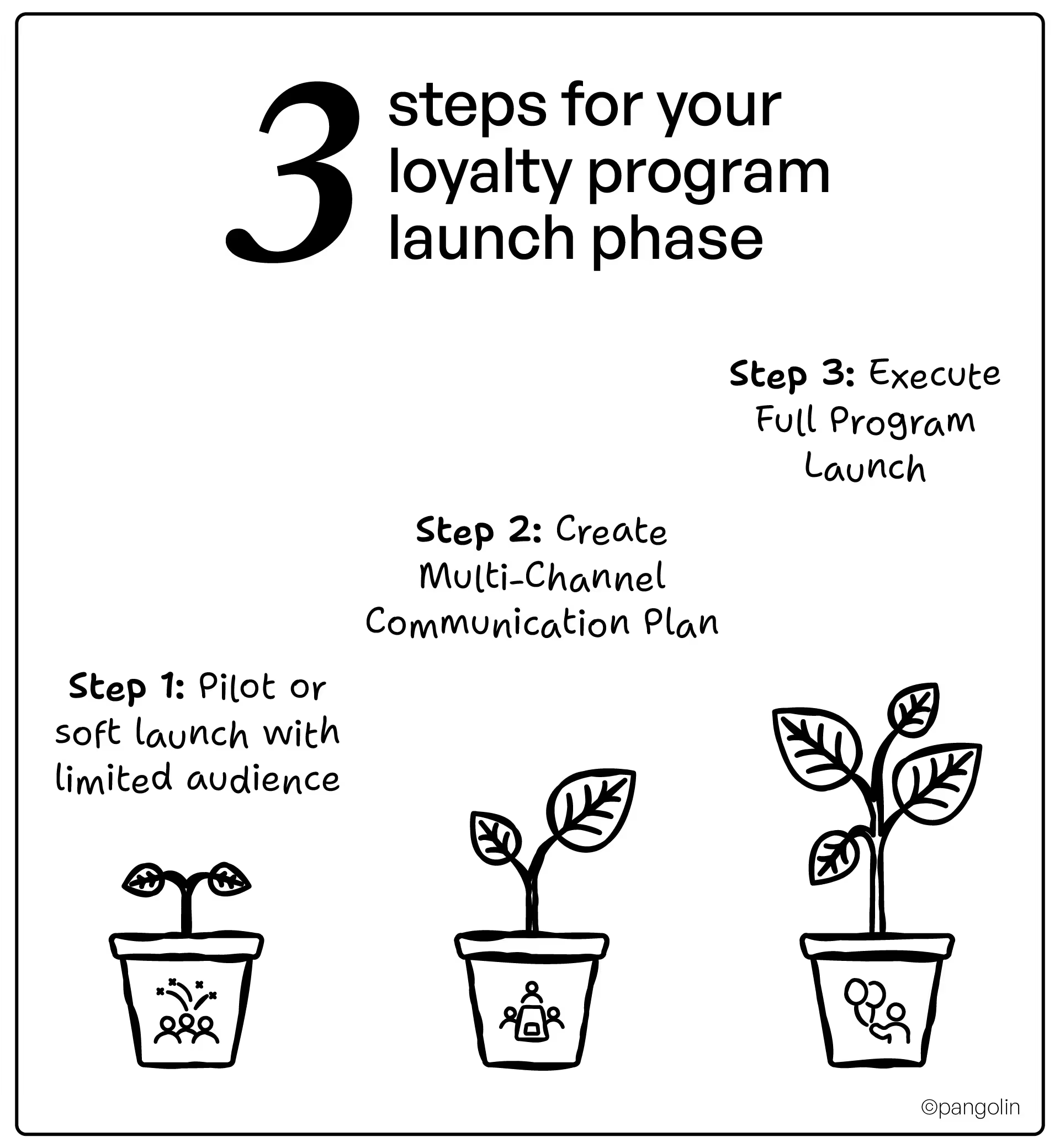
Don't ever launch to everyone on the first day. Before they ruin your reputation, pilots show you technical problems, confusing user experiences, and hidden operational bottlenecks.
Test with 500 to 1,000 carefully chosen members from your most active partners or employees. The length of time varies a lot. Before the full launch, Lululemon ran their pilot for three years. Most B2B programs need at least 4 to 8 weeks.
What to test in the pilot:
Use surveys, one-on-one interviews, and support ticket analysis to get qualitative feedback. You get the most useful information when you watch partners use the program in their own setting, not in a conference room demo.
Important pilot metrics:
Don't go ahead with the full launch until the pilot metrics are in a good range. You will have to spend months fixing a broken program that you launched to save three weeks of pilot time.
Generic mass communication makes people less interested. Partners need different messages at different times, and they need to get them through the channels they use.
Timeline for communication: 7 to 14 days before launch: The teaser campaign builds excitement. "Something big is on the way for our business partners. Sign up to get early access.
Training inside the company (one week before the public launch): Give training to everyone who works with partners. Sales reps, distributor account managers, customer support, and field teams all need to be able to answer simple questions and get the same message every time.
On launch day, the announcement goes out at the same time through email, SMS, push notifications, WhatsApp, and in-app messaging. A clear call to action: "Join now and get twice the points on your first purchase."
After the launch (Days 1–7): Daily reminders for partners who signed up but haven't done their first action. "You're only one step away from getting rewards." This is how.
Send different messages to different personas: What drives a retailer (like margin support and inventory financing) is very different from what drives an electrician (like certification, skill training, and job site credibility). Don't send out one-size-fits-all messages; send messages that are specific to each person.
Use everyday languages for trade channels. An electrician in Tamil Nadu needs to be able to speak Tamil. In Rajasthan, a mechanic needs to know Hindi. In emerging economies, English-only programs leave out 60% of your potential customers.
Assets that make field work possible:
Launch day is not a campaign day. It's an operational deployment that needs to be watched closely and be able to respond quickly.
Big bang vs. staged rollout: Staged rollout (launching in different areas over 4 to 8 weeks) lowers risk but slows down progress. Big bang (launching everywhere at once) makes things exciting, but it also makes technical problems worse.
Pick based on how much risk you're willing to take and how much work you can handle.Checklist for the day of the launch:
All systems are up and running, including the app, web portal, support lines, and backend integrations.
The support team was briefed and had twice as many people as usual.
First, celebrate with your own teams. Make sure that all of your employees know why the program is important and how it will help them succeed before partners see it.
For B2B programs that need a lot of personal attention, hold launch events for your best partners. Greenpanel invited over 200 carpenters to their launch event in Delhi and treated them like important partners instead of just people who do business with them.
That sign of respect creates emotional loyalty that no amount of cash back can match.
Watch closely for the first 48 hours: Keep an eye on the completion rate for signups, the first action rate, system performance, error logs, and the themes of support tickets.
If you don't deal with problems that seem small on hour 12, they will turn into huge ones by day three.
Keep a quick response team on hand that can make repairs right away. If you find that the SMS verification code isn't working for Airtel users, you need permission to deploy a hotfix within hours, not wait for next week's sprint planning.
Launch week creates excitement. Month three reveals whether you built something sustainable or just burned through budget on a vanity project.
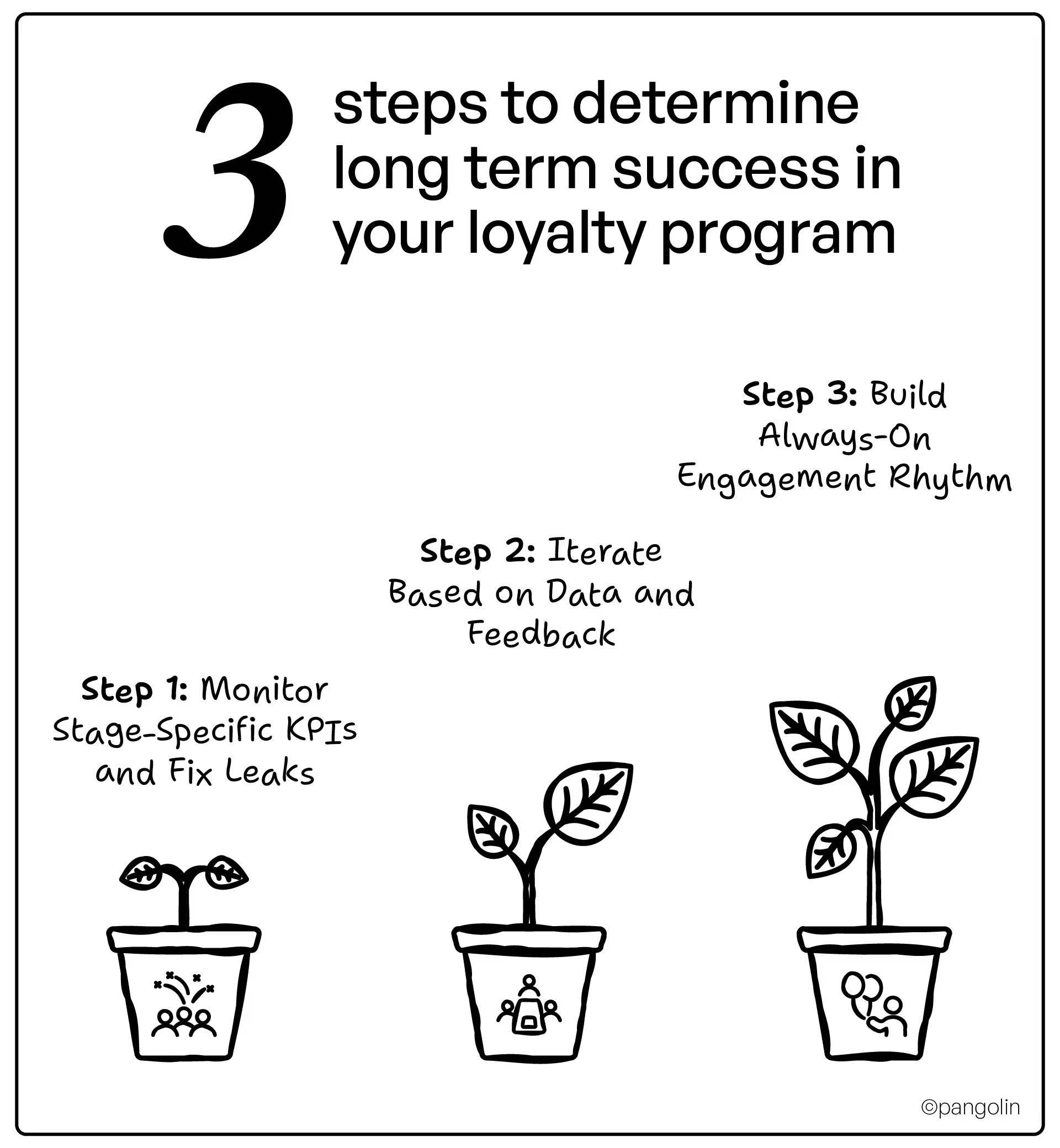
Metrics on a dashboard are useless without diagnostic context. It's not enough to know that engagement dropped by 15%. You need to find out which stage-to-stage transition is leaking.
Follow the whole process of adoption:
Enrollment rate (40–50%+ healthy): What percentage of your potential partners have signed up?
Activation rate (60%+ target): What percentage of people do their first action (scan, buy, or refer) within 7 days?
Weekly active users (more than 50% engaged): How many members do something at least once a week?
Redemption rate (30–40%+ strong): What percentage of members use their rewards at least once?
Churn rate (goal: less than 10%, typical: 15–25%): What percentage of people stop using the service each month?
NPS (50+ emotional loyalty vs. 30–40 transactional): Would members tell their friends about your program?
Use the Ground Truth Framework diagnostic to expose gaps between what leadership thinks is happening and ground reality. Run quarterly workshops where you map each stage transition, identify the biggest leakage point, and commit to fixing it before the next review.
First, fix the biggest hole. If 60% of partners drop out between Noticed and Onboarded because of KYC issues, fixing that will fix everything else. Don't try to make ten things better at the same time. Choose the transition with the most drop-offs and go after it.
The best loyalty programs change all the time based on what members actually do, not what you thought they would do.
Weekly checks: Look over the themes of the support tickets, the activation rate, the engagement rate, and the churn rate. Find problems when they're small.
Analysis every month: Look at cohort retention curves (how many members are still active after 30, 60, or 90 days?), redemption patterns by persona and location, and campaign performance by segment.
Review of business every three months: Show stakeholders clear data on ROI, such as CLV lift, better retention, extra revenue, and the effect on advocacy. Change how you spend your money based on what works.
Test everything with A/B: Try out different messages for onboarding emails. Try out different reward systems, like giving small rewards right away or big rewards later. Test the UI flows for redemption. Don't let opinions make decisions; let data do it.
Make changes based on what your partner says and what your field team learns. Your salespeople know what objections come up a lot. If you ask your best partners what would make the program better and really listen, they will tell you.
As you learn, make your personal segments better. Even though you first treated contractors and retailers the same, you might find that they need very different program tracks.
Programs that think of launch as the end point die after six months. Programs that build orchestration that are always on increase engagement over time.
Most programs follow a curve of decay that is easy to see. In the first month, there is a lot of energy, big budgets, and banners everywhere. Month two is still going strong. In the third month, there are ripped banners and deals that are no longer valid. In the fourth month, a partner opens the app, sees old content, and never comes back.
Create a rhythm of ongoing engagement:
Monthly themes make it easy to plan out content cycles. Safety Month (promote protective gear), Upskill Month (feature training modules), Festive Promotions (Diwali bonuses, Christmas rewards), and Regional Pride (celebrate top performers by geography) are all great ideas.
Weekly nudges and automated triggers keep things visible. "You're only 50 points away from your next prize." "Next week, your tier status will go up if you make one more transaction."
"A new training module just came out on advanced installation techniques."The program feels real because of regional activations and leadership spotlights. Show off a "Champion of the Month" from each area. Tell success stories of partners who used training to make their businesses bigger.
Talk to long-time members about why they stay loyal.
Your top 50 to 100 partners meet every three months on advisory councils.
Ask for feedback on new plans before they go live. Try out ideas for products. Get information about the market from different areas. You show partners that you listen when you act on their suggestions and tell everyone about it.
Recognition events in different areas bring people together in person.
Annual partner conferences, regional awards ceremonies, and skill competitions make a digital program into real relationships.
The app never seems to be idle because of the continuous content calendar. New rewards every month, new training materials every three months, and seasonal campaigns that go along with business cycles. Being always-on doesn't mean being always busy. It means being there all the time.
Even with a solid loyalty onboarding checklist, specific failure patterns repeat across industries.
Vanity metrics obsession: Celebrating 30k enrollments while ignoring 11% weekly active usage. Track engagement depth, not database size.
One-size-fits-all launch: Trying to do awareness, onboarding, and engagement in a single campaign. Use stage-specific campaigns with different creative for each transition.
KYC friction: Asking for too much information too soon. Reduce signup to under 5 minutes with progressive verification.
Delayed gratification: Points posting 15+ days after action. Instant or 48-hour maximum reward delivery is non-negotiable.
Generic mass communication: Sending identical messages to electricians, retailers, and contractors. Segment by persona and deliver relevant messages.
Lack of internal alignment: Sales team doesn't understand the program or actively undermines it. Align incentives so everyone wins when partners engage.
No pilot testing: Big bang launch exposes technical flaws to your entire audience simultaneously. Pilot with 500-1k users first.
Launch-and-leave: Treating loyalty as a project with a finish line rather than a continuous operating model. Build an always-on rhythm from day one.
Overcomplicating program structure: Partners need a PhD to understand earning rules. Keep mechanics brutally simple.
Ignoring field reality: Designing in boardrooms for people who've never worked a construction site. Shadow real partners through their actual workday.
Free Download : Trade Loyalty Leakage Template
The difference between programs that work and programs that waste budget comes down to systematic execution against a proven program launch planning framework.
Here's what to do this week:
Download the Ground Truth Framework Worksheet and run a diagnostic session with your cross-functional team. Map where your program is actually leaking, not where you assume it's leaking
Audit your current KPIs. Are you tracking vanity metrics (total enrollments) or reality metrics (weekly active engagement, activation rate, redemption rate)?
Interview five partners from different personas. Ask them to explain your program in one sentence. If they can't, you have a Noticed to Onboarded communication problem.
Review your onboarding flow. Can a partner complete signup in under 5 minutes on a low-end Android phone with patchy WiFi? If not, you're losing 60% of interested partners.
Check your always-on engagement calendar. What happens in week 6, month 3, and quarter 2? If the answer is "nothing scheduled," you're building a program that will feel dead by month four.
The companies that nail GTM execution for loyalty program launch don't have bigger budgets or better technology. They have systematic frameworks that turn boardroom theory into field reality.
They diagnose leaks with surgical precision and fix the biggest gaps first.
Your program is either compounding loyalty with every interaction or leaking partners at predictable transition points. There's no middle ground.
The question isn't whether you'll launch a loyalty program. The question is whether you'll launch one that your partners still talk about two years from now because it actually changed their business, not one that quietly disappears from your portal like it never existed.
Ready to turn your loyalty program from cost center to growth engine? Contact Pangolin Marketing to access the complete Ground Truth Framework diagnostic toolkit and campaign architecture templates built specifically for B2B trade channels.

Aniket leads content marketing at Pangolin, writing and editing for B2B tech clients who need sharp messaging and consistent output. He came from journalism and brings that newsroom discipline to content work, turning drafts around quickly and keeping quality high.