Airbnb pitched seven prominent VCs in 2008. They needed $150,000. Every single one passed, market too small, model unproven, nobody would stay in strangers' homes. That $150K investment would be worth $2.5 billion today.
The investors didn't lack data. They had pitch decks, market analysis, founder bios. What they missed was understanding the actual customer journey, how people would discover, evaluate, and trust this bizarre new way to travel. They mapped their decision to theoretical frameworks instead of real behavior.
B2B IT marketing directors make the same mistake every day.
Your dashboard shows five lead sources. Your buyers used 10+ touchpoints. That gap is bleeding pipeline, 80% of B2B buyers are 70% done before you know they exist. They're reading blog posts, watching YouTube reviews, asking peers on Slack, consulting G2. All invisible to your attribution model.
The traditional funnel assumes linear progression: awareness → consideration → decision. Reality? Buyers loop back, skip stages, engage multiple channels simultaneously, and involve 6-10 stakeholders with wildly different channel preferences.
Seven years of buyer journey research reveals which channels drive revenue at each stage and why your attribution model is lying to you.
Your marketing dashboard tells a clean story. Google Ads drove 87 MQLs last month. Organic search contributed 143. LinkedIn generated 52. Case closed.
Except that's fiction.
One buyer discovered you through an organic blog post six months ago. Downloaded a whitepaper from LinkedIn three months later. Attended your webinar last month.
Then watched your CEO on a podcast, asked about you in a Slack channel, read G2 reviews, and finally clicked your Google Ad before requesting a demo. Your dashboard credits Google Ads. It misses the nine touchpoints that built enough trust for that click to matter.
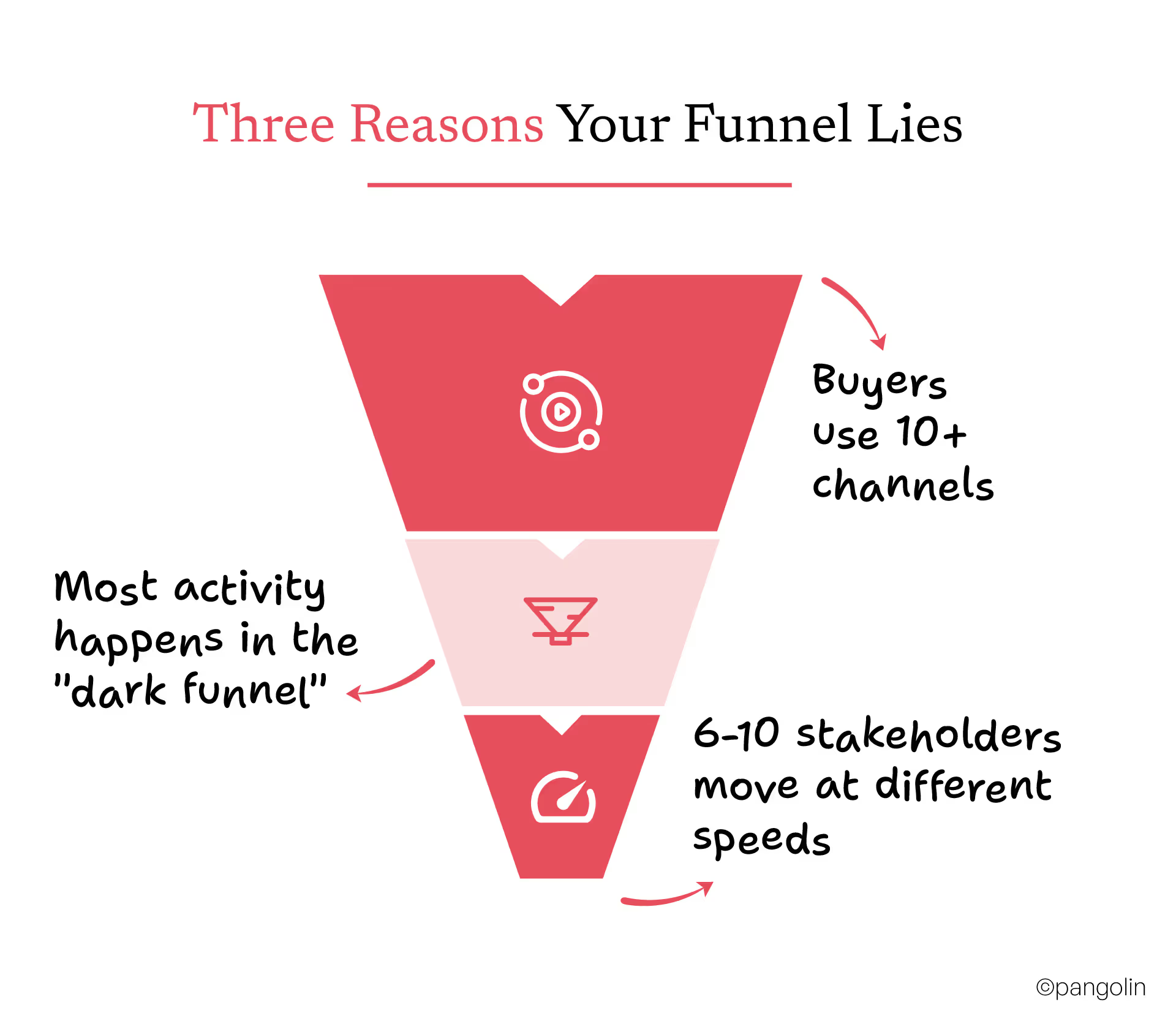
B2B buyers now average 10 interaction channels in their buying journey, up from just 5 in 2016. 42% use more than 11 different touchpoints before deciding.
72% start their research online, review 11 pieces of content before contacting a vendor, and spend only 17% of their time with suppliers. Translation: By the time they raise their hand, they've already decided.
Your attribution model can't see Slack recommendations, podcast mentions, Reddit threads, private LinkedIn DMs, YouTube reviews, or coffee chats with ex-colleagues.
Traditional tracking captures maybe 30% of reality. Google Analytics shows last-click attribution.
Your CRM tracks form fills and demo requests. Everything else? Invisible. You're optimizing the 30% you measure while ignoring the 70% that decides deals.
Your CTO is reading technical blogs (awareness), their CFO is reviewing pricing pages (decision), their VP of Engineering is comparing you on G2 (consideration), and their security team is downloading compliance docs (evaluation).
One "buyer." Four journey stages. Simultaneously. Your funnel assumes a single person moving sequentially. Reality is six stakeholders progressing through different stages at different speeds, using different channels, evaluating different criteria.
A managed security services deal took seven months. The tech evaluator found them via SEO (month 1), the business sponsor attended their webinar (month 3), the CISO checked G2 reviews (month 5). Which channel drove the deal? All of them.
Forget awareness/consideration/decision. That's marketing theory, not buyer reality.
Gartner research shows the B2B buyer journey is two distinct phases. Understanding this changes everything about how you allocate budget.
This is the invisible phase. The "dark funnel" where 80% of buying happens.
What's actually happening: Internal teams recognize a problem, stakeholders self-educate through anonymous research, peer consultations happen over Slack and conference hallways, vendor shortlists get created (typically 3-5 companies), and consensus builds across the buying committee.
Critical insight: 78% of B2B buyers establish requirements before contacting a vendor. The leader at the end of Selection Phase wins 80% of the time, before your salesperson has their first conversation.
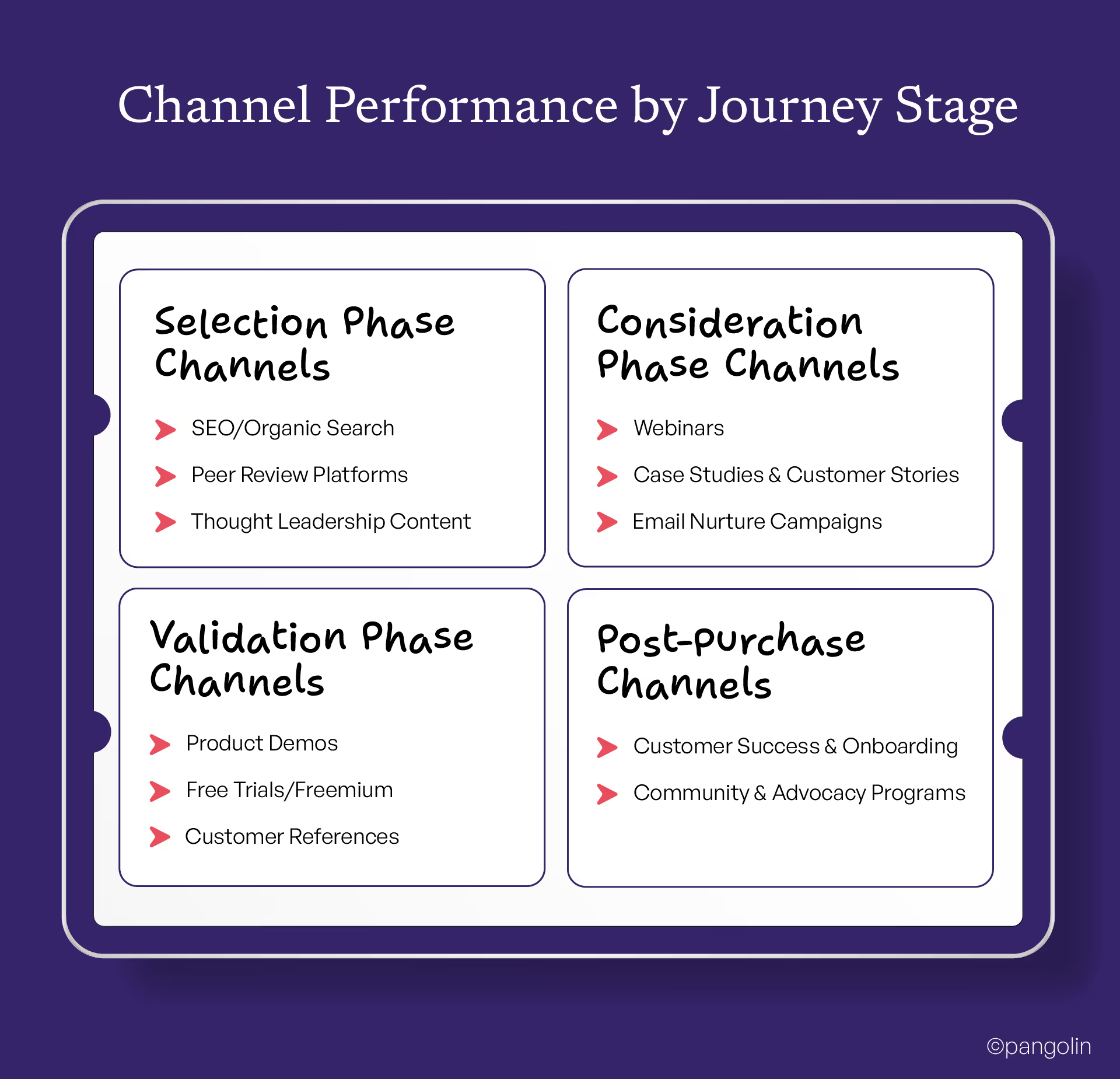
Channels that dominate this phase:
This is where trust gets built or destroyed. Where buyers form strong preferences before ever talking to sales. Where 80% of the ultimate decision crystallizes.
This is what most companies think of as "the sales process." Vendor conversations begin. Demos happen. RFPs get issued.
But the uncomfortable truth: The leader entering this phase wins 80% of the time.
What's actually happening: Vendor conversations finally start (but preferences already formed), technical evaluation confirms what research suggested, demos validate pre-existing beliefs, RFP processes formalize decisions already made, and reference calls provide final reassurance.
Channels that dominate this phase:
Sales teams hate hearing this, but Validation Phase is mostly confirmation bias. Companies spend enormous resources on demos and proposals for deals that were won or lost months earlier.
Most B2B IT companies pour budget into late-stage channels, demos, events, sales enablement, while under-investing in Selection Phase channels like SEO, educational content, and peer review management.
That's backwards. If 80% of deals are decided in Selection Phase, why allocate 60% of budget to Validation Phase?
72% of B2B buyers start their research online. Companies that blog regularly generate 67% more leads per month.
Organic leads convert to opportunities at 2-3x higher rates than paid leads.
Buyers ask Google questions at 11pm when they can't sleep worrying about cloud migration complexity or security gaps. Your blog post ranking #1 for "managed SIEM vs in-house SOC" captures them when intent is highest and competition is lowest.
Metrics that matter: Organic traffic to educational content, engagement depth (time on page, scroll depth), return visitor rate, content download conversions.
77% of B2B buyers consult user reviews during their purchasing journey. G2, TrustRadius, and PeerSpot increasingly dominate early research. Reviews on these platforms often rank ahead of vendor pages in Google.
Buyers trust peers more than vendors. A detailed G2 review from a company like theirs carries more weight than your case study.
Metrics that matter: Review quantity and average rating, review velocity (new reviews per quarter), keyword rankings for "[your category] reviews", source attribution (G2 traffic converting to leads).
Industry reports and original research establish category authority. Conference speaking and podcast appearances create top-of-mind awareness. When your CEO educates the market about emerging security threats or cloud migration best practices, buyers associate your brand with expertise.
Metrics that matter: Share of voice in industry conversations, brand awareness lift, influenced pipeline.
Webinars generate 73% higher lead quality than other channels. Average ROI: 213%, peaking at 430% for B2B SaaS. 53% of B2B marketers say webinars are the top format for highest-quality leads.
Webinars require 45-60 minutes of attention. Only serious buyers invest that time. They reveal intent through registration (company size, job title) and engagement (questions asked, polls answered, follow-up requested).
Metrics that matter: Registration-to-attendance rate, engagement score (questions, polls, downloads), webinar-to-demo conversion rate, multi-touch progression.
Buyers prioritize case studies from companies similar to theirs. Industry-specific case studies outperform generic success stories 3:1. Video case studies generate 2x engagement vs written.
"Has this worked for someone like me?" is the question buyers need answered before shortlisting vendors.
Metrics that matter: Case study page views from high-intent visitors, downloads of industry-specific case studies, case study → demo request conversion rate.
Email marketing delivers 340% ROI in B2B. Nurtured leads make 47% larger purchases. Multi-touch email sequences convert 23% faster.
Most buyers aren't ready to talk to sales the moment they download your whitepaper. Email nurture keeps you top-of-mind during the 3-6 month research phase.
Metrics that matter: Email-to-MQL progression rate, multi-touch engagement (consuming 5+ emails), nurture-to-demo conversion rate.
Buyers spend only 17% of their time with suppliers, so demos must be high-impact. Personalized demos convert 2x better than generic ones.
By this stage, buyers know what they want. Demos validate that your solution matches their research. Best demos are collaborative discovery, not feature tours.
Metrics that matter: Demo-to-opportunity conversion rate, demo-to-close rate, deal size by demo type, time from demo to close.
Free trials drive 66% of B2B SaaS conversions. Trials reduce perceived risk and accelerate decisions. Trial users close 3-5x faster than demo-only paths.
For technical products, hands-on experience beats any sales pitch.
Metrics that matter: Trial sign-up conversion rate, trial activation rate (actually use the product), trial-to-paid conversion rate, time to activation.
Reference calls reduce perceived risk in the final decision stage. Peer-to-peer conversations carry more weight than vendor claims.
In the final mile, buyers want reassurance from someone who's already made this decision.
Metrics that matter: Reference request → close rate, win rate with vs without reference calls, reference satisfaction scores.
5% increase in retention drives 25-95% profit increase. Companies with strong multi-channel strategies retain 89% of customers vs 33% for weak approaches.
First 90 days determine long-term retention.
Retention compounds. A customer churning in month 6 never gets to expand in year 2.
Metrics that matter: Time to first value, product adoption rate (feature usage), Net Revenue Retention (NRR), customer health scores.
Community-engaged customers renew at 2x higher rates. Customer advocates generate 3-5x ROI through referrals.
Your best customers become your best marketers. Community creates switching costs (relationships, reputation) beyond product features.
Metrics that matter: Net Promoter Score (NPS), customer referral revenue, community engagement rate, expansion revenue from community members.
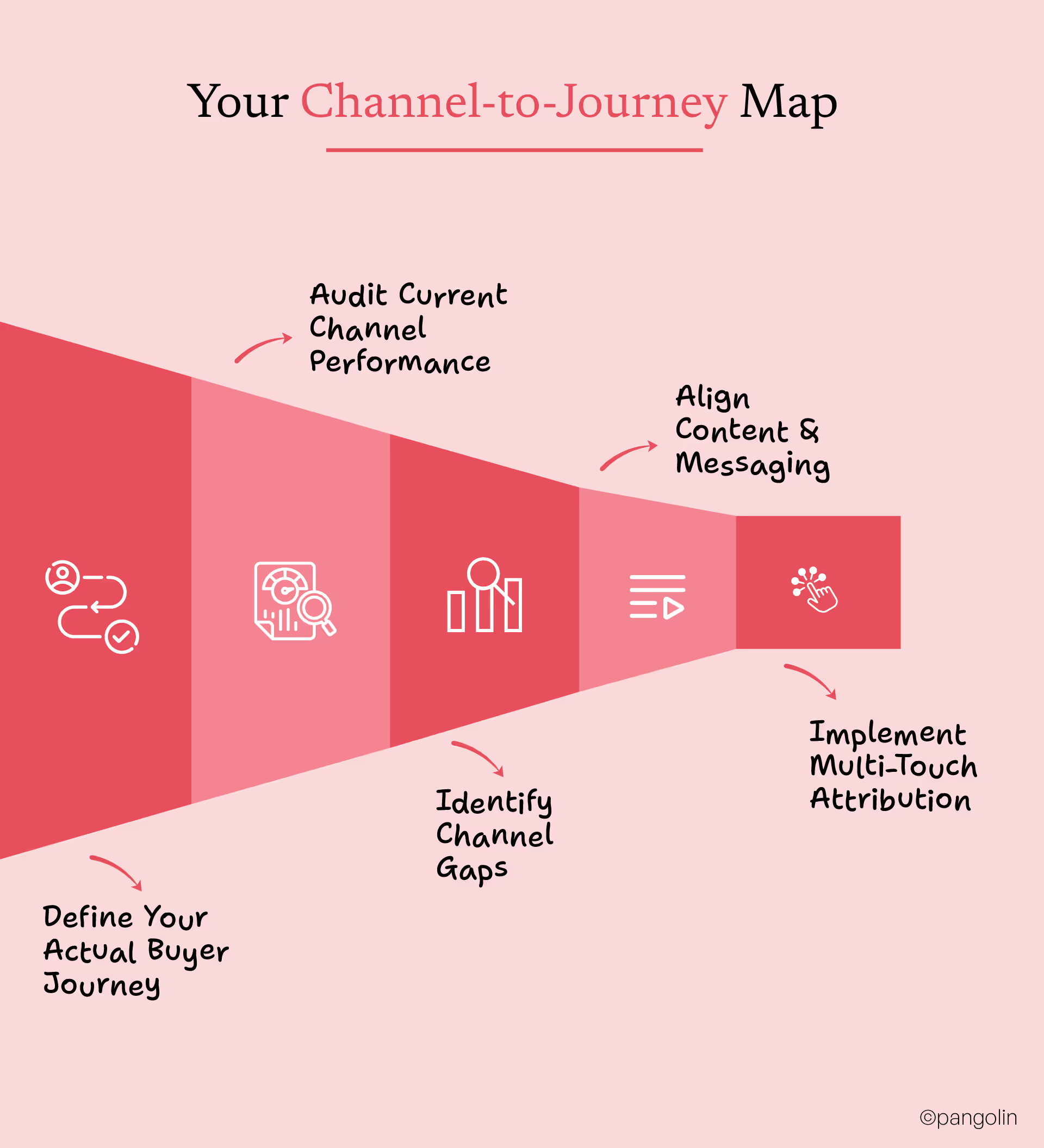
Interview 10-15 recent customers with these questions:
Map the sequence they actually followed. Identify common patterns: journey length (typically 4-9 months for enterprise IT), number of stakeholders (typically 6-10), content consumed (average 11 pieces), channel sequence.
What you'll discover: Buyers skip stages, loop back, involve multiple stakeholders progressing at different speeds, and make decisions 80% before sales engages.
Most companies know channel performance (Google Ads drove 87 MQLs). Few know channel performance by journey stage.
Data to gather:
Tools you need: CRM with source tracking (Salesforce, HubSpot), marketing automation (Marketo, Pardot), analytics platform (Google Analytics 4, Mixpanel), attribution software (Bizible, DreamData).
Key question: Which channels generate the most MQLs vs SQLs vs closed-won deals? The answer reveals quality gaps.
Example finding: "LinkedIn generates 15% of our leads but 35% of closed-won revenue. Google Ads generates 40% of leads but only 10% of revenue. We're over-investing in Google Ads."
Legend: ✓ Strong presence and performance | △ Present but underperforming | ✗ Missing or ineffective
Common gaps: Weak SEO for problem-recognition keywords, no webinar program (missing 73% quality lift), no free trial offering (missing 66% conversion driver), limited expansion marketing.
Prioritize 2-3 high-impact gaps to address in next 90 days. Don't try fixing everything at once.
Different stages need different messaging. Awareness-stage buyers don't want product pitches. Decision-stage buyers don't need education.
Selection Phase (Months 1-6): Educational, not promotional. Problem-focused, not product-focused. Framework-driven (helping them think through decisions).
Content examples:
CTAs that work: Download comprehensive guide, subscribe to industry insights, register for educational webinar.
Validation Phase (Months 6-9): Solution-focused, proof-driven. ROI and business case support. Risk mitigation and objection handling.
Content examples:
CTAs that work: Schedule personalized demo, start free trial, calculate your ROI, request customer references.
Single-touch attribution is lying to you. Last-click gives all credit to Google Ads when the buyer consumed your content for six months. First-touch credits that initial blog post but ignores the webinar that actually converted them. Both miss the 42% of buyers using 11+ touchpoints.
Attribution models that work:
Position-Based (U-Shaped): 40% credit to first touch (awareness), 40% credit to last touch (conversion), 20% distributed to middle touches (consideration). Best for mid-market B2B with 3-6 month sales cycles.
W-Shaped: 30% to first touch, 30% to lead conversion touchpoint, 30% to opportunity creation touchpoint, 10% distributed to other touches. Best for complex enterprise sales with clear stage gates.
Time-Decay: More credit to recent interactions, exponential decay for older touchpoints. Best for long sales cycles (9+ months) where early touches lose relevance.
Implementation requirements: Unified data across CRM and marketing automation, consistent UTM tracking across all channels, integration between platforms, executive buy-in (changes how teams are measured).
Start simple: If you're currently using last-click attribution, moving to U-shaped is 80% of the value for 20% of the complexity.
6-10 stakeholders are involved in every B2B IT decision, and each persona prefers different channels.
The orchestration challenge: All four personas progress simultaneously through different stages using different channels. While your CTO is in Selection Phase reading technical blogs, your CFO might be in Validation Phase reviewing pricing, and your end users are just entering awareness via a demo video.
You need coordinated content across multiple channels serving multiple personas at multiple stages, simultaneously.
That's why 51-54% of buyers switch providers if the experience isn't seamless.
Knowing which channels work is 30% of success. Actually orchestrating seamless experiences across 10+ touchpoints is the other 70%.
Your buyer's reality: Discovers you via blog post (website analytics), downloads whitepaper (marketing automation), attends webinar (webinar platform), visits pricing page (website analytics), clicks LinkedIn ad (ad platform), requests demo (CRM), talks to sales (CRM + email).
Your tech stack's reality: Seven different platforms that don't talk to each other. No unified view of the buyer's journey. Sales has no context on content consumed. Marketing can't see sales conversations. Retargeting doesn't know they attended webinar.
Result: You optimize each channel in isolation while the buyer experiences disconnected chaos.
Technical requirements:
Why most companies fail: They treat each platform as a separate kingdom. Nobody owns the experience across channels.
McKinsey research shows winning B2B companies appoint dedicated "journey orchestrators", people responsible for seamless experience across channels, not just channel performance in isolation.
What they do: Map actual buyer journeys through ongoing customer interviews, design channel transition logic, set experience standards across all touchpoints, monitor drop-off points and friction, optimize based on inter-channel performance.
Companies with strong multi-channel orchestration retain 89% of customers vs 33% for weak approaches.
Bad experience (disconnected channels): Buyer reads blog post → Generic "Subscribe to Newsletter" CTA → Days later, sees LinkedIn ad for different product → Downloads unrelated whitepaper → Receives generic email welcome series → Sales calls weeks later with no context → Buyer ghosts.
Good experience (orchestrated channels): Buyer reads blog post on "Reducing Cloud Migration Risks" → Smart CTA offers "Cloud Migration Readiness Assessment" → Downloads assessment, receives personalized results via email → Email sequence delivers related case study → Retargeting shows webinar invite: "Live Q&A: Cloud Migration Best Practices" → Attends webinar, receives follow-up with recording + demo offer → Sales rep calls with context: "I saw you attended our cloud migration webinar and downloaded the assessment. What specific challenges are you facing?" → Demo is customized to their assessment results and webinar questions → Buyer feels understood, moves forward.
The difference: Every step feels like natural progression. No repeated information. No mismatched messaging. Context preserved across channels. That's orchestration.
Most marketing dashboards are vanity metric graveyards. Impressions, clicks, visits, all easy to measure, none predictive of revenue.
Google Analytics shows last-click. Your buyer's journey was six months long with 11 touchpoints. That last click captures maybe 10% of the actual influence.
Solution: CRM-based attribution over GA4. Your CRM captures original source (first touch), all touchpoints along the journey (via form fills, webinar attendance, content downloads), attribution by closed-won deals (revenue connection), multi-touch credit distribution based on your chosen model.
CRM-based attribution is 70-80% more accurate than GA4 for B2B because it tracks the full 6-9 month journey, not just website sessions.
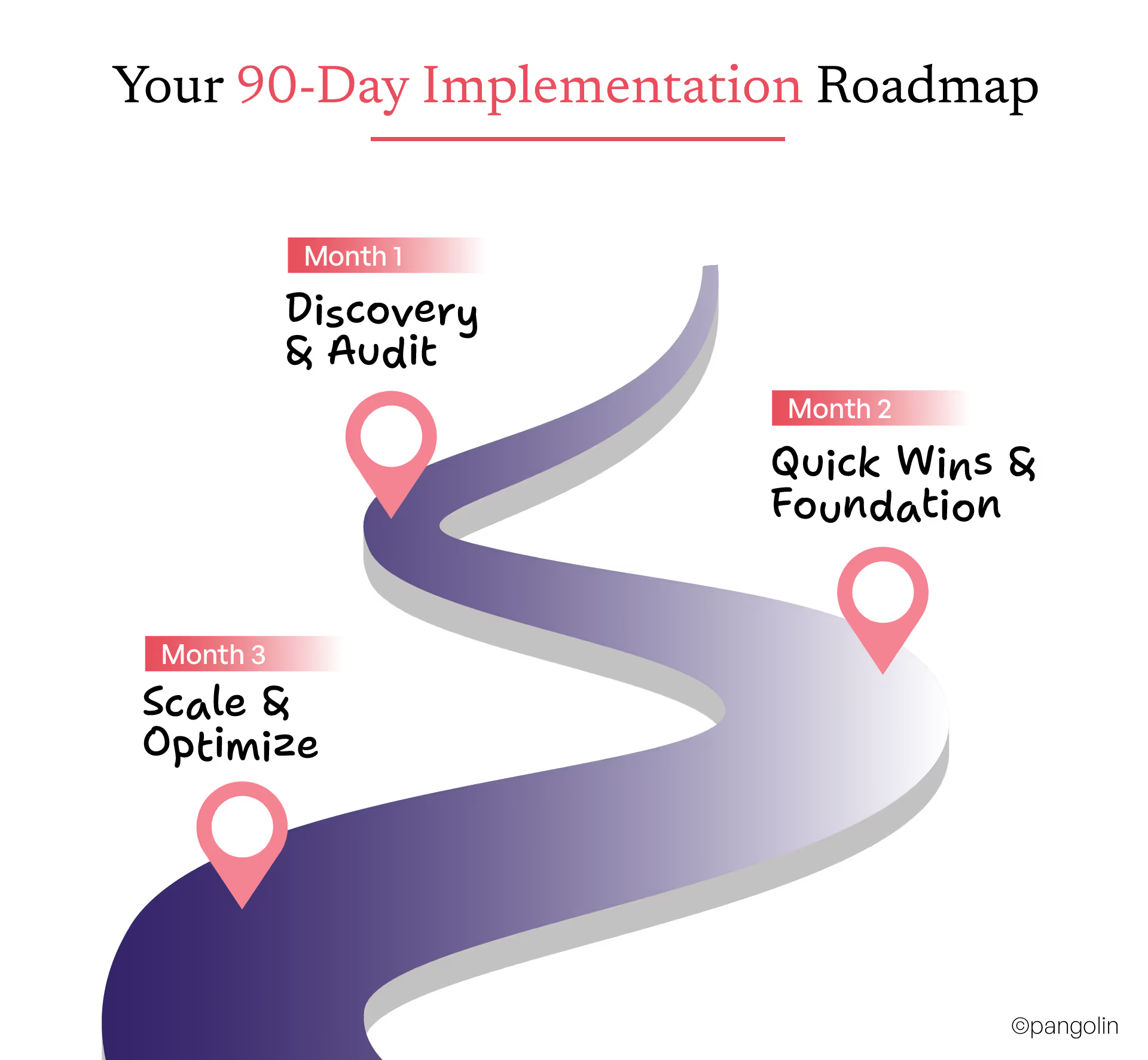
Week 1-2: Map your actual buyer journey. Interview 10 recent customers about their research process. Document actual channel sequence and touchpoints. Identify journey length and stakeholder involvement.
Week 3-4: Audit current channel performance. Pull CRM data on lead source by stage conversion. Calculate MQL-to-SQL rate by channel. Identify win rate and deal size by source. Create your channel-by-stage gap matrix.
Week 5-6: Address highest-impact gaps. If early-stage SEO is weak: Audit top 20 buyer keywords, create content plan. If webinars are missing: Schedule first educational webinar for consideration stage. If attribution is broken: Implement basic position-based (U-shaped) model.
Week 7-8: Set up measurement infrastructure. Ensure CRM captures original source and multi-touch data. Implement UTM tracking standards across all channels. Build dashboard showing progression from MQL → SQL → Opportunity → Close. Establish baseline metrics for each journey stage.
Week 9-10: Launch coordinated campaigns. Create persona-specific content tracks. Build email nurture sequences aligned to journey progression. Set up behavioral triggers (webinar attendee → demo offer). Test seamless channel transitions.
Week 11-12: Optimize based on data. Review 60 days of attribution data. Identify highest-performing channel combinations. Double down on what's working, cut what's not. Present findings to leadership with ROI justification.
Quick win priorities:
Airbnb's investors had pitch decks, market analysis, and financial projections.
They still missed a $2.5 billion opportunity because they didn't understand the actual customer journey.
Your dashboard shows five lead sources. Your buyers use 10+ touchpoints. That gap is costing you deals.
The core insight: 80% of B2B buyers complete 70% of their journey before you know they exist. The leader entering Validation Phase wins 80% of the time. That means your Selection Phase channels, SEO, content, thought leadership, peer reviews, determine winners before sales even gets involved.
The strategic implication: Stop over-investing in late-stage channels (demos, events, sales enablement) while starving early-stage channels (SEO, educational content, webinars). The deal is won or lost in Selection Phase, not Validation.
Webinars don't belong in awareness, they generate 73% higher-quality leads in consideration. Demos don't convert early researchers, free trials drive 66% of conversions in late-stage. SEO doesn't close deals, but it wins the Selection Phase that determines who gets to validate.
The execution challenge: Knowing which channels work at which stages is 30% of success. Building omnichannel infrastructure to deliver seamless experiences across 10+ touchpoints is the other 70%.
That requires unified customer data across scattered platforms, journey orchestration roles (not just channel optimization), attribution models capturing multi-touch reality, and persona-specific strategies acknowledging different channel preferences.
The measurement shift: Vanity metrics don't predict revenue. Track what matters by journey stage: engagement depth and content consumption in Selection Phase, MQL quality (measured by MQL-to-SQL rate) in Consideration Phase, win rate and deal size in Validation Phase, Net Revenue Retention post-purchase (drives 25-95% of profit).
The uncomfortable truth: The map, your documented buyer journey and channel strategy, isn't the territory. Real buyers don't follow your flowchart. They loop back, skip stages, engage channels you can't measure, and make decisions influenced by conversations you'll never track.
The "dark funnel" is real. 70%+ of the buyer journey happens in unmeasured channels, Slack recommendations, podcast mentions, Reddit threads, private LinkedIn messages, coffee conversations.
The winning strategy acknowledges this. Build for the 10+ channels you know about while staying humble about the interactions you don't. Use self-reported attribution surveys. Ask customers "How did you really find us?" in interviews. Combine quantitative data with qualitative insights.
The final insight: Companies dominating B2B IT lead generation in 2025 aren't guessing, they're measuring, mapping, and orchestrating with precision. But they're also staying flexible, testing constantly, and adapting as buyer behavior evolves.
Start by mapping your actual buyer journey, not your ideal one. Match channels to stages based on performance data, not assumptions. Implement multi-touch attribution that captures 6-9 month journeys. Build omnichannel orchestration that feels seamless.
The alternative? Keep optimizing channels in isolation, missing 70% of the journey, losing deals in Selection Phase before you know buyers exist.
Your buyers are using 10+ channels. Your competitors are mapping them. What are you doing?

Aniket leads content marketing at Pangolin, writing and editing for B2B tech clients who need sharp messaging and consistent output. He came from journalism and brings that newsroom discipline to content work, turning drafts around quickly and keeping quality high.