In 2019, Castrol India faced a quiet crisis.
They had enrolled 150,000 mechanics into their FastScan loyalty program. The dashboard looked beautiful, numbers were impressive but here's what no one was talking about: most mechanics never came back after signing up.
The problem was the gap between what Castrol promised and what mechanics actually experienced. A mechanic would scan a coupon, and then receive zero confirmation. He had no idea if the system worked or if he had been scammed.
By day 15, he had forgotten about the program entirely.
Castrol made a single change that transformed everything, they partnered with Standard Chartered Bank and started transferring rewards directly to mechanics' bank accounts via IMPS in the same day within hours.
Suddenly, a mechanic could scan in the morning and have cash in his account by evening. The moment proof of value landed, everything shifted. Mechanics started scanning regularly, word spread to peers, the program went from dormant to vital.
Average daily transactions exceeded 100,000. INR 6 crores reimbursed monthly. By 2024, Castrol began hosting regional mechanic events across regions, with mechanics choosing to show up because they belonged to something that actually worked.
This is the story of loyalty program engagement: it is not about having a good program. It is about making partners feel it works before they lose faith.
Most brands keep waiting for engagement to happen. Castrol made engagement inevitable by solving for the actual problem: distrust born from delayed value.
Your loyalty program probably has the same problem. 1000s of enrolled members but only a fraction actually engaged. This blog will show you the 15 tactics that separate programs that engage from programs that bleed members.
You tell the leadership: "We have 50,000 members." What you do not say: "Only 8000 - 10,000 are active monthly." You show enrollment spikes, you do not show the 20 to 25% monthly churn.
The engagement crisis in loyalty programs is not about rewards being too small. It is about partners being convinced the program does not work.
When a painter signs up and waits a week with zero reward confirmation, he concludes the system is broken.
When an electrician sees a generic "Double Points" message that does not speak to his actual work, he assumes the program is not for him. When a mechanic completes their first action and receives no recognition, they have no proof anything happened.
This is why 77% of loyalty programs fail within two years because partners never experience the value in the first place.
You can also refer to our case study to see how ‘Aur Milega’ and Pangolin transformed trade loyalty.
The 15 tactics are not a to‑do list you attack all at once. That is the fastest way to burn out your team and see no change in loyalty program engagement.
Use them as a stage-based toolkit.
First, use the Ground Truth Framework to see where partners are leaking across the six stages: Unseen → Noticed → Onboarded → Earning → Belonging → Leading. Then pick 2 or 3 tactics for the specific transition you are struggling with.
Now the tactics make sense. They are not 15 random ideas. They are grouped by what they fix.
(Unseen → Noticed)
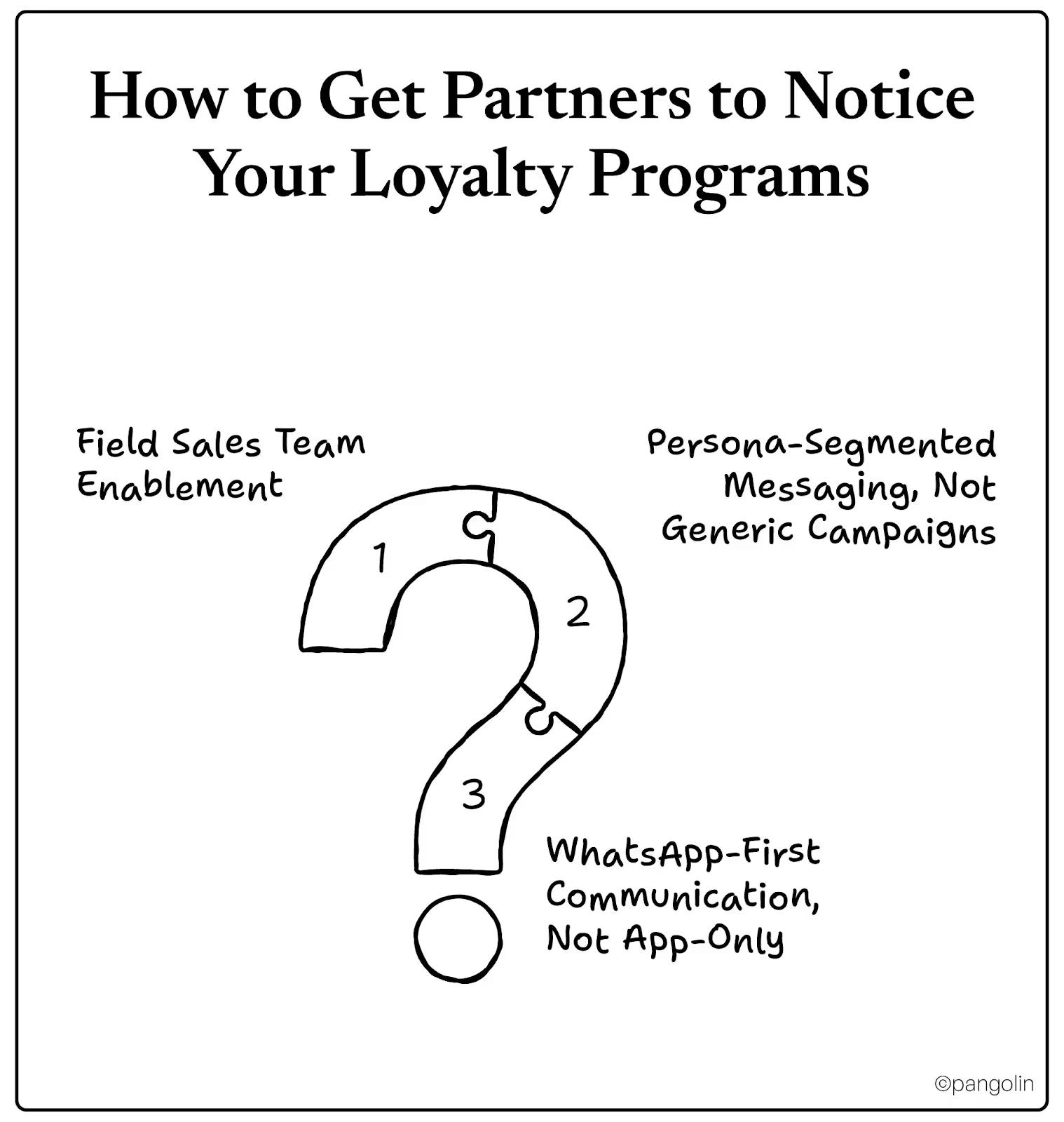
Your electrician checks WhatsApp ten times an hour. He opens your app once a week, if at all.
Most loyalty programs treat WhatsApp as a secondary channel. That is backwards. WhatsApp is the primary channel for trade partners. They trust peer forwards and dealer messages here far more than email or app notifications.
Real world result: WhatsApp-based loyalty communication drives roughly 3x repeat purchases versus email. Open rates sit above 70%, compared to 15–20% for email. And WhatsApp works on low connectivity. No app crashes. No endless loading.
What to do:
Make WhatsApp the main pipe for all loyalty communication.
Apps are where they manage details. WhatsApp is where you earn their attention.
Your retailer does not care about “professional certification.” Your electrician does not care about “working capital optimization.” Yet most programs send the same message to everyone.
Different partners want different outcomes:
One generic message underperforms everywhere. Three persona‑specific campaigns win across the same base.
What to do:
Same system. Different stories tailored to what they actually care about.
Here is what quietly kills most loyalty programs: your own teams do not believe in them.
If the people who meet partners every day do not pitch the programme, it stays invisible.
Result: Awareness plateaus. Partners never hear about it from someone they trust.
What to do:
If your own people are not selling the loyalty program, no one will.
(Noticed → Onboarded)
A mechanic scans your QR code, downloads the app, and then sees this:
PAN. Aadhaar. GST. Bank account. Workshop photo.
Five minutes in, his phone hangs. He closes the app and never comes back.
Across programmes, 50–60% of interested partners abandon signup because the form is too long or the app crashes on low‑end Android phones.
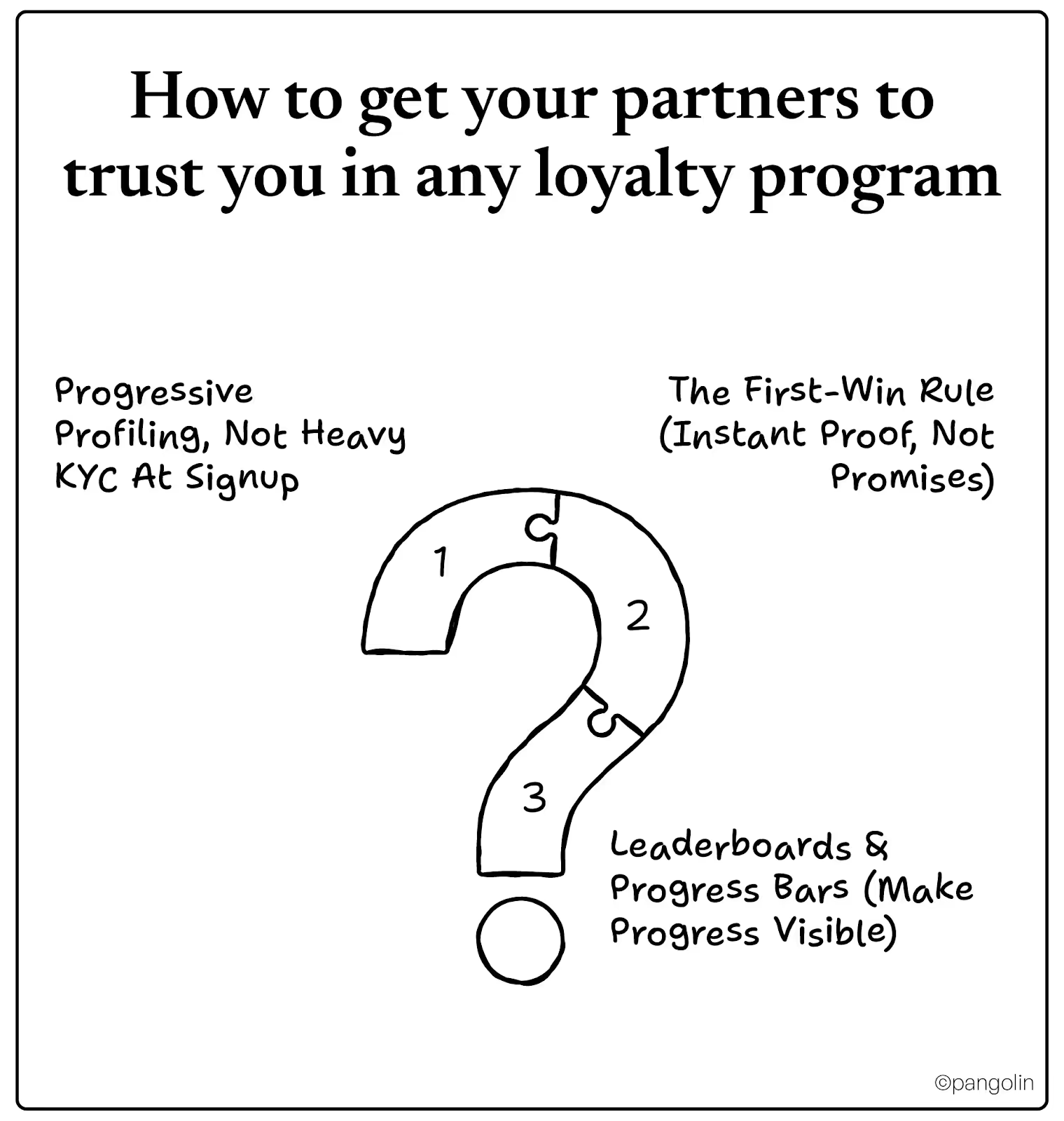
Progressive profiling flips the sequence.
By the time you ask for heavier data, they want the money and are willing to complete the process.
What to do:
The usual story:
By day 20, the partner believes the system is broken and deletes the app.
The first‑win rule says: every new user must experience tangible proof within 24 hours of signing up.
That proof can be:
Behavioral science is clear. A small, immediate reward is far more powerful than a larger, delayed one. The first win is about trust, not size.
What to do:
Once you win for the first time, your job is to make that win a habit.
Partners need to know:
How close they are to getting the next reward.
How they compare to others in their field.
Gamification works here because people are no longer skeptical. They are sure that the system works.
They just need to find reasons to keep using it.
A progress bar that says "You are 50 points away from ₹500 redemption" is more motivating than a vague "Keep earning." A leaderboard that says "Your peer earned ₹60k this month, you earned ₹40k" encourages healthy competition.
What you should do:
Seeing progress makes the program feel real and personal.
Download the Ground Truth Framework to diagnose exactly where your programme is leaking. Which stage transition loses the most partners? What is blocking them? Which of these tactics fixes it first?
(Onboarded → Earning)
Your programme launched with a bang in January. Banners everywhere. App installs spiked.
By March, banners faded. Messaging stopped. By April, partners opened the app and saw nothing new. They assumed the programme was dead.
Most companies treat loyalty like a one‑time project. Launch, then silence. Engagement decays in that silence.
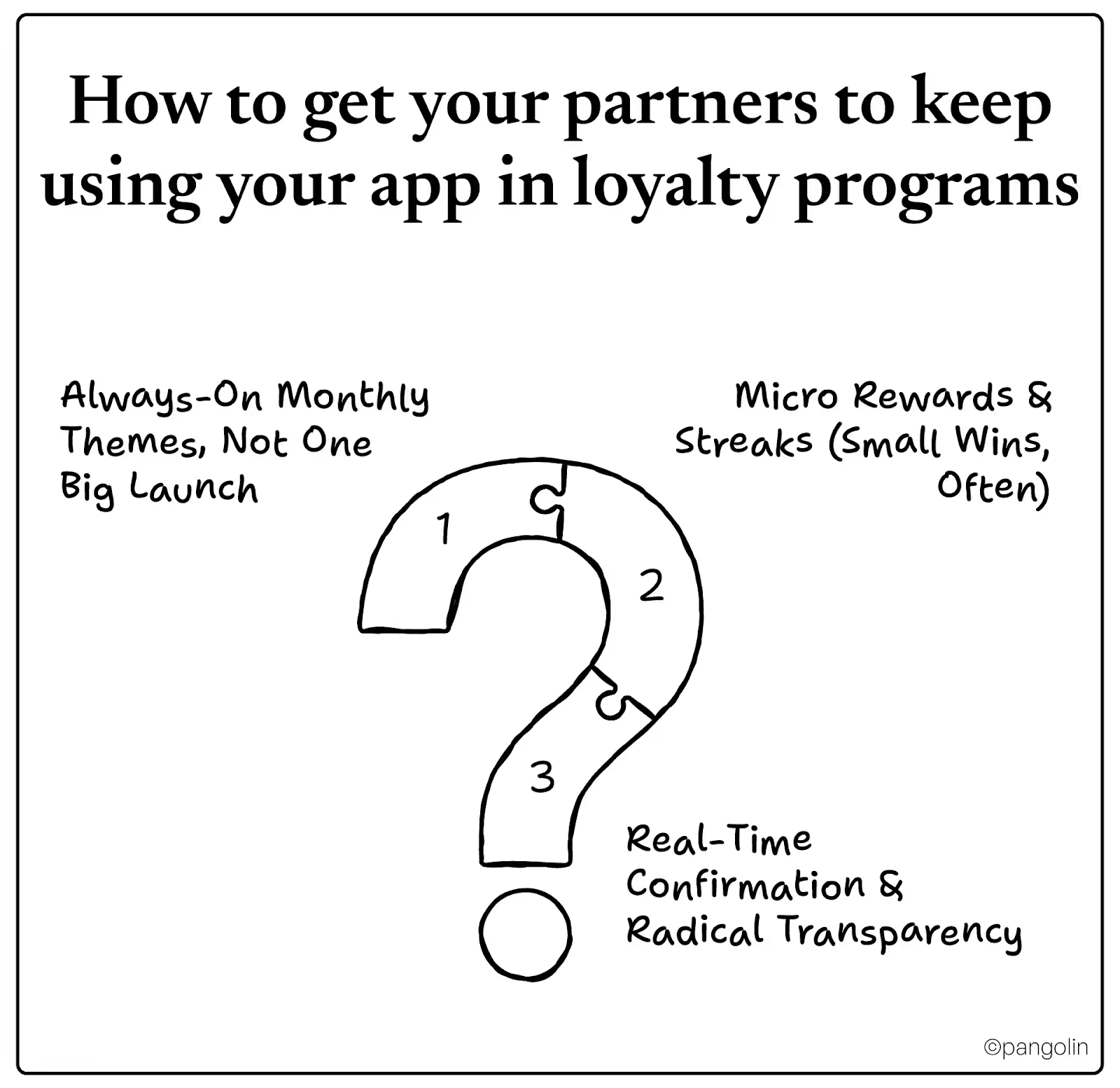
Always‑on engagement treats loyalty like a media channel.
Example:
Partners start to expect fresh content when they open the app or check WhatsApp.
What to do:
A single big reward months away doesn't make you want to do something. Small wins that happen all the time are.
For example:
This week, a mechanic who scans five invoices will get a ₹100 bonus.
Streaks make habits happen. People who have a 7-day streak are emotionally invested in keeping it going.
Things to do:
Delayed value kills engagement. Real‑time confirmation builds it.
When a partner scans an invoice, they should see points hit their wallet immediately. Not “pending.” Not “will post in 15 days.” Immediately.
Castrol’s FastScan worked because mechanics saw money in their bank account on the same day through IMPS transfers. That one change turned skepticism into belief.
If you cannot transfer money instantly, you can still show real‑time confirmation:
“You earned 50 points. That is +₹25 to your wallet.”
What to do:
Partners should never be left wondering, “Did that scan work?”
(Earning → Belonging)
Up to this point, engagement is transactional. “I do something, I get points.”
Now it needs to become emotional. “I am becoming someone.”
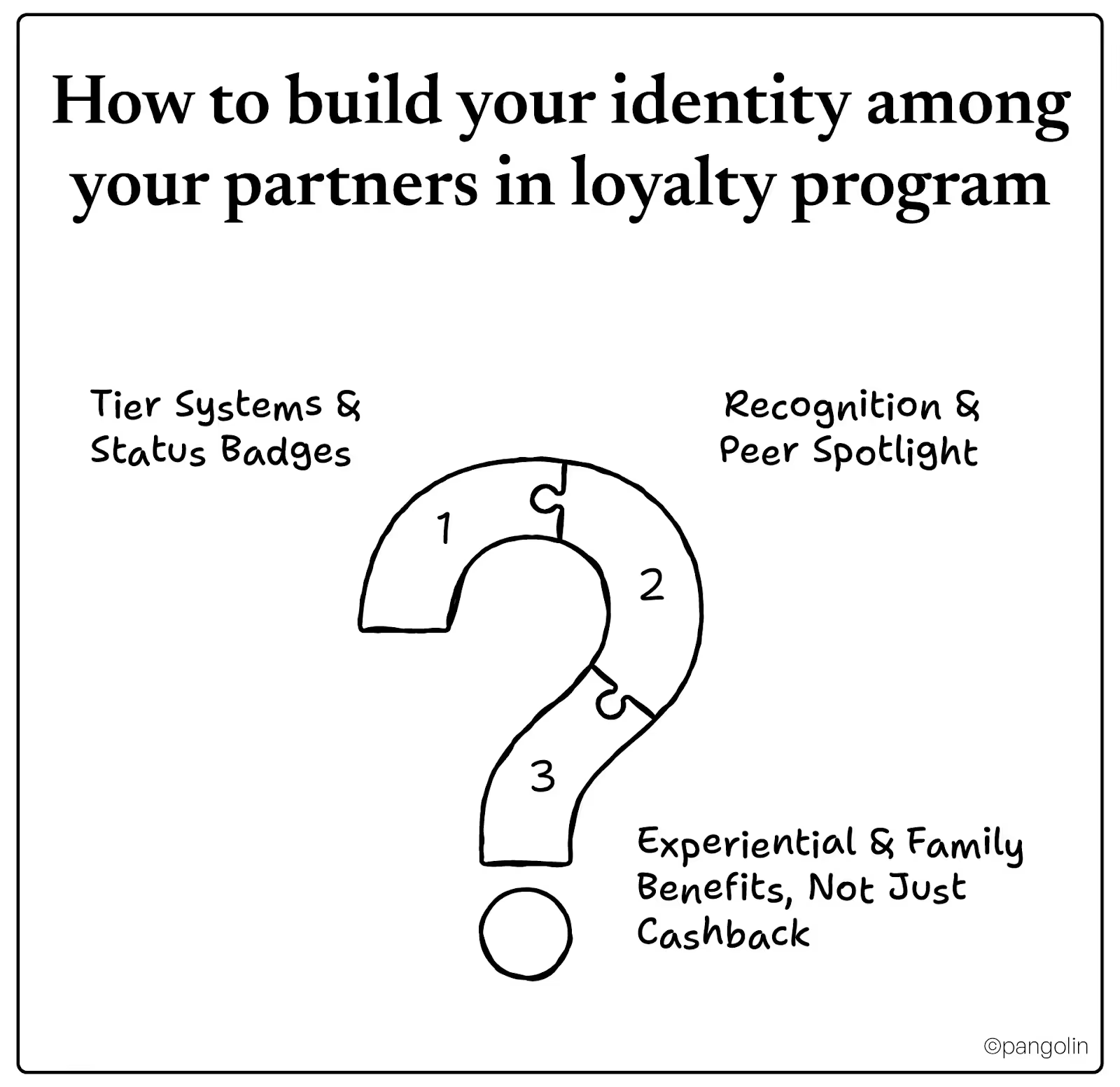
Tier systems work because they create professional identity.
These badges are status symbols that create psychological switching costs.
What to do:
Partners who feel proud of their tier do not switch for ₹1 more cashback.
People work for money. They stay for recognition.
When you spotlight a partner (with their permission), they stop being a number in your database. They become “Champion of the Month.”
Peer recognition has a multiplier effect. When an electrician sees a story about how a peer earned ₹1 lakh this year through the programme, belief kicks in: “If he can do it, I can too.”
Castrol saw this when they used community events and recognition to move beyond pure transactions.
What to do:
Recognition makes the programme feel human.
By the time partners reach this stage, many are saturated with simple point earning. They are looking for meaning, security, and growth.
Examples of benefits that hit deeper:
Asian Paints nailed this with Colour Academy. Painters did not join for points. They joined because training helped them earn more.
What to do:
This is where emotional loyalty kicks in.
[Download Our Whitepaper ‘From Cashback To Community’, A Research-Grade White Paper on
Trade Influencer and Channel Partner Loyalty Transformation.]
(Belonging → Leading)
Partners who feel they belong naturally start selling your programme for you. But you need to make it easy and rewarding.
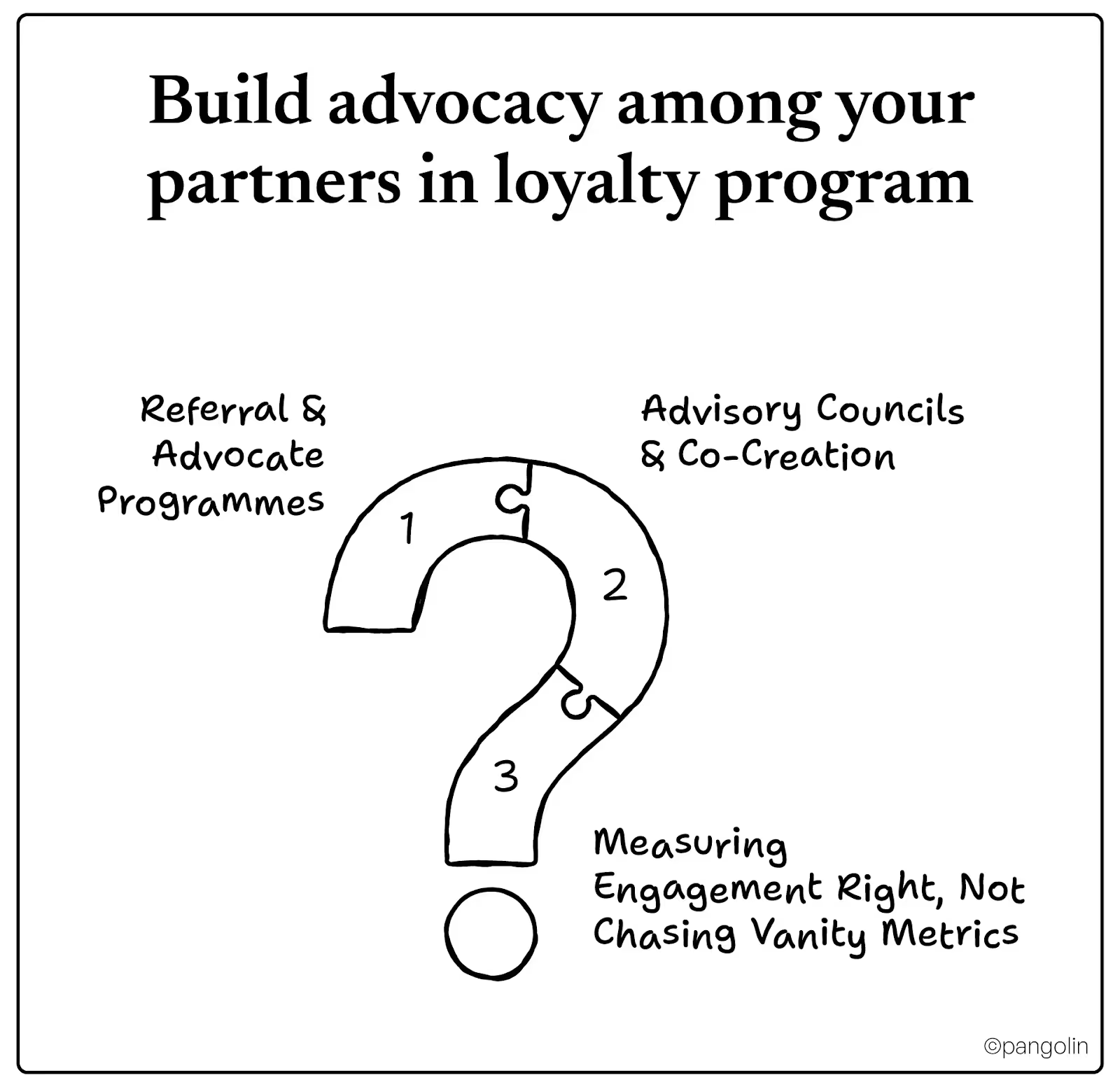
A two‑sided referral structure works best: both the referrer and the new partner earn when the new partner completes the first action.
When a mechanic sees that five of his peers joined through his referral link and are now earning, his identity shifts. He is no longer just a participant. He is a community builder.
What to do:
Referrals are the cheapest growth lever for mature programmes.
Partners who help shape your product and programme become emotionally invested.
Quarterly advisory councils where your top 50 partners join a structured conversation can change everything.
When someone says “your KYC is too heavy” and sees it simplified the next quarter, their loyalty shifts from transactional to personal.
What to do:
This turns partners into co‑owners.
The last tactic is about measurement.
Most programmes obsess over:
Those are vanity metrics. They tell you activity, not health.
Healthy loyalty programs focus on:
What to do:
If you measure the wrong things, you will always think the programme is “fine” while it quietly dies.
The 15 tactics map to six adoption stages where partners either move forward or leak out.
Each stage has different engagement drivers. Different communication. Different friction points. Different reasons partners quit.
Program success is not "more engagement." It is "right engagement for the right stage."
A first timer needs proof the system works (Tactics 4, 5, 6). A habitual user needs reasons to keep going (Tactics 7, 8, 9). A loyal member needs identity and community (Tactics 10, 11, 12). An advocate needs influence and impact (Tactics 13, 14, 15).
Missing any stage collapses the next.
This is how Castrol went from a dead program to 100,000 daily transactions. Castrol did not add more rewards. They solved for the real barrier at each stage.
Your loyalty program has 50,000 members but only 8,000 to 10,000 are active monthly. The other 40,000 are leaking at specific stage transitions.
The question is not whether you need better engagement. The question is which of the 15 tactics will move the needle fastest for your specific leaks.
Read the "From Cashback to Community" Whitepaper to understand the full model: how emotional loyalty drives 2-3x CLV, how Castrol and Asian Paints achieved the kind of engagement they did, and why the brands winning loyalty are not the ones with the biggest budgets, they are the ones with the clearest understanding of ground reality.
Explore our Trade Loyalty Case Study to see exactly how these 15 tactics moved the needle for manufacturers like you.
The brands winning at loyalty engagement in 2025 are the ones who stopped asking "How do we get more engagement?" and started asking "Why are partners leaving at this specific stage, and what is the one tactic that fixes it?"
That clarity turns 8,000 active members into 30,000 plus. Not through manipulation or rewards inflation. Through respect for partner reality and stage specific engagement that matters.
Book a Consultation with Pangolin Marketing to discuss your specific activation challenges and get a customized diagnosis of your program's gaps. The manufacturers winning at trade loyalty are not the ones with the biggest budgets. They are the ones who understood their Ground Truth first

Aniket leads content marketing at Pangolin, writing and editing for B2B tech clients who need sharp messaging and consistent output. He came from journalism and brings that newsroom discipline to content work, turning drafts around quickly and keeping quality high.