
In February 2025, researchers created an AI chip smaller than a grain of salt. Mounted on an optical fiber tip, it decodes images at light speed using a diffractive neural network. A breakthrough for medical imaging and quantum communication.
But here's the twist: when it launched, the product page emphasized "miniaturization," the PPC ads shouted "speed," and the LinkedIn posts talked about "affordability." Three different value propositions. Three disconnected messages. Result? Confused prospects who bounced.
Your IT company might be doing the exact same thing.
When your SEO-optimized blog promises one outcome, your Google Ads headline pitches a different benefit, and your social posts sound like they're selling a completely different product, you're not just confusing buyers. You're bleeding conversions.
Aligned messaging isn't a "nice-to-have." It's the difference between a 30% CTR lift and watching your ad budget evaporate into mismatched landing pages. It's what separates IT companies that scale from those stuck explaining the same thing three different ways.
Here's how to get every channel speaking the same language, so your buyers actually understand what you do and why it matters.
Let's talk about what happens when your messaging fragments.
A prospect searches "cloud infrastructure automation" and lands on your SEO-optimized blog. Great. They read it, click your CTA, and hit a landing page that talks about "DevOps orchestration tools." Wait, are those the same thing? They're not sure. So they bounce.
Later, they see your LinkedIn ad promoting "enterprise-grade deployment solutions." Now they're really confused. Are you three different companies?
Your IT buyers research across 10–11 channels before making a decision. If each channel tells a different story, you're forcing them to do the mental work of connecting the dots. And guess what? They won't.
The data backs this up: companies with consistent messaging see conversion rates increase by 212% compared to those with misaligned ads and landing pages. Conversely, inconsistent messaging leads to 30–50% lower engagement and higher bounce rates.
Brand consistency builds trust. When your prospects see the same core promise across organic search, paid ads, and social posts, it reinforces credibility. When they don't, you look disorganized, or worse, untrustworthy.
IT buyers are skeptical by nature. They're evaluating security, scalability, integration complexity. If you can't even align your own marketing messages, why would they trust you to align their infrastructure?
Consistent branding across all touchpoints reinforces credibility and reassures potential customers that they are making the right choice.
Here's what misalignment costs you:
Alignment isn't cosmetic. It's operational. Companies implementing unified messaging report 40–60% higher qualified lead volume compared to fragmented strategies.
Before you align channels, you need to know what you're aligning. Most IT companies skip this step, and that's why their messaging drifts.
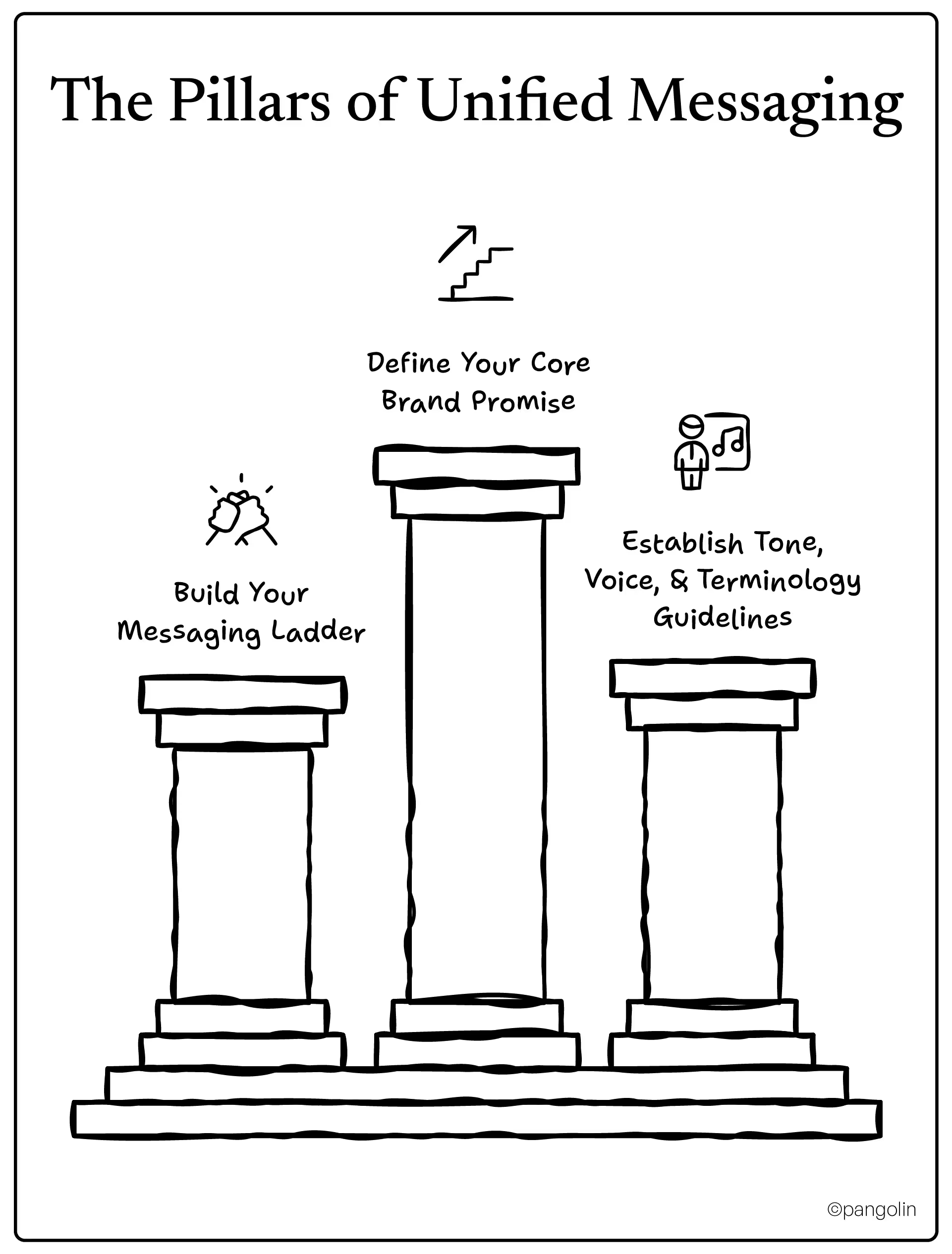
Your core promise is the one thing you want every prospect to remember. Not three things. One.
Examples:
This promise anchors every message, every channel, every asset.
A messaging ladder translates technical features into business outcomes using benefits laddering. Here's how it works:
Your SEO content explores the pillars. Your ads lead with the promise. Your social proof delivers the proof points. Different formats, same story.
IT marketers love jargon. Your buyers? Not always.
Define:
Inconsistent terminology across channels confuses buyers and fragments your SEO authority.
Now let's get tactical. Here's how to ensure SEO, ads, and social all sing from the same hymn sheet.
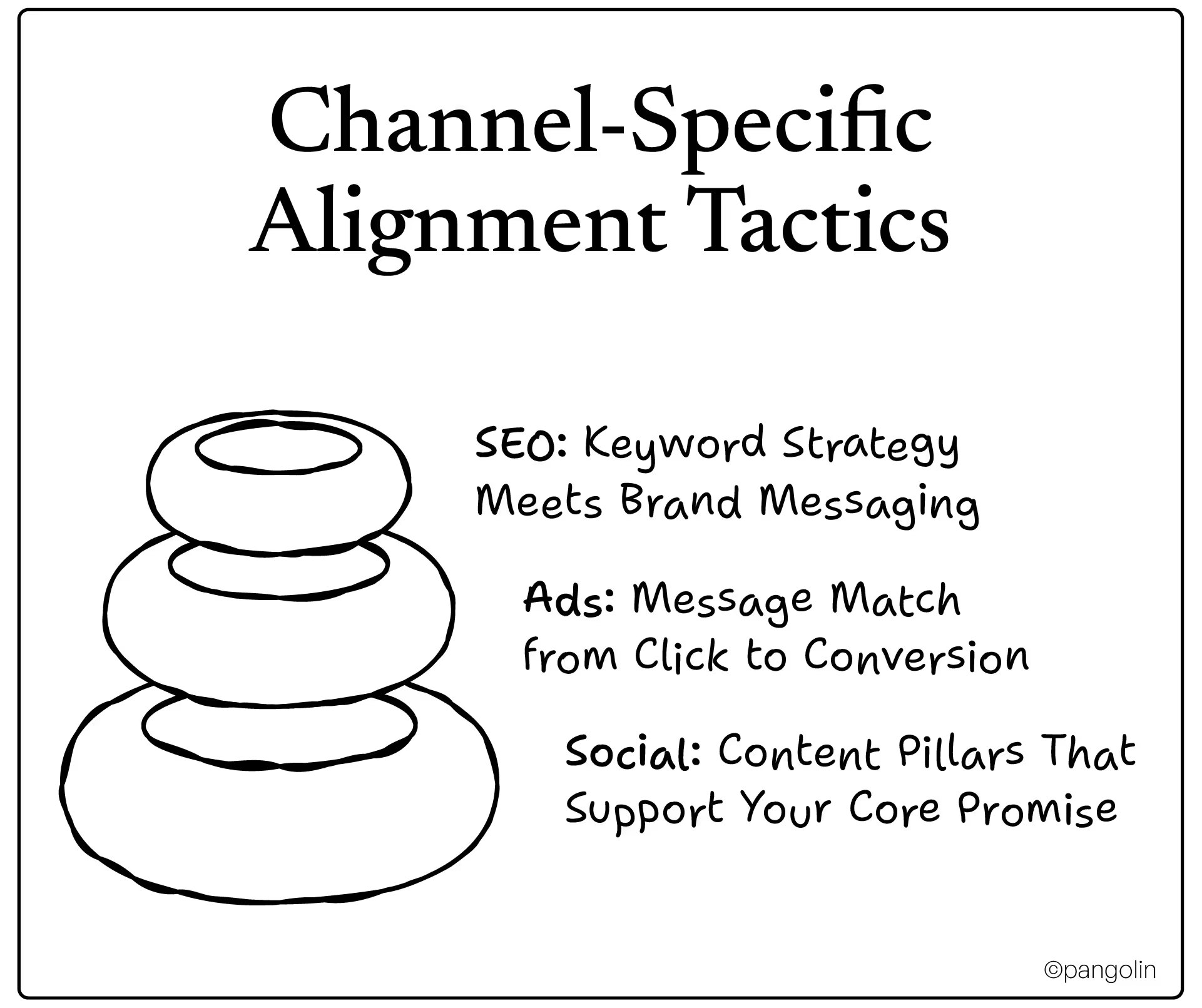
Your SEO strategy should reinforce, not contradict, your core promise.
If your promise is "infrastructure that scales without breaking," your keyword clusters should reflect that:
Each keyword cluster maps to a stage of the buyer journey and reinforces a specific value pillar.
If your title tag promises "Deploy in 10 Minutes," your H1 better say the same thing. Mismatches signal low quality to both Google and users.
Don't call it "container orchestration" on one page and "Kubernetes management" on another unless you explicitly explain they're the same thing. Consistency strengthens topical authority.
Ad-to-landing-page alignment is where most IT companies hemorrhage money.
If your ad says "Cut Cloud Costs by 40%," your landing page headline should mirror that, not pivot to "Enterprise DevOps Solutions".
Message match reduces cognitive load and boosts conversions by up to 212%.
Use the same imagery, color palette, and design language in your ads and landing pages. Visual consistency creates a seamless transition that keeps users engaged.
Your ad should lead with the benefit (outcome), not the feature (mechanism). Then your landing page can unpack the "how".
Bad ad copy: "Real-time container monitoring"
Good ad copy: "Stop outages before they start"
Both describe the same product. One focuses on the feature. The other focuses on the outcome.
Your social channels shouldn't feel like they're run by a different company.
If your value pillars are "zero downtime," "predictable costs," and "rapid deployment," your social content pillars should reflect those:
Every post ladders up to your core promise.
Don't send LinkedIn users to a "Request a Demo" page while sending Twitter users to a "Download Whitepaper" page, unless there's a strategic reason. Consistent CTAs reinforce the desired action.
Social signals may not directly impact SEO, but they influence brand searches and click-through behavior. Use your target keywords naturally in social posts to reinforce topical relevance.
Ready to unify your messaging? Follow this process.
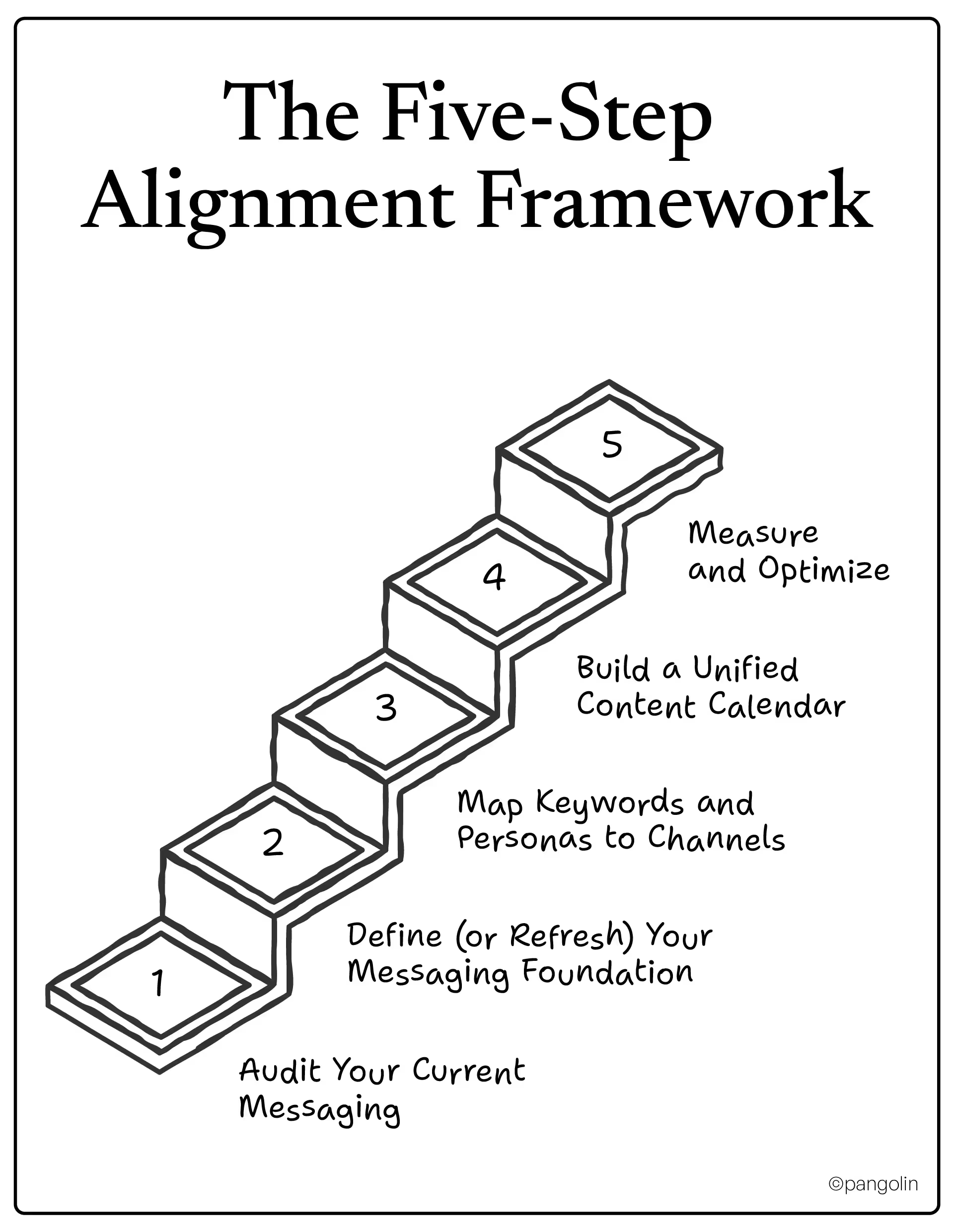
Map every customer-facing asset:
For each asset, note:
Identify gaps, contradictions, and drift.
Use the messaging ladder framework:
Document this in a messaging guide that every team member can reference.
Create a matrix:
This ensures every channel speaks to the right person with the right message at the right time.
Coordinate SEO content publication, ad campaigns, and social posts so they reinforce each other.
Example sequence:
Each touchpoint builds on the last, reinforcing the same core message.
Track these metrics to assess alignment impact:
SEO metrics:
Ad metrics:
Social metrics:
Set up cross-channel dashboards so you can see how messaging alignment impacts performance across the funnel.
A mid-sized B2B IT firm was running Google Ads for "automated deployment tools." The ad headline: "Deploy Faster with Automation."
The landing page headline? "Enterprise DevOps Platform for Modern Teams."
No mention of "deploy faster." No mention of "automation" above the fold.
Result: 2.1% conversion rate. Quality Score of 5/10. High cost per click.
The fix:
New result: 3.8% conversion rate (+81%). Quality Score of 8/10. 22% lower CPC. 60% lift in CTR.
All from aligning the message.
Even with the best intentions, messaging alignment breaks down. Here's why, and how to prevent it.
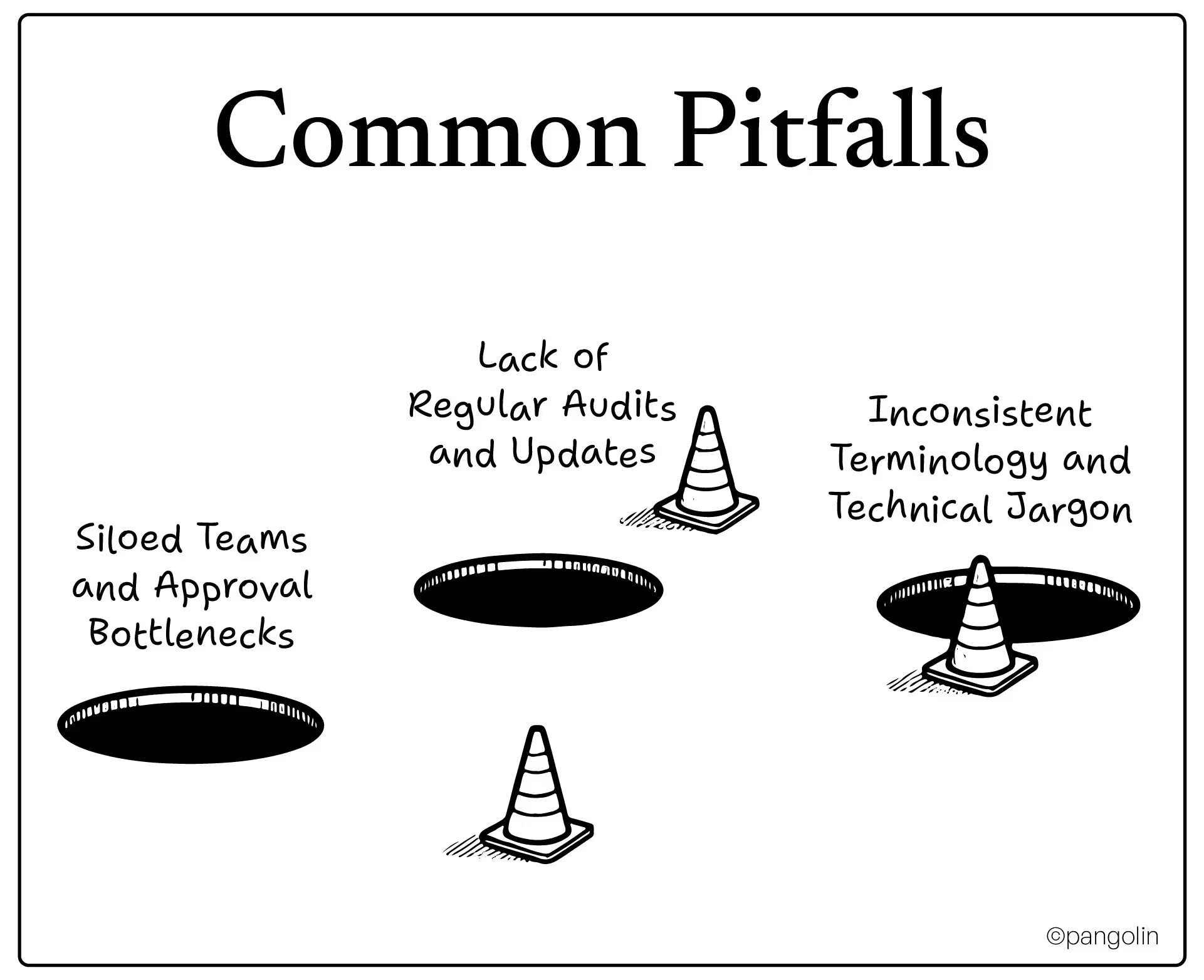
Your SEO team, ad team, and social team operate independently. Each optimizes for their own KPIs without checking if the messages align.
Fix: Implement a messaging governance process. Require all new campaigns to pass through a messaging review checklist before launch. Use shared docs (Notion, Confluence) to centralize messaging guidelines.
Your product team calls it "container orchestration." Marketing calls it "Kubernetes management." Sales calls it "deployment automation."
Fix: Create a terminology glossary. Define official terms for every key concept and mandate their use across all channels.
Messaging drifts over time. New campaigns launch. Old pages get updated without coordination. Eventually, alignment erodes.
Fix: Schedule quarterly messaging audits. Review top-performing pages, ads, and social posts. Flag inconsistencies. Update assets to realign.
Ready to align your messaging? Start here.
Unified messaging isn't about using the same headline everywhere. It's about coordinated storytelling that reinforces the same core promise, whether your buyer finds you through Google, clicks your ad, or scrolls LinkedIn.
When your SEO, ads, and social all speak the same language, you're not just improving CTR or Quality Scores. You're building trust. You're reducing confusion. You're making it easy for buyers to understand what you do and why it matters.
The data proves it: aligned messaging drives 212% higher conversions, 40–60% more qualified leads, and dramatically lower customer acquisition costs.
Your IT solution might be brilliant. But if your messaging is fragmented, your buyers will never know it.
Start with the audit. Build your messaging ladder. Align your channels. Measure the impact.
Need help unifying your messaging across SEO, ads, and social? Pangolin specializes in brand strategy, full-funnel growth marketing, and revenue automation for B2B IT companies. We'll help you turn message chaos into conversion clarity.
Kavya Somani and Aniket Panja authored this guide. Design by Adhiraj Jadhav and Sohini Some, UI/UX by Adil Abdul and Yugandhar LakshmiNarayana, SEO by Yuva Priyadarshini and Aniket Singh. Deepti Karn led project execution.
With thanks to Avani Nagwann and Shashank Ayyar for strategic guidance.

Aniket leads content marketing at Pangolin, writing and editing for B2B tech clients who need sharp messaging and consistent output. He came from journalism and brings that newsroom discipline to content work, turning drafts around quickly and keeping quality high.